


Makerere University researchers have developed a predictive model to help government anticipate water-access challenges and improve infrastructure planning as Greater Kampala Metropolitan Area continues to expand.
The model, developed under a project titled “Urban Expansion Model for Mitigating Water Scarcity in the Greater Kampala Metropolitan Area”, examines how different patterns of urban growth affect water availability, distribution, affordability and reliability.
The researchers say the model could help policymakers identify areas likely to experience pressure on water infrastructure, guide settlement planning and prioritise investments before shortages become more severe.
Presenting the findings at Makerere University on Wednesday, October 28, 2026, the project’s Principal Investigator, Dr Nestor Mugabe, said the research was motivated by the need to understand how rapidly growing settlements could be provided with essential services.
“We set out to collect evidence to understand what is happening in Greater Kampala Metropolitan Area and develop a predictive model that can help planners and policymakers manage urban expansion while safeguarding water access,” Mugabe said.
The study examined four patterns of urban expansion: infill development, extension expansion, linear expansion and urban sprawl. It found that urban sprawl and infill development have significant positive relationships with water scarcity, while planned extension and linear expansion offer different relationships with the pressure on water services.
Mugabe said the findings demonstrate the importance of integrating infrastructure provision into urban development rather than allowing settlements to grow without adequate planning.
“We need to engage politicians, planners and communities and explain the long-term consequences of some of the activities taking place in our settlements,” he said.

The research covered Kampala, Wakiso and Mukono districts, using household interviews, focus group discussions and satellite imagery. It sampled 400 household heads from organised, semi-organised and informal settlements.
The findings showed that water challenges differ across settlement categories. Residents in organised settlements mainly reported intermittent supply, while those in semi-organised areas faced distribution challenges. In informal settlements, affordability was a major concern, even where piped water was available nearby.
Mugabe said the findings point to economic water scarcity as a major challenge in Greater Kampala, where water resources exist but infrastructure, distribution and affordability limit access.
“What I found is that water is available in Uganda and Kampala generally. The biggest problem is distribution, which affects accessibility and affordability,” he said.
He recommended increased investment in sustainable water and sanitation infrastructure, alongside the adoption of the predictive model to guide future urban planning. The researchers proposed piloting and validating the model in one or two other urban areas to establish its wider application.
Minister pledges support for research implementation
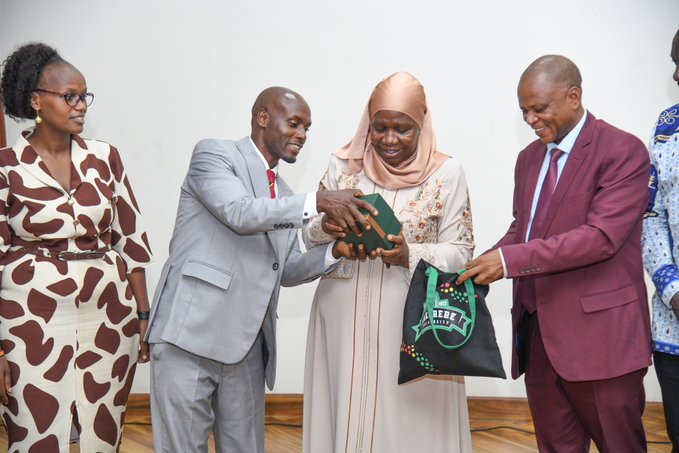
Minister for Kampala Capital City and Metropolitan Affairs Hajjat Minsa Kabanda welcomed the findings, saying the model could help government move from responding to existing water shortages to anticipating future infrastructure needs.
“A scientifically validated urban expansion model could help policymakers assess future development scenarios, identify areas that may require additional water infrastructure and prioritise interventions, particularly in underserved communities,” Kabanda said.
She called for stronger urban planning, investment in water infrastructure, evidence-based decision-making and coordination among government institutions, water service providers, local governments and development partners.
The Minister urged the research team to engage KCCA and her ministry to explore how the findings could be incorporated into metropolitan planning and service delivery.
“I want to pledge that we shall work with you. I propose that we meet again in November, when you can come and present the project to us so that we can discuss how to work together,” she said.
Kabanda also encouraged researchers to explore other urban development challenges, including waste management and rainwater harvesting, saying research could help government identify practical solutions and make better use of available resources.
Makerere calls for stronger research-policy partnerships
Makerere University’s Acting Vice Chancellor, Prof. Moses Musinguzi, said the research demonstrated the importance of universities working with government to address practical development challenges.
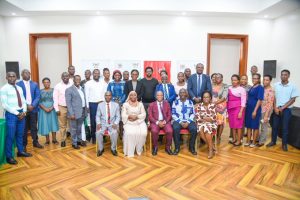
He said the university was committed to providing expertise to government institutions and welcomed the Minister’s participation as an opportunity to strengthen collaboration.
Musinguzi particularly emphasised integrated spatial planning, saying government agencies needed to coordinate their infrastructure plans to reduce duplication and unnecessary expenditure.
“Those houses will have implications for several other services, including water, electricity, roads and other social amenities,” he said, referring to the need to plan infrastructure alongside housing developments.
“I would therefore like to urge the Ministry to take the necessary steps to ensure that planning is integrated and coordinated across government institutions,” he added.
He cited Makerere’s collaboration with Kampala Capital City Authority on waste management following the Kiteezi landfill incident as an example of how university expertise could support government interventions.
Prof. Julius Fred Kikooma, Director of Makerere University’s Directorate of Graduate Training, said the value of research should ultimately be measured by its uptake and contribution to policy and practice.
“We recognise that research uptake requires substantial and sustained engagement beyond simply disseminating findings. It involves communicating research outcomes in accessible formats, engaging potential users, identifying opportunities for implementation and determining where further evidence or validation may be necessary,” Kikooma said.
Grace Cherotich Ruto, Engagement Officer at the Makerere University Research and Innovations Fund (Mak-RIF) Secretariat, said the fund was established in 2019 following discussions between Makerere University management and the Ministry of Finance.
She said the government provides Shs30 billion annually to support research and innovation across the university’s colleges.
“Research should have practical value. It could generate evidence that informs policy, produce an innovation that needs to be commercialised, or build the capacity of people working in institutions and different sectors,” Ruto said.
She encouraged researchers to ensure that their findings reach communities, policymakers and institutions capable of translating them into practical interventions.
The project was funded by the Government of Uganda through the Makerere University Research and Innovations Fund.