




Uganda is strengthening its preparedness for earthquakes through nationwide building assessments, updated seismic risk mapping and research aimed at improving construction standards and protecting communities.
The National Building Review Board (NBRB) has already screened more than 30,000 buildings across the country as part of efforts to identify structural weaknesses and guide interventions to make buildings safer.
Eng. Dr Maurice Oleng, a civil and structural engineer and head of research at the NBRB, said the assessments, alongside new scientific studies, would provide evidence to guide building regulations, engineering practice and disaster preparedness.
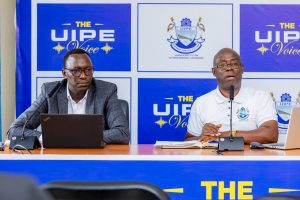
Presenting the findings during a Uganda Institution of Professional Engineers (UIPE) Voice session, Oleng said the board was developing a clearer picture of Uganda’s earthquake risks and the resilience of its built environment.
“We have already screened over 30,000 buildings across the country,” Oleng said, explaining that the ongoing exercise was helping identify buildings that require strengthening and those with more critical structural weaknesses.
He said the work was part of a broader seismic risk assessment initiative known as Serene, which the NBRB is implementing in collaboration with the Global Earthquake Model Foundation.
The project examines three key areas: earthquake hazards, the exposure of people and infrastructure, and the vulnerability of buildings and other assets.
Oleng said the board had completed the exposure model and developed an updated seismic hazard assessment to help identify areas that are more susceptible to ground shaking. Further building assessments are expected to inform recommendations on structural strengthening and revisions to construction standards.
The research is particularly important for Uganda because of its location between the eastern and western arms of the East African Rift System, which exposes parts of the country to seismic activity.
Areas around Toro, Kigezi, Ankole and Bunyoro have been identified as susceptible to earthquakes, while parts of eastern Uganda, particularly around Mount Elgon, face landslide risks.
Oleng said the findings would help engineers and policymakers make better-informed decisions on building design, construction supervision and land-use planning.
“The key thing to put in place is to have a robust seismic design code, such that the engineers have a foundational baseline,” he said.
The NBRB is working towards updating Uganda’s existing seismic design provisions to reflect new scientific evidence and modern engineering practices. The review is expected to support the design of structures that can better withstand earthquake forces.
Research identifies opportunities to strengthen schools
Progress is also being made in understanding the safety of school buildings, where structural failures could put large numbers of learners at risk.
A study conducted with the University of Sheffield and other partners assessed 100 school buildings in Fort Portal, Hoima and Mbarara to determine their vulnerability to earthquakes.
Oleng said the assessment had identified areas where targeted improvements could make buildings safer. About 5% of the buildings required urgent corrective measures, while approximately 60–70% needed further inspection and minor retrofitting. About 20% were assessed as safe.
The findings provide a basis for prioritising interventions, including repairing cracks, reinforcing structural elements, improving connections and securing unsupported gables and parapets.
The NBRB is also conducting a nationwide baseline survey of buildings with more than 200 enumerators working alongside the Uganda Bureau of Statistics. The exercise is examining building characteristics, construction materials and compliance levels to improve the evidence available for future planning.
Oleng said the board was engaging building control officers and local authorities to improve awareness and ensure that recommendations from building assessments translate into action.
He also emphasised the importance of public education, saying communities needed practical information on earthquake preparedness and safer construction.
Among the measures he highlighted were updating building standards, strengthening construction supervision and ensuring that approved designs incorporate appropriate seismic provisions.
Engineers promote public awareness
Eng. Zainab Mpakiraba, UIPE Vice President for Public Relations, Ethics and Practice, said the session demonstrated the value of explaining technical subjects in ways that communities could understand and apply.
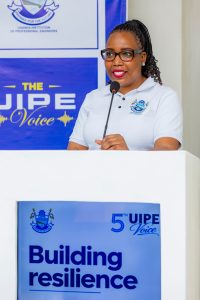
“For me, my biggest takeaway from the session this morning is that engineering is not only about the work that we do, but it is also much more important to ensure that the work that we do can impact our communities,” Mpakiraba said.
She said the NBRB’s work was important in ensuring that buildings where people live and work are safer, adding that UIPE would continue creating opportunities for engineers and the public to discuss issues affecting national development.
“We envisage a world or a community in Uganda where the technical work that we do is packaged understandably, and the public that are beneficiaries of the work that we do can understand some of the decisions that we make,” she said.
Mpakiraba said UIPE planned to deepen engagement through continuous professional development sessions and public discussions on engineering and building safety.
She also announced that the institution was revamping its website to introduce an interactive section through which engineers and members of the public could share ideas and raise issues for discussion. The platform was expected to be rolled out in November.
The NBRB plans to showcase further research and initiatives at a building control conference scheduled for December 9–11, 2026, at Mestil Hotel in Kampala, under the theme “Beyond Bricks: Advancing Building Standards for Sustainable Development.”
The ongoing assessments, research and professional engagement are intended to provide a stronger foundation for safer construction, better-informed planning and improved resilience to natural hazards across Uganda.