


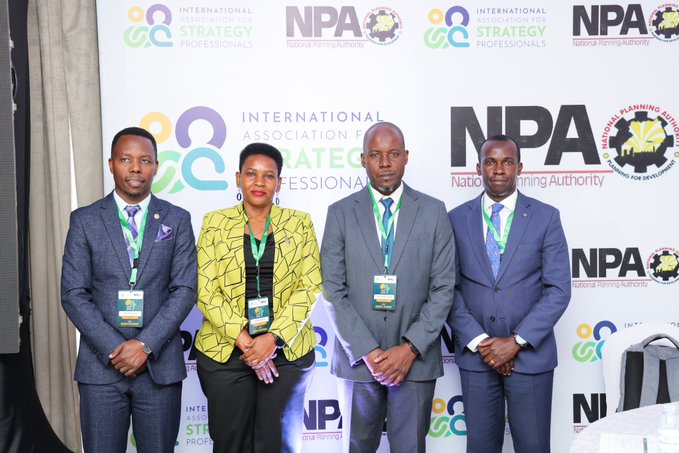
KAMPALA — African countries and organisations must strengthen strategy execution, institutional accountability and local capacity to translate development ambitions into measurable economic and social results, strategy professionals said at a regional conference in Kampala.
The two-day International Association for Strategy Professionals (IASP) Africa Regional Conference 2026, held on October 29–30 at Protea Hotel by Marriott Kampala Skyz in Naguru, brought together strategy professionals, policymakers, business leaders, academics and development practitioners under the theme “Unlocking Strategy Excellence for Africa’s Transformation.”
The discussions focused on how institutions can bridge the gap between ambitious development plans and tangible outcomes, including improved economic performance, stronger institutions and better livelihoods.
Dr Joseph Muvawala, Executive Director of the National Planning Authority (NPA), who was represented by Senior Manager, Economic Planning, Dr Asumani Guloba, argued that the success of a strategy should be judged by the results it delivers rather than the quality of the planning document.
“The measure of strategy is therefore ultimately not the quality of the document, but the results it helps a country or organisation deliver,” Dr Muvawala said in his article, Why Strategy Execution Matters for Africa’s Economic Transformation.
His argument reflects a challenge confronting governments and organisations across the continent, where development ambitions are expressed through continental frameworks, regional commitments, national development plans and institutional strategies, but translating them into coordinated implementation remains critical.
Uganda’s Fourth National Development Plan (NDP IV) and Ten-fold Growth Strategy illustrate the scale of the country’s economic ambitions. Delivering on these priorities requires institutions to identify where resources, capabilities and partnerships can generate the greatest economic impact, while strengthening coordination and accountability.
The conference examined these issues through six dialogues addressing the challenges facing African economies and institutions, changing leadership and workforce demands, technological opportunities, and the capabilities required to respond to emerging risks.
Execution at the centre of strategy
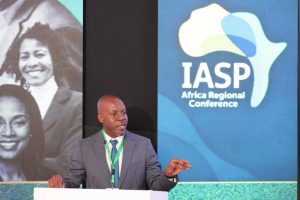
Innocent Miraze Agaba, president of the International Association for Strategy Professionals (IASP) Uganda Chapter, said Africa’s main challenge was not a shortage of ideas but the ability to implement them effectively.
“Africa has wonderful ideas and plans, but the people on the ground are not seeing the results,” Agaba said, describing the gap between strategic ambition and implementation as a major obstacle to transformation.
He said the conference was intended to examine how strategy professionals and institutional leaders could improve the development, implementation and evaluation of strategies to produce tangible change.
Agaba noted that Africa had significant opportunities, including the African Continental Free Trade Area and a growing workforce, but said these would not automatically translate into economic gains without deliberate action.
He encouraged participants to exchange experiences, challenge assumptions and identify practical measures they could apply within their organisations.
“The ultimate value of this gathering will not be judged by the discussions held in this room alone, but by what we achieve after the conference,” he said.
Agaba added that participants should be able to report improved institutional performance, measurable results and practical achievements when they meet again.
Global expertise must reflect local realities
Daniel Omara, IASP Global President, said African institutions needed to move beyond strategies that look impressive on paper and focus on those that deliver measurable outcomes.
“Our greatest opportunity lies in strengthening our ability to turn ambition into execution, and execution into impact,” Omara said.
He said effective strategy required institutions to make better choices, align people and resources, strengthen accountability and execute plans with discipline.
Omara also cautioned against adopting international strategy frameworks without considering the circumstances of the institutions and communities where they would be applied.
He urged strategy professionals to benchmark against international practices while adapting them to local needs.
“We are not here simply to import global practices into Africa. We are here to build a stronger global profession through shared learning, African leadership and locally relevant solutions,” he said.
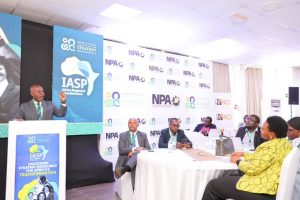
Omara said African countries had lessons to contribute to the global strategy profession, particularly in resilience, innovation and navigating complex operating environments.
He challenged participants to identify what they needed to do differently to improve execution, the capabilities their organisations needed to build and how strategy professionals could collectively contribute to the continent’s transformation.
Coffee value addition highlighted as growth opportunity
The conference also considered how strategic choices could generate greater economic value from existing opportunities.
Dr Guloba, on his part, highlighted the potential of coffee value addition to increase Uganda’s export earnings.
According to a statement by the IASP Uganda Chapter, Guloba said value addition could help raise Uganda’s annual coffee export earnings from US$1.2 billion to US$2.4 billion.
The example illustrated the importance of moving beyond production and examining how processing and other value-adding activities could increase the economic returns from the country’s resources.
The NPA and IASP Uganda Chapter co-organised the conference, bringing together national development planning and professional strategy practice to examine how institutions can improve execution.
IASP, a global association for strategy professionals, seeks to strengthen strategy practice through professional learning, knowledge exchange and certification. Omara said the association had chapters in 15 countries, with Uganda among its active chapters.
The association offers Strategic Planning Professional (SPP) certification for practitioners with at least five years of relevant experience and Strategy Management Professional (SMP) certification for experienced professionals with a record of leading strategy formulation and engaging senior executives.