


For communities living alongside forests, biodiversity is not an abstract environmental concept. It is part of everyday life.
The forest provides water, food, medicinal plants, pollination and other resources that sustain households. When managed responsibly, it can also become a source of income.
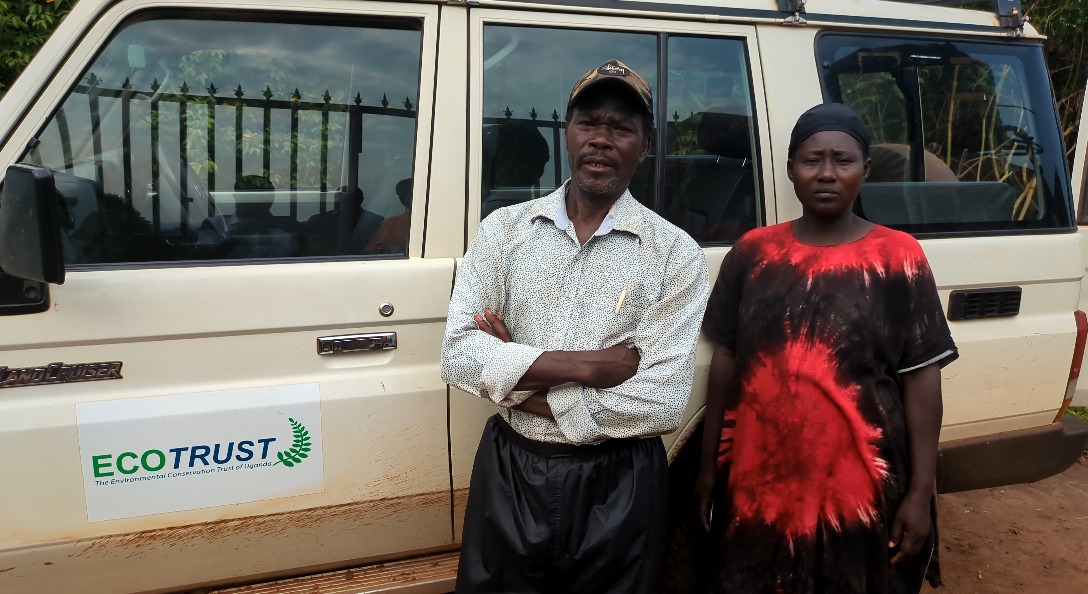
In Alimugonza Communal Land Association in Masindi District, the Environmental Conservation Trust of Uganda (ECOTRUST) is helping residents build that connection between conservation and livelihoods through a biodiversity monitoring programme that puts the community at the centre of protecting its forest.
The approach is based on a simple idea: the more communities understand what lives in their forest, the better equipped they are to protect it — and the more opportunities they have to benefit from keeping it healthy.
According to Jonathan Odongo, Biodiversity Programme Officer at ECOTRUST, the relationship between people and nature is inseparable.
“As human beings, we survive on nature,” Odongo says. “Biodiversity is also an important source of livelihood for communities when they are trained on how to use it sustainably.”
Where bees meet biodiversity
One of the clearest examples in Alimugonza is beekeeping.
The community keeps bees for honey production, but the success of the enterprise depends on something beyond the beehives: the health of the surrounding forest.
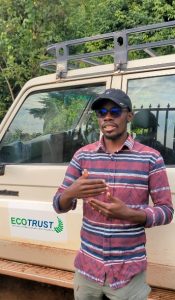
“The bees need flowering trees to collect nectar and pollen so they can produce honey. When the forest is protected, the bees thrive, honey production increases, and the community earns more income,” Odongo explains.
This means that protecting trees is not simply an environmental obligation. It directly supports a household enterprise.
But honey is only one of the benefits emerging from the forest.
The Alimugonza Forest is also home to chimpanzees, baboons and more than 60 species of birds. Its biological richness has created another potential source of income through biodiversity credits, a conservation-financing mechanism that rewards communities for protecting ecosystems.
Rather than generating income by extracting resources from the forest, the model allows communities to benefit from maintaining its biodiversity.
“The community is protecting this forest, so they are able to benefit from biodiversity credits,” Odongo says. “Monitoring helps measure how much biodiversity is being conserved, and that forms the basis for how much income the community receives.”
That makes monitoring crucial.
Listening to the forest
ECOTRUST supports two complementary systems for monitoring biodiversity in Alimugonza.
The first uses technology.
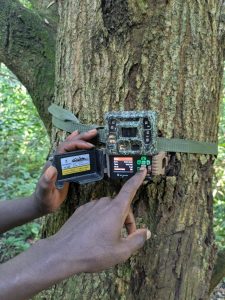
Camera traps have been strategically installed in the forest to photograph wildlife without interfering with their behaviour. Audio-moth devices, meanwhile, record the sounds of birds, insects and other animals, creating a picture of what is happening in the forest even when people are not physically present.
The technology effectively turns the forest into a place that can be observed around the clock.
The information gathered is analysed using a five-pillar biodiversity metric that assesses species diversity alongside the condition of the forest.
But technology is only half of the equation.
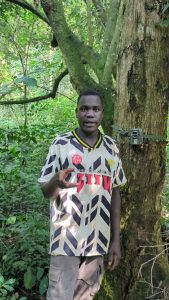
The second system is community-led transect monitoring, in which trained residents walk along designated trails each month, recording birds, mammals, plants and signs of threats such as illegal logging and other forms of forest degradation.
For Odongo, involving residents directly is one of the programme’s most important features.
“It creates ownership. When people understand what they are protecting and why it matters, they become committed to protecting the forest,” he says.
From patrols to knowledge
For the community, the monitoring programme has changed the way residents understand their own forest.
Hannan Ndiroraaho, Chairperson of Alimugonza Communal Land Association, says that before ECOTRUST’s intervention, residents mainly viewed forest protection as stopping people from cutting trees.
“Before ECOTRUST came in, we were only patrolling the forest to stop people from cutting trees,” Ndiroraaho says. “We did not know the different animals, birds, or trees that were inside our forest.”
That has changed.
The community now combines traditional observation with technology, using camera traps and audio-moth devices alongside regular patrols.
Residents follow three established monitoring trails through their 75-acre forest, working in teams to record birds, mammals, plants and threats while also checking the monitoring equipment installed by ECOTRUST.
The result is a growing body of knowledge about the forest.
“We now know exactly which birds, animals and trees are in our forest,” Ndiroraaho says. “We also know which animals come during different seasons.”
Among the animals recorded are chimpanzees, baboons, monkeys, squirrels and, during the dry season, buffaloes.
“Before, we never had this information,” he says.
A community record of threats
The programme has also introduced a community diary in which residents document significant events affecting the forest.
Illegal logging, crop-raiding wildlife and other conservation challenges are recorded, creating a local evidence base that can be shared with authorities and used to inform restoration and other interventions.
The diary gives the community something more than a record of problems. It provides a continuing account of how the forest is changing and the pressures it faces.
This information, together with data from the transects, camera traps and audio-moths, helps build a broader picture of the forest’s health.
That evidence is important for biodiversity credits because the value of conservation depends on demonstrating that biodiversity is actually being maintained.
Conservation as an enterprise
The programme is also changing how residents think about conservation as an economic activity.
Young people and women have increasingly become involved in biodiversity monitoring and forest-based enterprises.
Ndiroraaho says several young people have been trained to install camera traps, monitor biodiversity and support other communities involved in beekeeping.
The community has also received training in developing a business plan for beekeeping.
“ECOTRUST trained us to develop a business plan for beekeeping,” he says. “We learned that beekeeping is a forest-based enterprise because bees depend on healthy forests.”
That lesson has helped shift the community’s understanding of conservation.
“Now we understand that conserving the forest and improving our livelihoods go together,” Ndiroraaho says.
It is a shift from seeing the forest simply as land that must be protected to seeing it as a living asset whose continued health supports the community.
Protecting the forest for the future
For Alimugonza, the biodiversity programme is therefore about more than counting animals or installing cameras.
It is about creating a system in which the community can see, measure and ultimately benefit from the value of keeping its forest intact.
The forest continues to provide water, medicinal plants, honey and other natural resources, while its wildlife and plant diversity are being documented and monitored.
Every month, community members return to the trails to record what has changed, identify threats and check on the species sharing the forest with them.
The cameras continue to watch. The audio-moths continue to listen. The community continues to walk the trails.
Together, the different forms of monitoring are creating something Alimugonza did not have before: a detailed record of its natural wealth.
And in a community where livelihoods depend on that wealth, knowing what the forest holds may be the first step towards ensuring it remains there for generations to come.