


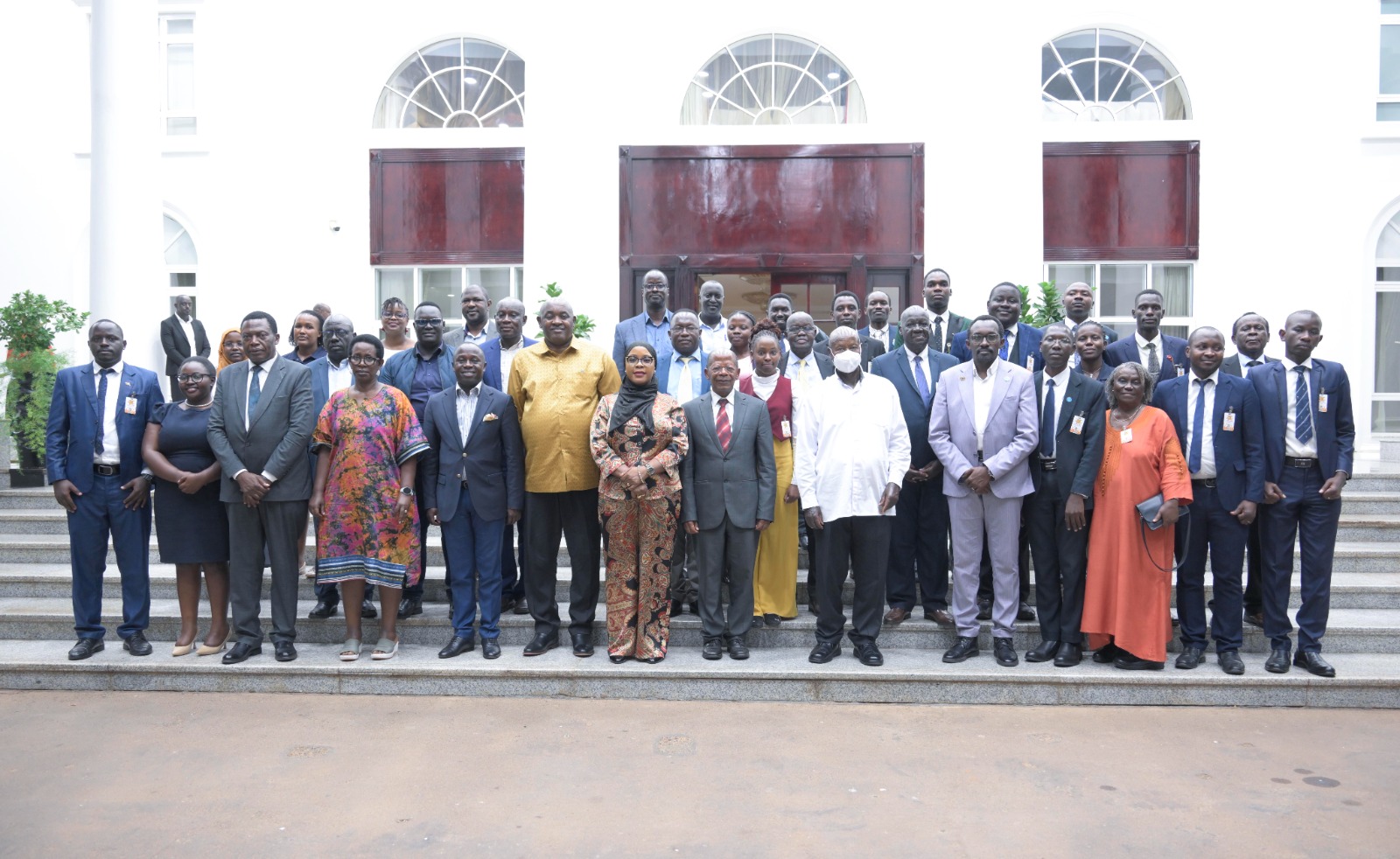
President Yoweri Kaguta Museveni has pledged Shs125 billion to the Uganda Medical Association (UMA) Savings and Credit Cooperative Organisation (SACCO) to help health workers access affordable loans for further training and business development.
The President committed on Friday, October 9, 2026, during a meeting with medical interns and UMA leaders, led by association president Dr Frank Asiimwe, at State House Entebbe.
Museveni said the proposed fund would enable doctors to borrow money to finance professional specialisation and establish businesses, describing the initiative as a one-time intervention rather than a recurring government expenditure.
“Regarding the issue of wanting Shs125 billion where the doctors can borrow and, if possible, employ themselves, that one I will support. This is not recurrent. It is a one-time process,” Museveni said.
He added that health workers seeking to upgrade their qualifications through private institutions could use the fund, while government would continue to identify and finance specialisations required within the public health system.
“Regarding the Shs125 billion, it would cater for training if she or he wants to upgrade; you go there privately, but the government should have its own specialisations it is looking for,” he said.
The proposed funding comes as medical interns continue to raise concerns about allowances, training arrangements and working conditions in government health facilities.
Museveni said the government would continue discussions on the remuneration of interns, adding that the available Shs2 million allowance would be paid this year as consultations continued.
“I am not closing the debate, but let’s weigh these issues out and think about them,” he said.
The President questioned why individuals or institutions that had financed medical students throughout their university education would stop supporting them during the one-year internship period.
“What I am looking at is the issue of employing people who have graduated fully as much as possible. This year we are going to pay a little money, Shs2 million allowances, but we shall continue the discussions about this matter,” he said.
Museveni also criticised the Ministry of Education and Sports for linking graduation from medical school to completion of internship, saying the two processes should be separated.
“I think it was a mistake. I think it was wrong for the Ministry of Education to say that you don’t graduate as a medical doctor until you have done this housemanship course,” he said, adding that the policy would be corrected.
On the broader question of public spending, Museveni said government interventions must be guided by affordability and sustainability.
He cited an example from Ntungamo, saying a hen should only swallow what it can manage, warning that taking more than it can swallow could kill it.
Museveni recalled that during Amanya Mushega’s tenure as Minister of Education, about 11,000 students qualified for university admission, but Makerere University could accommodate only 2,000.
He said he had advocated for private sponsorship to allow other qualified students to pursue university education rather than lose opportunities because of limited public funding.
The President also expressed support for tax exemptions for health workers and proposed a duty-free arrangement for essential items used in delivering health services.
“I also support the idea of tax exemption for the life savers. I don’t see what we lose if we say, let’s leave these ones,” he said.
UMA raises concerns over interns’ welfare
Dr Asiimwe welcomed the proposed Shs125 billion allocation, saying the association’s existing SACCO demonstrated the potential of such financing initiatives.
He said the Shs1 billion extended to the UMA SACCO by Museveni in 2017 had grown to Shs13 billion.
Asiimwe called for stronger public-private partnerships in medical training, deployment, promotion, accountability, monitoring, quality control and data sharing.
He said many Ugandans receive treatment from private health facilities and urged government to recognise doctors working in both public and private institutions.
The association president also said UMA was working with the Ministry of Health to address absenteeism among health workers and asked Museveni to institutionalise two face-to-face meetings with the association annually to review priorities in the health sector.
On medical interns’ welfare, Asiimwe said approximately 300 interns had not received their allowances, despite reporting for duty in August and providing services around the clock.
“Resolving the welfare and training of interns, residents and fellows, you mentioned that they should be given Shs2.5 million allowance. It was reduced to Shs1 million, and as we speak, 300 of these frontline workers didn’t even get that money,” he said.
The government had previously announced a monthly allowance of Shs2.5 million for medical interns in 2021, but later reduced it to Shs1 million, citing financial constraints.
The government also proposed that private sponsors who had financed medical students’ education should continue supporting them during internship, arguing that the period was part of their training. The proposal was rejected by medical interns, some of whom staged strikes that disrupted services at several regional referral hospitals.
Asiimwe further proposed three additional professional ranks—Chief Consultant, Principal Consultant and Senior Consultant—to improve career progression for doctors below the Director General level.
He called for the government to raise staffing levels in referral hospitals to 75 per cent by the next general election and establish a retirement package for health workers comparable to those available to security personnel.
He also asked government to support the establishment of regional medical hubs with capacities of between 50 and 100 beds to provide mentorship and practical training for young doctors.
Government cites progress in health sector
The Minister of Health, Dr Chris Baryomunsi, thanked Museveni for supporting efforts to improve healthcare delivery.
Baryomunsi said government programmes, including universal education, had contributed to increasing the number of universities training doctors from one to 13.
He also cited immunisation programmes and interventions against HIV as contributors to improvements in life expectancy and reductions in infant and maternal mortality.
The Permanent Secretary in the Ministry of Health, Dr Diana Atwiine, said the ministry regularly consulted stakeholders but had to operate within its allocated budget.
“We prioritise within what we are given, and we can’t go beyond what we are given. When the ministry gets the money, we send it to the sites that are training the interns,” she said.
Atwiine added that the ministry was preparing a paper for Cabinet consideration on outstanding issues affecting medical interns.
The meeting ended with medical interns welcoming the President’s commitment to address their concerns and pledging continued cooperation with the Ministry of Health and other stakeholders to improve healthcare delivery.