


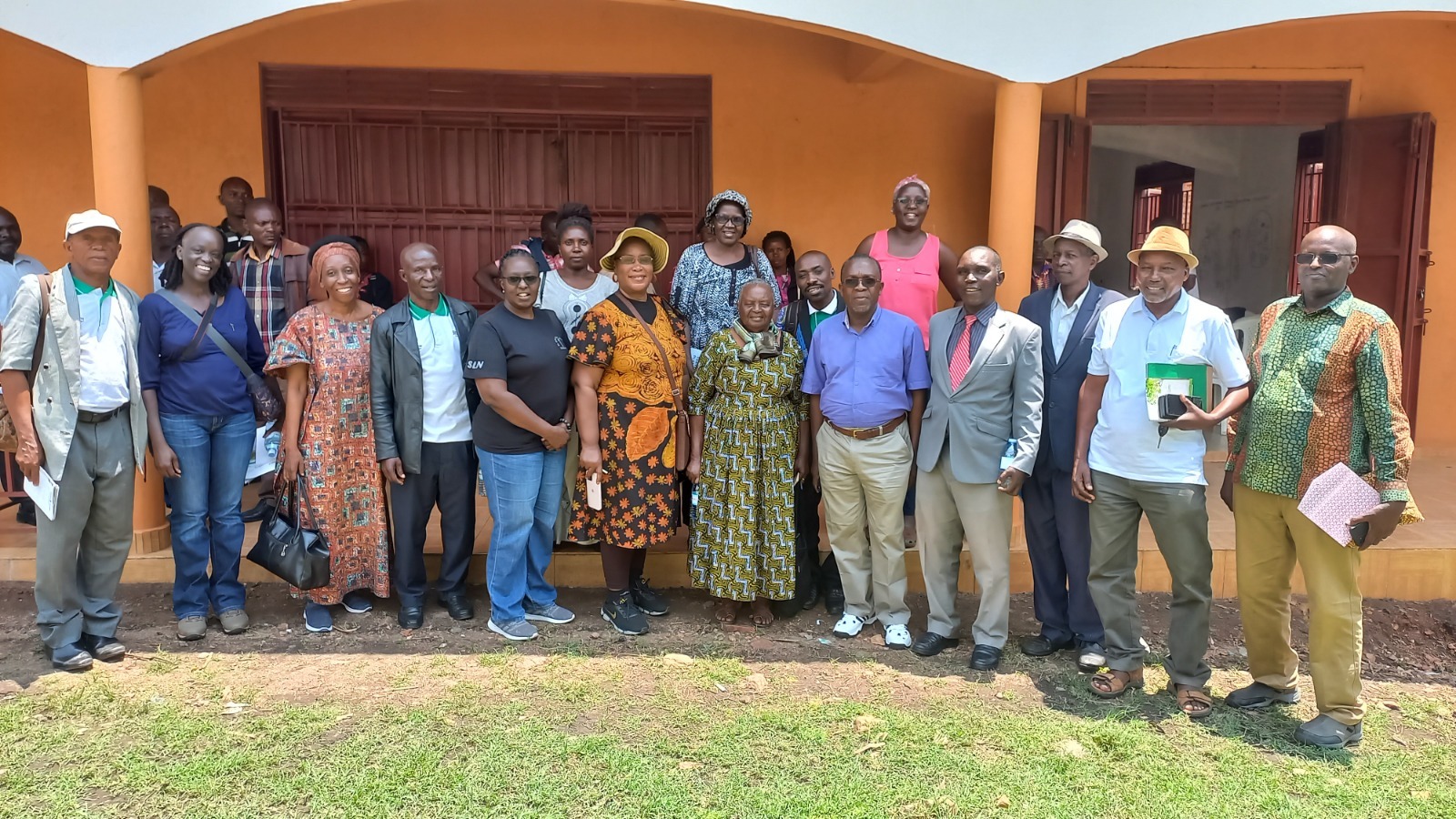
When seven community members came together in 2009 to protect disappearing trees around the Mubuku Central Forest Reserve in western Uganda, their initiative was driven by a shared concern about the loss of forest resources.
More than a decade later, that small effort has evolved into a community-led conservation movement demonstrating how environmental protection can create economic opportunities for rural households.
The Mubuku Integrated Farmers Association (MIFA), which now brings together nearly 13,000 farmers, has built a model that connects forest conservation with financial inclusion, agricultural development, and improved household livelihoods.
Supported by the Environmental Conservation Trust of Uganda (ECOTRUST), the initiative demonstrates that protecting forests becomes more sustainable when communities have economic incentives and the financial resources to meet their everyday needs.
The journey began when MIFA, with support from ECOTRUST and CARE International, partnered with the National Forestry Authority (NFA) to establish a Collaborative Forest Management agreement. Under the arrangement, the community took responsibility for protecting 35 hectares of public forest land.
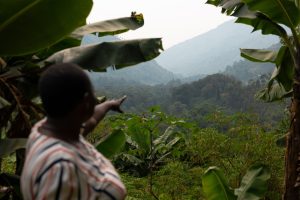
Through ECOTRUST’s Trees for Global Benefit (TGB) programme, farmers began planting indigenous trees rather than relying on activities that contributed to enumerating the harmful activities that are being mitigated; poaching and tree cutting. Although the land remains government-owned, farmers own the trees they plant and receive payments for the carbon benefits generated through the programme.
What began with nine farmers has since expanded, creating opportunities for thousands of households to participate in conservation while earning additional income.
MIFA’s experience has also demonstrated that long-term forest protection requires more than encouraging communities to plant trees. Rural households face everyday financial pressures, including school fees, healthcare expenses and the need to invest in agricultural production. Without alternative sources of income and access to financial services, pressure on natural resources can persist.
These efforts point to a broader understanding of conservation: protecting natural resources requires addressing the economic realities of the people who depend on them.
Recognising this connection between household welfare and environmental protection, ECOTRUST supported MIFA with a UGX 100 million contribution through its Community Carbon Fund. The funding enabled the association to strengthen village savings and credit groups and establish a Coffee Value Addition Project.
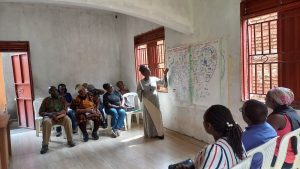
Through the initiative, MIFA’s four branches (Buhuhira, Rukoki, Kabatunda and Kiruli) serve as local support centres where farmers can access financial services closer to their communities. When households need money for school fees, emergencies, or other immediate expenses, they can obtain small loans and repay them after harvesting their coffee
This arrangement helps farmers avoid selling their coffee prematurely to middlemen, often at lower prices, simply because they need immediate cash.
The association also trains farmers to sort and dry coffee cherries properly to improve quality. It then aggregates the coffee, sells it in larger quantities at better prices, and channels the resulting profits back into supporting farmers through its local branches.
For MIFA, these interventions are an important part of ensuring that conservation benefits translate into practical improvements in household livelihoods.
The impact is evident in the experiences of members such as Sevia Nyamunungu, MIFA’s Coffee Value Addition Coordinator. While studying at university in Gulu, Sevia struggled to complete his final examinations because he had an outstanding tuition balance of UGX 300,000.
On the day of his examinations, his mother, one of MIFA’s early tree farmers, received her carbon payment from the association’s office. She immediately sent the money to her son, enabling him to clear his outstanding fees and complete his studies.
The experience shaped Sevia’s understanding of the value of conservation finance. He subsequently became a tree farmer under the TGB programme and dedicated his career to helping other farmers access similar opportunities.
For other members, the benefits extend to employment, investment and improved financial security.
Flavia Tukamushaba, a cashier who joined MIFA in 2012, recalls when the association’s office was managed by just one person. Today, she is part of a six-member team serving more than 30,000 customers.
Through her salary, Flavia has invested in livestock and maize farming. She has also joined the tree-planting programme, establishing 500 trees under the Collaborative Forest Management arrangement and receiving three carbon payments.
“Personally, my life has completely changed,” she says, reflecting on how the initiative has created opportunities for both employees and farmers.
She adds that access to financial support has helped households meet important needs, including paying school fees and improving their homes.
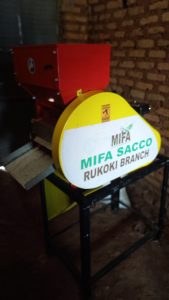
The model is also evolving to address longer-term agricultural and environmental challenges. Using profits generated from coffee sales, MIFA plans to install coffee processing machines at its branches and establish a large storage warehouse in Mubuku. These investments are expected to strengthen farmers’ bargaining power by enabling them to aggregate and sell coffee in larger quantities.
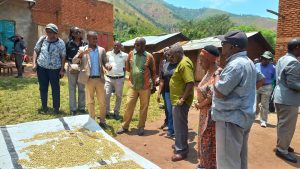
The association is also establishing Farm Field Schools to equip farmers with knowledge and practical skills in improved agricultural practices, soil conservation, and water protection.
In communities where coffee production is less viable, MIFA is introducing beekeeping as an alternative income-generating activity, creating additional opportunities through honey production.
Through its Trees for Global Benefit programme and Community Carbon Fund, ECOTRUST is supporting an approach in which carbon finance, community savings, agricultural value addition and livelihood diversification complement environmental conservation.
MIFA’s experience illustrates the potential of community-led financing to make conservation economically meaningful. By linking the benefits of protecting forests to improved household welfare, the association is helping demonstrate that rural communities do not have to choose between making a living and protecting the environment.
When communities have the right incentives, financial opportunities, and ownership of conservation initiatives, protecting nature can become part of building more secure and sustainable livelihoods.