


Kasese — When Janeta Muhindo, 63, received her first payment for growing trees, she did not spend it on another tree. She bought a pig and feed.
The pig produced eight piglets. Muhindo sold them and used the money to pay school fees for a child in Senior One. Another litter produced nine piglets, she said, helping pay for another child’s education.
Her son later completed Senior Four in First Grade, trained as a nurse, and found work. “I planted trees, and the money I got helped me educate my children,” Muhindo said.
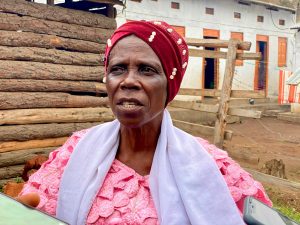
Her story shows how a small environmental payment can expand into a wider household economy.
Today, Muhindo has 205 trees on one hectare in Karambi Sub-County, Bwera Town Council, Kasese District, and notes that income from the programme also helped her build a permanent house.
As a member of the Rwenzori Slopes Trust Tree Farmers Cooperative Society, her journey reflects a simple chain: tree, payment, pig, piglets, school fees, education, and employment.
Africa’s climate-finance problem is not only that there is too little money. It is also that much of the money does not reach the people most exposed to climate risk. The Africa’s Climate Finance Outlook 2026 says the 10 most climate-vulnerable African countries receive only 11% of climate-finance flows, compared with about 46% going to 10 larger, more bankable economies.
In Kasese, cooperatives are trying to solve a version of that problem from the bottom up: by bringing smallholder farmers together so that trees, coffee, livestock, savings and other activities become part of a larger economic unit.
From Trees to Businesses
This economic multiplier effect is driven by carbon finance—a system where landholders receive payments for activities that remove or store carbon dioxide, such as planting and maintaining trees.
In Kasese, the Environmental Conservation Trust (ECOTRUST) supports farmers through its Community Carbon Fund (CCF), a mechanism built into the Trees for Global Benefits (TGB) initiative.
Under the TGB model, smallholder farmers receive 60% of their carbon payments directly into their bank accounts while automatically contributing 10% of their earnings to their local Community Carbon Fund.
Farmers in Kyarumba, a rapidly growing mountainous trading hub and town council, say the real opportunity is what happens after the payment arrives.
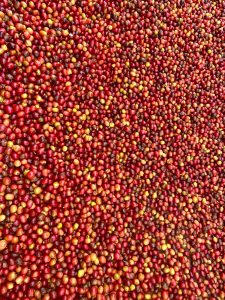
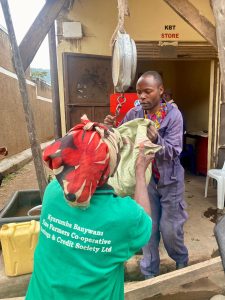
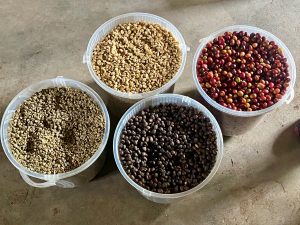
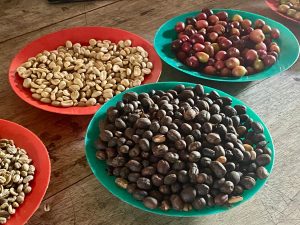
Members of the Kyarumba Banywani Tree Farmers Cooperative Savings and Credit Society have invested in coffee processing, livestock, honey, savings and credit, land and healthcare.
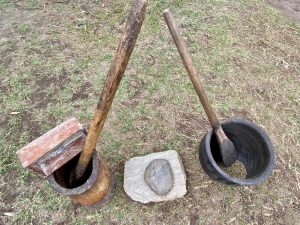
Their focus is value addition — doing more with a product before selling it so that farmers can capture more of its value.
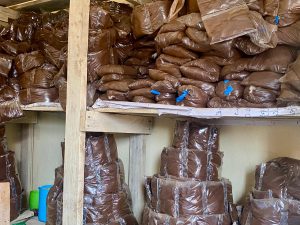
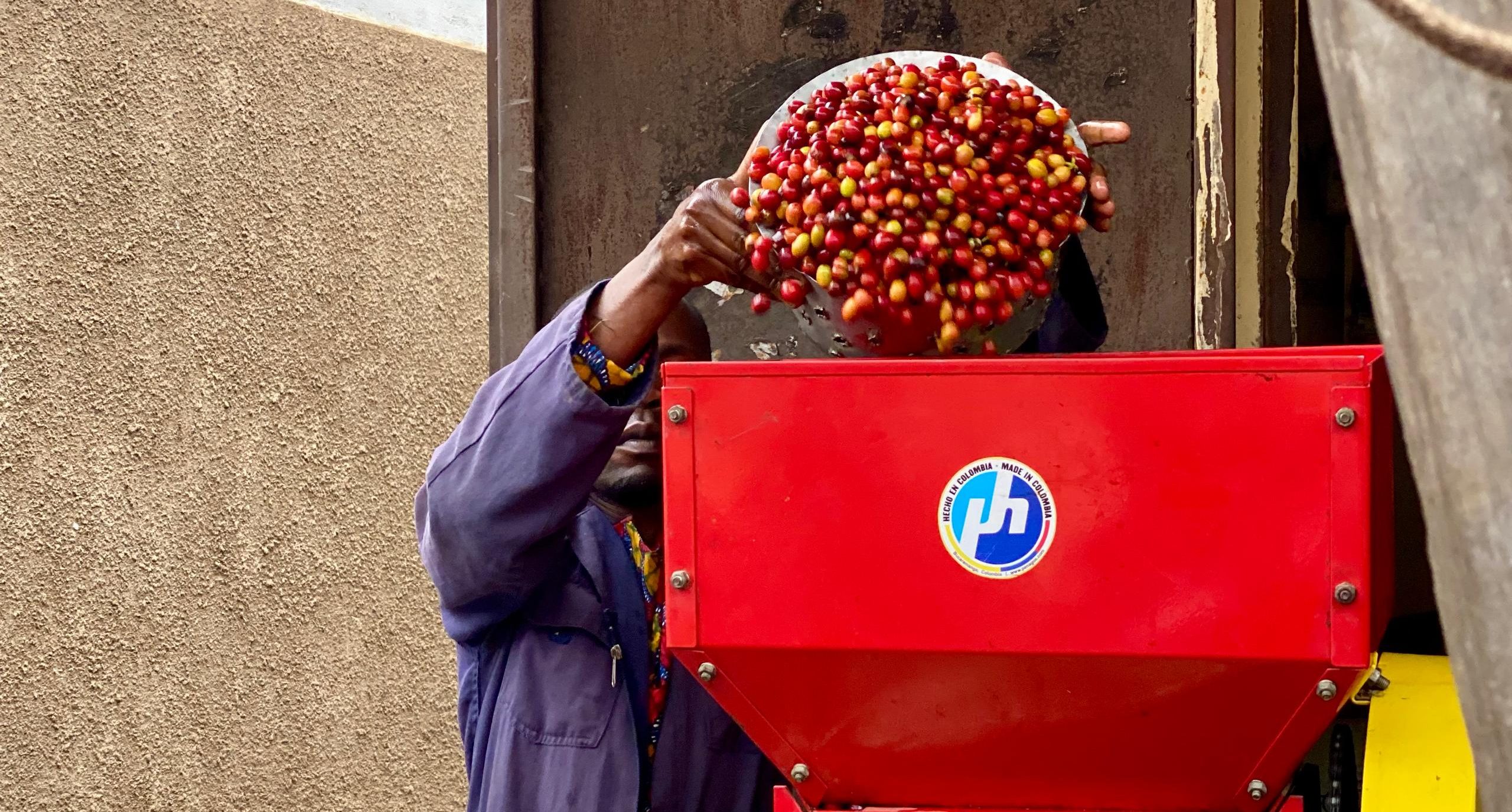
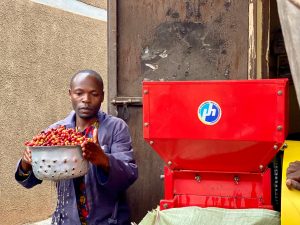
Before the cooperative could afford some basic processing equipment, members roasted coffee in local pots, pounded it in mortars and sieved it by hand.
William Kimera, the cooperative’s project coordinator and secretary for business, says members now want their own machine so they can process and package coffee themselves.
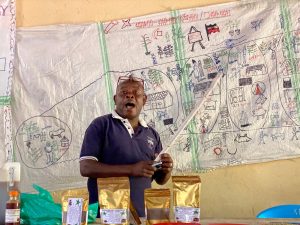
“If we get our own machine, that means we shall be branding for ourselves, and then we get the ready coffee for export,” Kimera said.
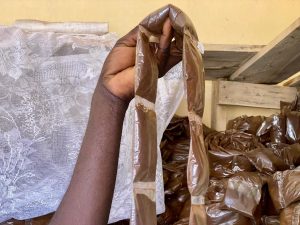
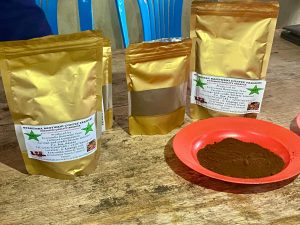
For now, the cooperative works with Bukonzo Joint Cooperative Union to roast, grind and package its coffee. “We are raising funds through local contributions.”
The cooperative’s five-year plan includes coffee processing, honey production, savings and credit, livestock, transport and land ownership.
Five kinds of capital
Pauline Nantongo Kalunda, executive director of ECOTRUST, says carbon finance should not be measured only by the cash paid to individual farmers.
ECOTRUST uses what it calls a five-capitals approach: natural, financial, physical, human and social capital. Natural capital includes trees and other natural resources. Financial capital includes savings, loans and income. Physical capital includes assets and infrastructure. Human capital includes education and skills, while social capital refers to relationships and collective organisation.
“It’s really exciting that we brought the journalists here to see for themselves the things that we are talking about,” Kalunda said.
But carbon finance has limits. “It is a market-based programme, so we can only expand as much as we can find the market,” Kalunda said.
The constraint is therefore not simply whether farmers can plant more trees, but whether there is enough demand for the carbon those trees generate. The Africa’s Climate Finance Outlook 2026 similarly warns that Africa’s climate-finance gap is structural: finance tends to flow toward projects and economies considered more “bankable”, while smaller and more vulnerable communities struggle to attract capital.
ECOTRUST is also exploring biodiversity credits, which seek to reward landholders for maintaining wider biological diversity, including plants and wildlife.
A cooperative becomes a safety net
In Kyarumba, the cooperative has also moved beyond agriculture. It has developed a health-support arrangement for members who struggle to meet medical costs.
At its clinic, Biira Angela, a certified nurse, provides services including family planning, HIV testing, counselling and treatment for conditions such as malaria. More complicated cases are referred elsewhere.
Biira is not a cooperative member. “I am only working for the farmers, serving the people.”
She says working through an organised group makes it easier to understand and respond to community needs.
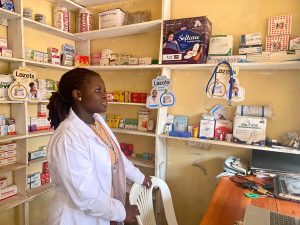
“When there is an organisation, they always follow protocol. You are always in the same line with people about what they need.”
The work has also exposed her to health problems she had not previously seen.
The river can feed a farm — or destroy it
The farmers’ economic experiment is taking place in a landscape exposed to increasingly difficult environmental conditions.
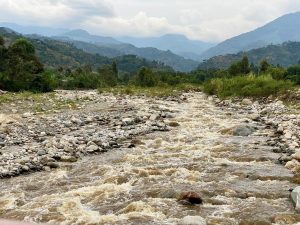
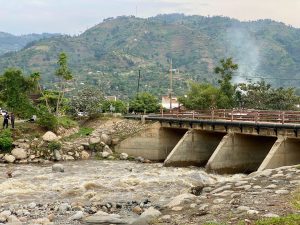
Promise Mumbere, a Kyarumba Town Council representative, described the damage after heavy rain during the field visit. “Today, very early in the morning, we received heavy rain from the mountains and all the banks of this river you’re looking at were swept away.”
River Nyamugasani can rise quickly during heavy rains, according to Erican Bahati, a farmer coordinator in Kyondo A, a sub-county in Bukonzo County.
“We were scared that it may again destroy the crops of people who have gardens along the river. But it is good that this afternoon it has calmed.”
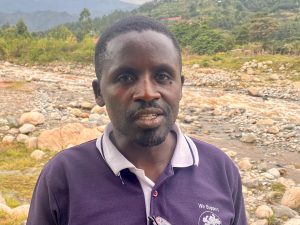
Bahati remembers flooding that swept away a market and businesses along the river years ago. “A whole building and market were swept away.”
Yet farmers depend on the same river during dry periods.
“We use the water from the river for watering crops,” noted Bahati.
Coffee, honey and collective power
At the Rwenzori Slopes Trust Tree Farmers Cooperative Society, farmers are combining tree planting with coffee, beekeeping, livestock and savings.
William Ndungwa, a youth farmer and marketing manager, received 200 tree seedlings. He says 180 trees survived drought and other weather conditions.
He has received four carbon payments of Shs200,000, Shs250,000, Shs230,000 and Shs200,000, which he says helped with education and personal expenses.
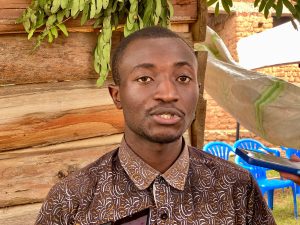
He is now pursuing a diploma in customs clearing and forwarding.
Ndungwa also sees the trees as a future asset and hopes to harvest mature trees for timber before replanting.
“Let’s join hands to raise and reform the environment by participating in this activity of growing trees and herbs, so that we can be able to make our medicines for our own.”
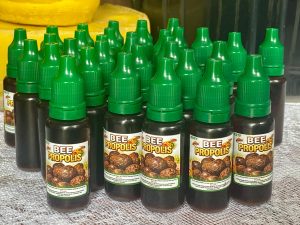
The cooperative also produces and packages honey.
Francis Bahweribugha, its chairperson, says the organisation, formed in 2020, has expanded from tree planting into savings and credit, coffee production and marketing, beekeeping and livestock.
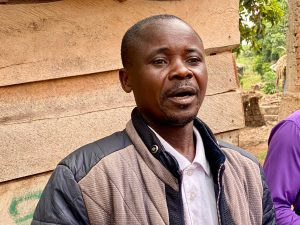
The shift from individual farmers to cooperatives matters because climate finance has a scale problem. The Africa’s Climate Finance Outlook 2026 describes a system in which individual communities and enterprises are often too small to access the institutions, financial instruments and negotiating power needed to unlock larger pools of capital.
In Kasese, aggregation is becoming one answer: farmers who once planted trees separately are pooling their labour, savings, coffee, honey and livestock into organisations large enough to buy land, seek machinery and build businesses.
When coffee profits become land
At Mubuku Integrated Farmers Association (MIFA) Rukoki Branch, coffee profits have already been turned into a physical asset.
Simon Masereka, the branch chairperson, says the group’s 1,634 registered members grow trees and coffee, save money, keep livestock and participate in beekeeping.
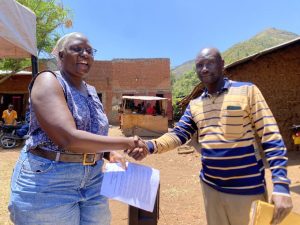
After three seasons of coffee business, Masereka says the branch used profits to buy a 50-by-100-foot plot for Shs5.5m. “We hope to construct our own offices.”
ECOTRUST gave Kigoro Primary School in Rukoki sub-county a goat. It reproduced. “They now have seven goats from that original goat,” says Masereka.
The challenge of making it last
The model remains exposed to the market and the weather.
Masereka says coffee prices can fall from about Shs15,000 per kilogramme to Shs13,000 or Shs14,000 within days. Farmers also face pests, diseases and poor roads.
Joshua Mwebale, who helped develop the Rwenzori Slopes Trust’s five-year “Vision Road Journey,” says the cooperative wants to expand branded coffee and honey, savings and credit, livestock, fish farming, energy-efficient cooking stoves, tourism and eventually a factory.
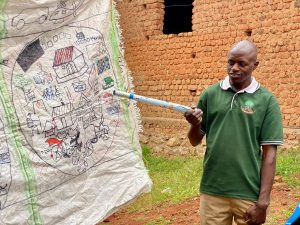
“If you want to reach faster, you go alone. But if we want to reach far, we go together,” Mwebale said. “After trees bring us together, we are so hopeful that we shall reach far even beyond expectations.”
But Mrs Ruth Labong, Senior Community Development Officer, says some farmers still focus too heavily on the next carbon payment.
“Their mindset is that they have to plant these trees, get the money, and then put the money into different developments.”
She says farmers are being encouraged to join savings groups and Village Savings and Loan Associations and invest in income-generating activities.
“We have been creating awareness and sensitising them on how to engage in and integrate livelihood programmes.”
Farming on a changing landscape
Augustine Kooli, Senior Environmental Officer at Kasese District Local Government, describes environmental degradation in the district as “colossal.”
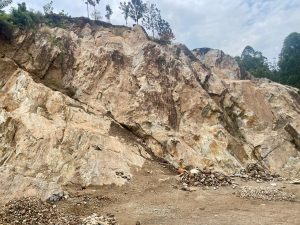
He points to deforestation, soil erosion, mining, agriculture, livestock and damage to rivers and other water bodies.
“Development comes with degradation,” Kooli said, noting that communities need land, roads, buildings and energy even as these activities can damage the environment.
The district is promoting environmental awareness, sustainable resource use and tree growing, including a nursery expected to produce about 800,000 seedlings a year.
Wilson Mwahulhwa, Senior Agricultural Officer, says farmers also need to adapt how they use the land.
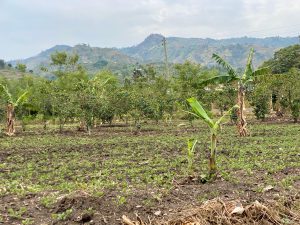
Agroforestry — growing trees alongside crops or livestock — can help protect soil while providing shade, nutrients and fodder. “We try to bring about an agro-ecosystem that has a multiplicity of trees, crops and animals,” Mwahulhwa said.
The district is also promoting irrigation, water harvesting, minimum tillage and better use of manure and fertiliser.
For farmers in the Rwenzori, the experiment is therefore no longer simply about planting trees for carbon. It is about what those trees can help them build around them: pigs, school fees, coffee businesses, savings, land, health services and new sources of income.
But the experiment also exposes the limits of climate finance. The Africa’s Climate Finance Outlook 2026 argues that Africa’s financing problem is not simply a shortage of money; it is also a question of who can attract it, at what scale and on what terms.
In Kasese, farmers are trying to answer that problem from the ground up: organise, aggregate and turn small environmental payments into larger economic assets.
The test now is whether those assets can become strong enough to survive when the carbon payment, coffee price or weather does not go their way.