


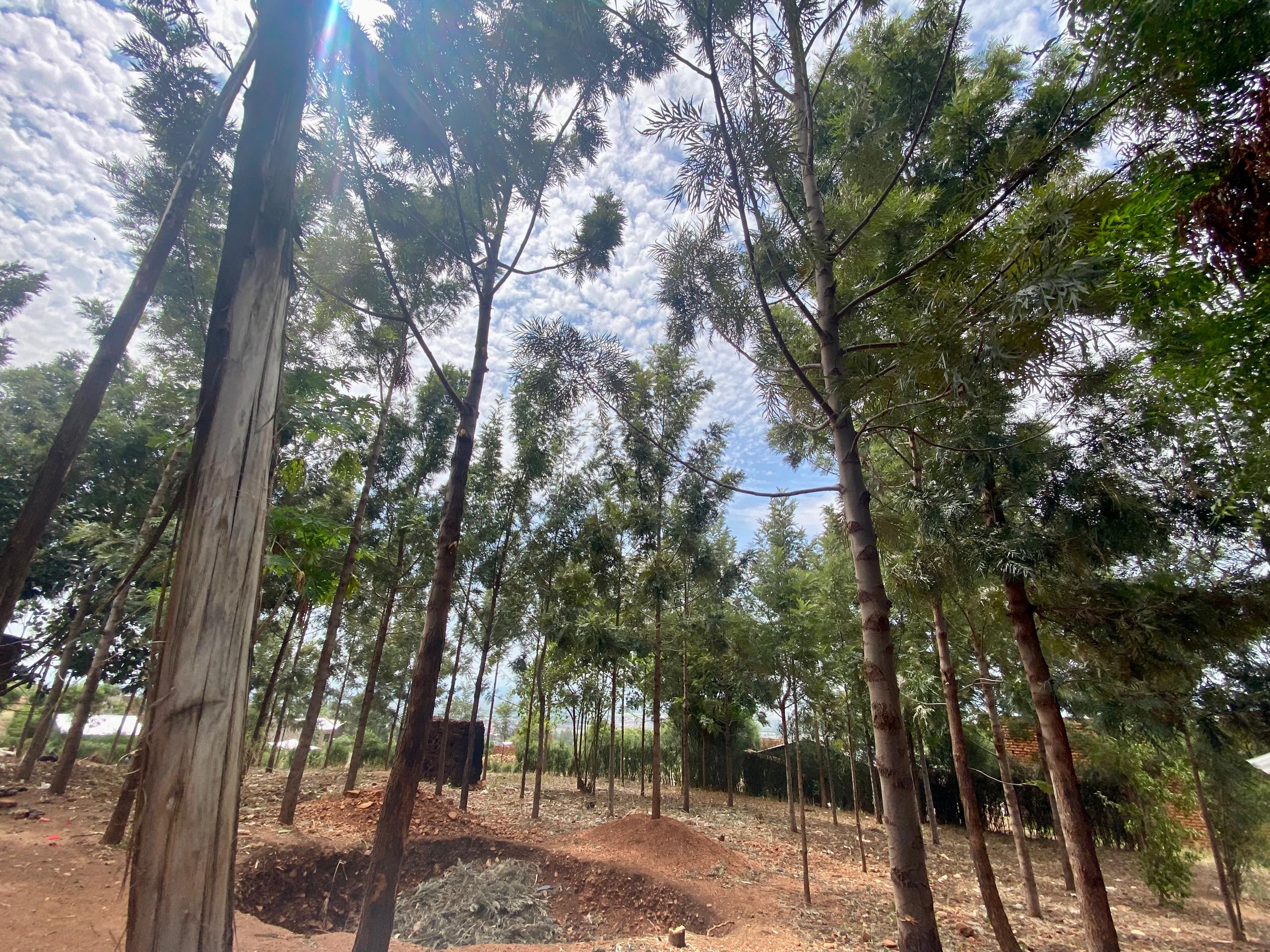
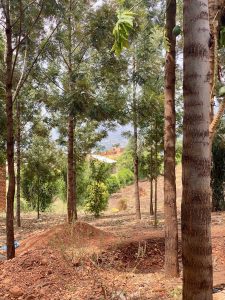
In Kasese district, where farmers face drought, soil erosion, changing rainfall patterns and pressure on the natural environment, conservationists are testing whether putting a financial value on trees can make environmental restoration worthwhile for smallholder farmers.
The approach is being implemented through Trees for Global Benefits (TGB), a carbon-finance programme run by the Environmental Conservation Trust of Uganda (ECOTRUST).
Carbon finance is a system in which activities that reduce or remove greenhouse-gas emissions are measured as carbon reductions or removals and can generate income through the sale of carbon credits.
A carbon credit is a tradable virtual certificate that represents the removal, reduction, or avoidance of one metric ton of carbon dioxide or an equivalent greenhouse gas from the atmosphere.
In simple terms, farmers plant and maintain trees that absorb carbon dioxide from the atmosphere. The carbon stored by the trees can then be calculated, verified and sold as credits, with part of the proceeds going back to participating farmers.
ECOTRUST says 60% of carbon payments go directly to farmers, linking conservation to financial returns.
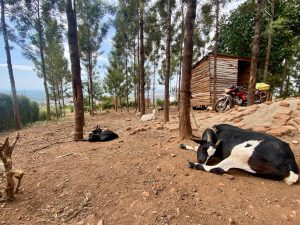
For farmers such as Evelyne Masika, the idea has turned part of her land into a long-term asset.
Before joining the programme, Masika grew cassava, beans and maize on rocky land where drought often affected production.
She now has a tree farm and says she has received two carbon payments—one after planting 100 trees and another after planting 200.
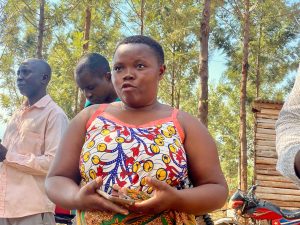
The money, she says, has helped her invest in other activities, pay school fees and build a more secure household economy.
Her family has also developed a 2021–2030 plan that includes more trees, livestock, coffee, land and savings.
“Trees belong to me,” Masika said, explaining that she sees them as an asset that can eventually provide firewood, poles and timber, subject to applicable forestry requirements.
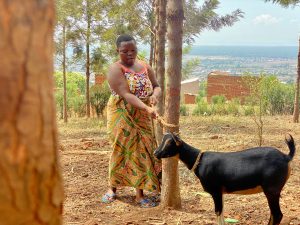
Why trees matter beyond carbon
For Kasese officials, however, the problem is much larger than greenhouse gases.
Augustine Kooli, a Senior Environmental Officer with Kasese District Local Government, describes environmental degradation in the district as extensive.
He points to pressure on rivers and water bodies, including the Lake George and Lake Edward systems, as well as the effects of agriculture, livestock keeping, mining and vegetation loss.
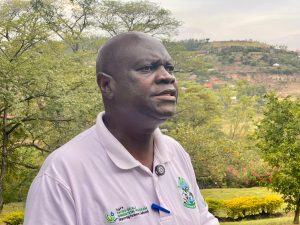
At Kilembe, he says, waste from mining has affected river systems.
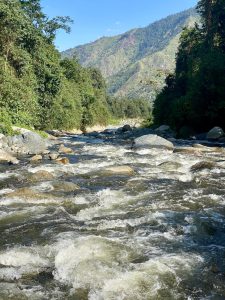
On hillsides, the removal of vegetation leaves soil exposed. When heavy rain falls, water runs rapidly over the land, carrying soil into rivers and increasing erosion and flooding.
“Trees can help slow that process by holding soil with their roots and improving the ability of the landscape to retain water,” he noted.
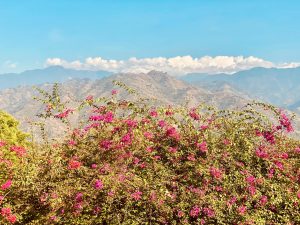
Evapotranspiration, the movement of water from land and vegetation into the atmosphere through evaporation and plant transpiration, is also part of the interaction between vegetation and the local water cycle.
This is important in Kasese because farmers frequently associate increased tree cover with changes in rainfall and reduced flooding.
Rogers Nyenze, an ECOTRUST coordinator, similarly described changes in rainfall timing, noting that the environment had changed since the programme began.
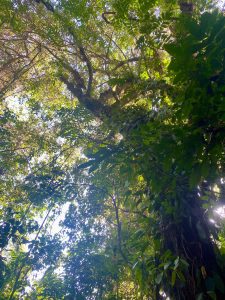
Kooli explains that vegetation contributes to the movement and retention of moisture within the landscape. But the relationship is not as simple as saying that planting trees causes rain to fall.
While the Ministry of Water and Environment documents changing rainfall patterns in Kasese, the Uganda Wildlife Authority’s Rwenzori Mountains National Park management plan highlights that local forests critically regulate regional temperature, humidity, and precipitation.
The evidence therefore points to trees as part of a wider water and ecosystem structure, rather than a single explanation for changing rainfall.
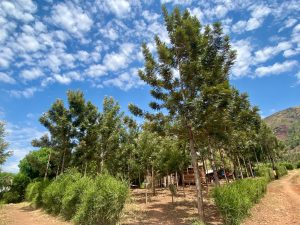
Farmers are not planting trees alone
Wilson Mwahulhwa, a Senior Agricultural Officer, says trees need to be considered as part of farming itself.
He promotes agroforestry, a farming system in which trees are deliberately integrated with crops and livestock.
“Trees such as Albizia and Ficus can help stabilise soil, provide shade, contribute organic matter and nutrients, supply fodder and support other farm activities,” he said.
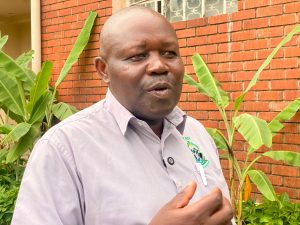
Farmers are also encouraged to use contour ploughing, contour trenches, water harvesting and minimum tillage.
Irrigation is another response.
Through the Micro-Scale Irrigation Project, farmers can access irrigation equipment at subsidised rates, with farmers contributing part of the cost.
The objective is to help farmers manage a climate in which rainfall is increasingly difficult to rely on. “We have to adapt,” noted Mwahulhwa.
The money is entering the wider rural economy
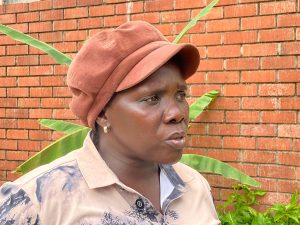
Ruth Labong, a Senior Community Development Officer, says the environmental intervention also needs to be viewed through the household economy.
She encourages farmers to join community groups, savings groups and Savings and Credit Co-operative Organisation (SACCOs) so that income can be saved and borrowed for productive activities.
“The question is not simply whether a farmer receives money, but what the household does with it,” she stated.
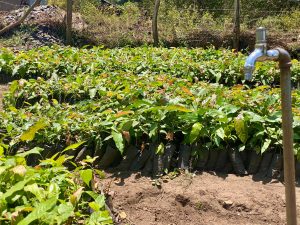
A nursery enterprise operated by Namb Company in Rukoki, Busongora South, provides another piece of the emerging local economy.
The nursery produces tree and coffee seedlings, employs four permanent workers and brings in additional labour depending on demand.
“Farmers come to us for seedlings, and we train them on establishing their own nurseries,” explained manager Walina Zaccheah Mbahimba.

Milton Thembo, another farmer, says he previously grew maize and made bricks. He now has about half a hectare of trees while continuing to grow food crops.
He is also part of Mubuku Integrated Farmers Association (MIFA), a community-centred organisation, where members save and borrow for school fees, medicines, clothing and house construction.
“I have 11 children, all of whom are in school,” Thembo explained.
The model therefore attempts to connect conservation income to household resilience.
Winfred Namwirya moved from being a tree farmer to becoming an ECOTRUST community engagement expert, after serving as a farmer coordinator, volunteer, intern, programme assistant and programme coordinator.
She is not just evidence that the trees changed the landscape; she is evidence that the programme created a pathway from participation into employment and leadership.
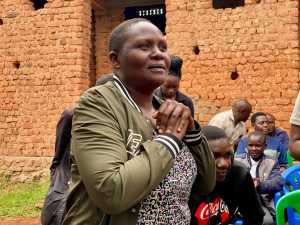
“It has really changed my life as an individual. With the first money I received, I started a nursery bed,” revealed Namwirya.
A farmer organisation is growing around the model
Simon Masereka, the chairperson of MIFA Rukoki, says the branch started in 2017 with 75 carbon farmers. It now has 1,634 registered carbon farmers.
The farmers are organised into 18 clusters that support mobilisation, tree planting, monitoring and coffee activities. Most members also grow coffee.
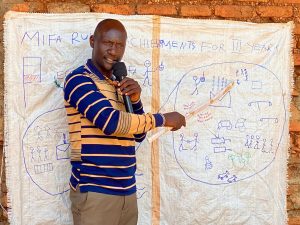
“The growth of tree planting has happened alongside stronger coffee businesses, savings and credit,” Masereka revealed.
The branch has also acquired a 50-by-100-foot plot in a trading centre for Shs5.5 million after three seasons of coffee profits, with plans to eventually develop offices.
The experience suggests that the value of conservation finance may lie partly in what happens around the carbon payment.
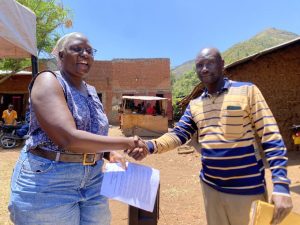
A farmer who receives money can save. A savings group can provide credit. Credit can support livestock, coffee or another enterprise. Those activities can reduce the pressure to cut trees simply to meet an immediate need.
The solution has its own vulnerabilities
The model is not without risks. Farmers report drought, intense sunshine, termites and landslides that can kill trees.
Baluku Johnson, a farmer coordinator working with 65 ECOTRUST beneficiaries, says some farmers may also cut trees when they need land or money for other projects.
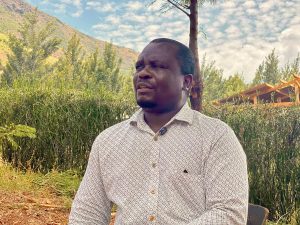
“Land sales and development can create another threat to long-term tree cover,” pointed out Baluku.
Coffee farmers face fluctuating prices, pests and diseases, while poor roads make transportation difficult in parts of the mountainous district.
There is also a knowledge gap. Some farmers initially feared that GPS mapping and tree planting were connected to land acquisition. Others had little understanding of how carbon markets worked.
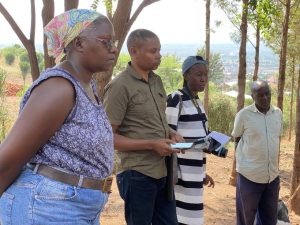
ECOTRUST’s five-day conservation-finance media training in Kasese in September 2026 was partly aimed at explaining carbon markets, nature credits and conservation finance while addressing misinformation around the sector.
The experiment is bigger than Kasese
Uganda’s experience is now connected to a much larger climate-finance system.
The country has secured about US$31 million from the Green Climate Fund after independently verified reductions of about 8 million tonnes of carbon dioxide emissions from reduced deforestation and forest degradation between 2016 and 2017.
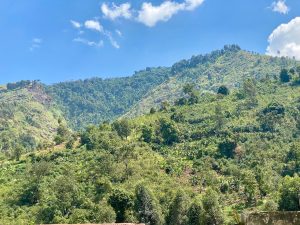
The funding is being channelled through a Results-Based Payments programme that includes restoration, climate-smart agriculture, sustainable charcoal and fuelwood production, and institutional strengthening.
Results-based financing means that financial support is tied to demonstrated results rather than simply to activities undertaken. The principle is similar to the logic being tested at farm level: environmental performance can have a financial value.
Beyond planting trees
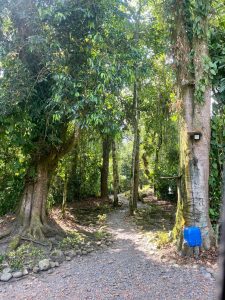
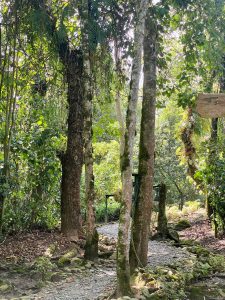
At Rwenzori Gateway, near the entrance to Rwenzori Mountains National Park, ECOTRUST has demonstrated another approach.
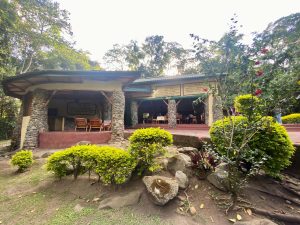
The land was formerly used as a cattle farm, with exotic trees around its paddocks. Rather than simply planting another forest, restoration involved removing agricultural activity and exotic vegetation and allowing native vegetation to regenerate.
The conservation model was then linked to tourism, with a private-sector partner operating accommodation and contributing to conservation through ground rent and payments linked to bed nights.
According to Pauline Nantongo Kalunda, the Executive Director of ECOTRUST, the lesson is that restoration does not always mean planting trees.
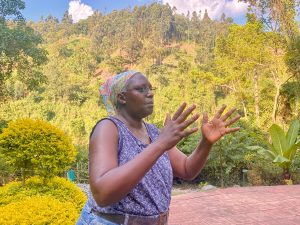
Sometimes it means protecting existing vegetation, allowing natural regeneration, changing farming practices or creating economic activities that make conservation worthwhile.
“So, this is one of those sites that has just completely regenerated. It is not even assisted regeneration because it is simply the removal of exotics and agricultural activities, after which the trees really take over in a natural succession, as happens in the wild,” Pauline explained.
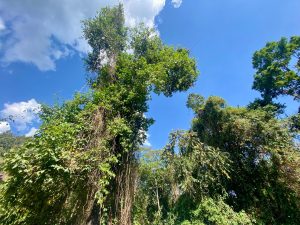
For Kasese, the emerging solution is therefore not a single project; it is a combination of carbon payments, farmer groups, savings and credit, agroforestry, irrigation, soil conservation, nurseries, coffee and other livelihoods.