


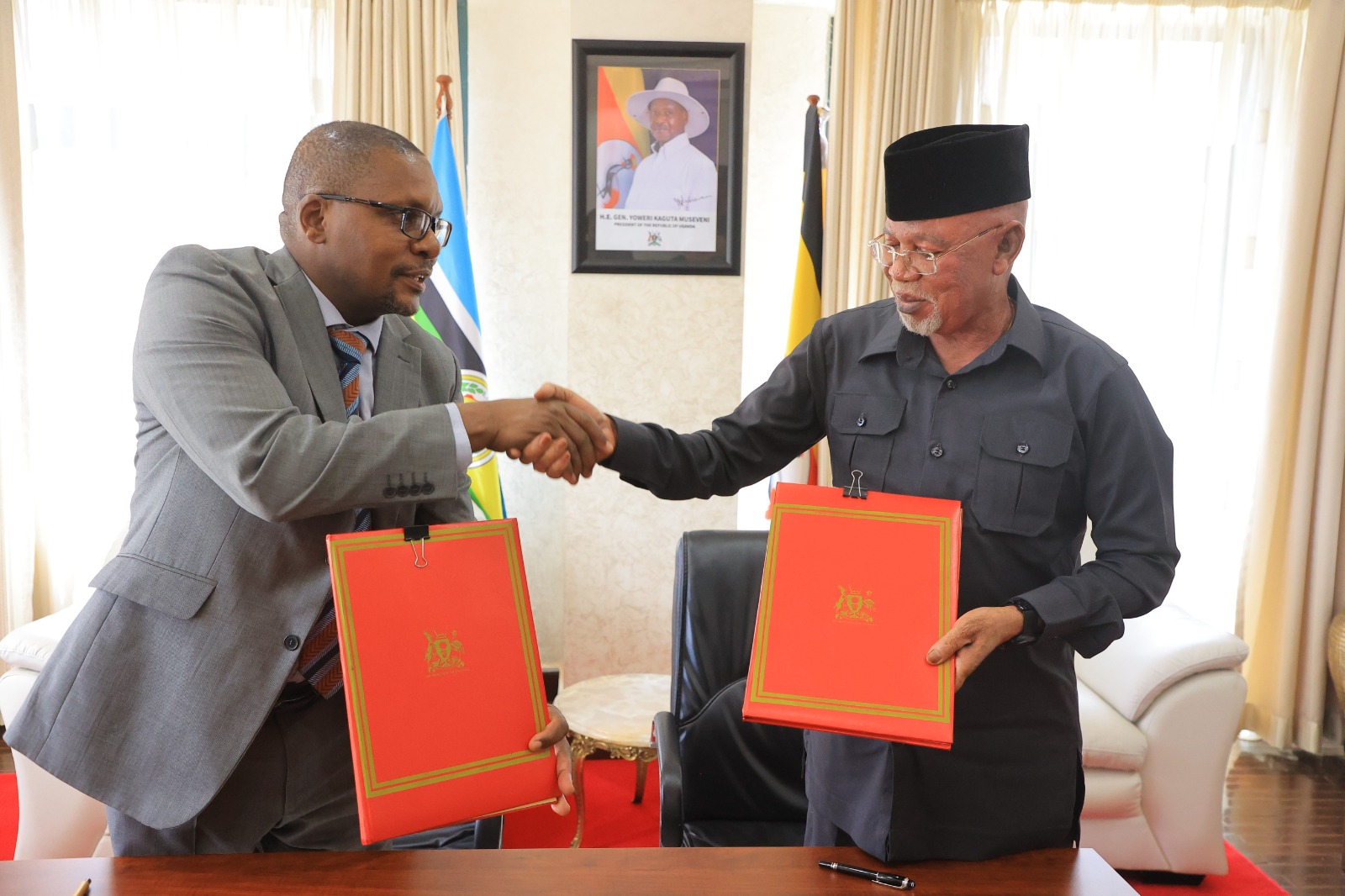
Kampala – The Government of Uganda has signed a Host Country Agreement with the Centre for Agriculture and Biosciences International, granting the global scientific organisation a permanent institutional presence in the country to boost agricultural exports and deepen scientific collaboration.
Gen. Odongo Jeje Abubakhar signed the agreement on behalf of the government, and Morris Akiri on behalf of CABI. The CABI delegation included Regional Director Dr Monica Kansiime, Mrs Christine Alokit, and Dr Nasib Mugwanya of the National Agricultural Research Organisation (NARO).
CABI is a science-based, intergovernmental, not-for-profit organisation established in 1928 under a United Nations treaty framework, with recognition from both the UN and the Commonwealth. Uganda has been a member since 1995, working closely with the Ministry of Agriculture, Animal Industry and Fisheries (MAAIF) and NARO.
The agreement follows Uganda’s ratification of the CABI Instrument in 2025 and completion of all legal processes, including clearance by the Attorney General. It paves the way for the establishment of a CABI Country Office in the Greater Kampala Metropolitan Area, transitioning from a project-based presence to a permanent operational footprint.
Speaking at the signing, Gen. Odongo Jeje highlighted the strategic importance of the partnership in addressing key agricultural challenges, particularly expanding access to international markets such as the European Union.
“This partnership is critical in restoring and expanding Uganda’s access to global markets. We must improve standards, strengthen farmer guidance systems, and enhance value chains to ensure our produce meets international sanitary and phytosanitary requirements,” he said.
He noted that CABI’s mandate aligns closely with Uganda’s development priorities, including increasing agricultural productivity, promoting environmental protection through nature-based solutions, and supporting inclusive value chains targeting women and youth.
CABI’s Executive Director for Africa, Morris Akiri, reaffirmed the organisation’s commitment to Uganda, pointing to ongoing and future initiatives. “We are committed to deepening our collaboration with Uganda through programmes that strengthen regulatory systems, build capacity for plant health, and enhance export readiness,” Akiri said.
He cited an ongoing European Union-funded €8 million programme focused on strengthening plant health systems and establishing a Centre of Excellence at Entebbe International Airport. Akiri also highlighted innovations such as cold chain logistics aimed at helping farmers preserve produce quality for export markets.
The establishment of a permanent CABI office is expected to enhance Uganda’s export competitiveness, improve food security through initiatives such as PlantwisePlus, and provide local institutions with greater access to global scientific expertise.
Both parties expressed optimism that the agreement will unlock new opportunities for investment, research, and technical cooperation, marking a significant step toward sustainable agricultural transformation and economic growth in Uganda.