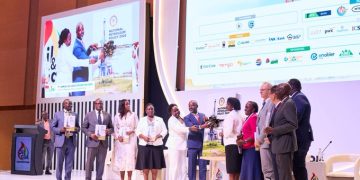



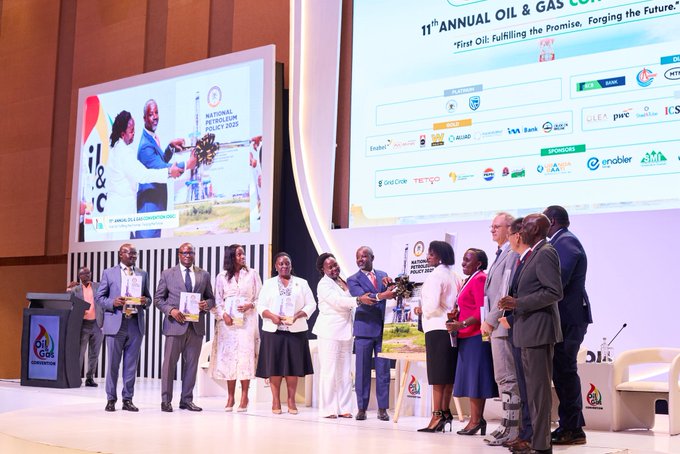
Speke Resort, Munyonyo — Uganda is accelerating its economic diplomacy and industrialisation agenda as momentum builds toward First Oil, with leaders and industry players positioning the oil and gas sector as a catalyst for regional integration, investment, and long-term economic transformation.
Speaking at the 11th Annual Oil & Gas Convention held at Speke Resort Munyonyo, the Minister of State for Trade, Gen. Wilson Mbadi, highlighted the critical role of industrialisation and local value addition in Uganda’s petroleum sector.
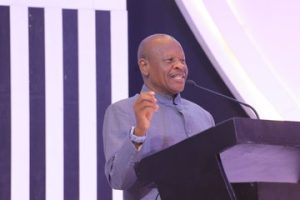
During his remarks, the Minister emphasised forging strategic partnerships and creating industrial linkages to ensure the extractive industry drives broader economic growth and national development. “Together, we can ensure Uganda’s petroleum wealth becomes industrial wealth, productive wealth, and shared national prosperity.”
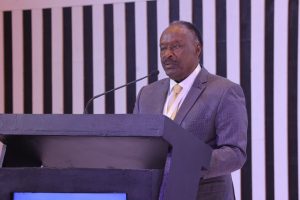
Presidential Advisor on Oil and Gas, H.E Col (Rtd) Fred Mwesigye, underscored the broader impact of the sector: “Uganda’s oil sector is driving more than energy — it is unlocking industrial value chains, regional integration and investment opportunities across East Africa.”
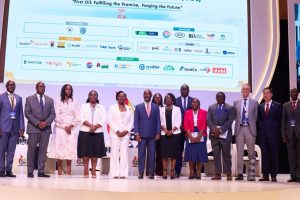
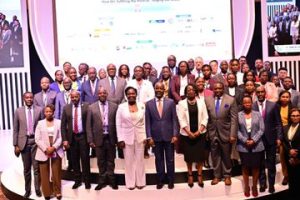
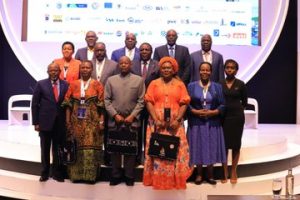
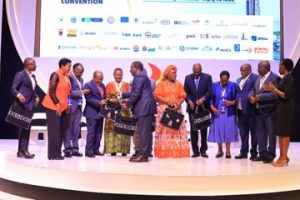
The convention, organised by the Uganda National Oil Company under the theme “Fulfilling the Promise, Forging the Future,” has brought together government officials, industry leaders, development partners, and international oil companies at a critical stage in Uganda’s petroleum journey.
Opening the event, Deputy Speaker of Parliament Thomas Tayebwa described the sector as central to Uganda’s long-term growth ambitions: “Oil production will no doubt unlock Uganda’s full economic potential. The petroleum sector is a strategic catalyst for our tenfold growth ambition—from a $50 billion economy to $500 billion by 2040.”
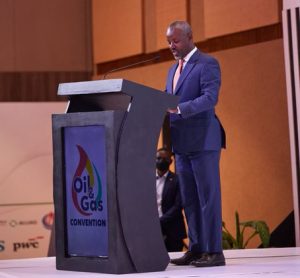
He added:“As we move from the infrastructure development phase to the oil production phase, the real opportunity lies in sustained enterprise growth, technology transfer, and positioning Uganda as a regional energy hub.”
Energy Minister Ruth Nankabirwa Ssentamu said Uganda has transitioned from planning to execution, citing major upstream projects: “Uganda’s oil and gas sector has moved from promise to execution, with the Tilenga and Kingfisher projects and EACOP progressing toward First Oil.”
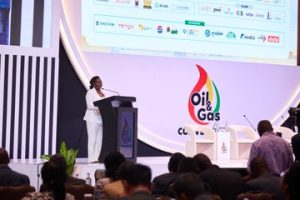
She emphasised infrastructure and ecosystem development: “On infrastructure readiness, we started with roads… now we are building the airport, the roads, and industrial parks to support oil production and ensure a complete industrial ecosystem.”
Nankabirwa added, “The conversation has shifted from potential to delivery. With First Oil just months away, decades of preparation are becoming reality.”
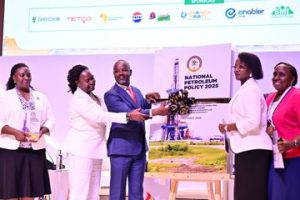
On investment opportunities, she noted: “With the $4B, 60,000bpd refinery nearing FID… Uganda is unlocking opportunities across refining, logistics and operations.”
Uganda’s commercial diplomacy strategy is also being aligned with the sector’s growth. Ambassador Richard Kabonero highlighted the evolving role of Uganda’s foreign missions: “Uganda is repositioning its global missions as engines of commercial diplomacy… to attract investment, promote trade and connect Ugandan enterprises to global value chains.”
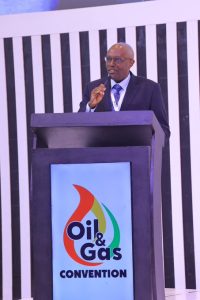
At the technical level, UNOC officials outlined how integrated development will underpin the sector. Chief Commercial Officer Gilbert Kamuntu said, “The refinery will play a critical role in enhancing energy security and enabling downstream industries,” adding that: “Integrated development across upstream, midstream, and downstream segments is key to achieving First Oil.”
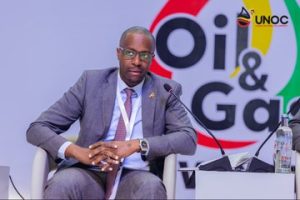
Eng. David Kasule highlighted investor readiness: “The industrial park is ready to host investors, with a range of bankable projects and first mover advantages for businesses.”
UNOC Chief Operating Officer Samantha Barungi introduced a new technical services arm: “This division will deliver services across the full project lifecycle… ensuring projects are executed efficiently and to international standards.”
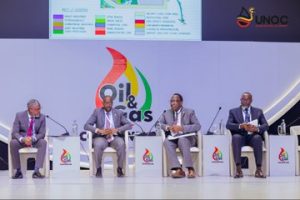
She added that it will: “nurture local talent and work with both public and private sector partners to capture and retain value within Uganda.”
Closing the first day, UNOC Head of Corporate Relations Sarah Banage described the broader economic impact: “Uganda stands at the historic intersection of energy transformation and industrial revolution.”
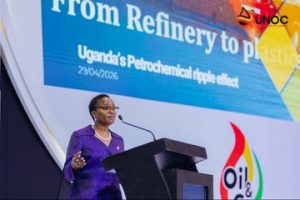
She added: “The 60,000 barrels-per-day refinery… will fundamentally restructure Uganda’s economy, saving an estimated USD 2 billion annually in petroleum imports.”
The convention comes as Uganda edges closer to oil production, with the government reaffirming its commitment to transparency, local content participation, and sustainable resource management.
As stakeholders converge in Kampala, the message from both policymakers and industry leaders is consistent: the foundation has been laid, and the focus has now shifted to execution—ensuring that Uganda’s oil wealth translates into inclusive growth, industrial development, and regional leadership in energy.