



KAMPALA — Uganda is preparing to overhaul its primary school curriculum, with the National Curriculum Development Centre (NCDC) saying the review will seek to reduce the workload on learners, strengthen life skills and deliberately identify and develop children’s talents.
Dr Richard Irumba, the Deputy Director – Research, Consultancy and Library Services at NCDC, said the review is still being developed and consulted on, but the centre expects the revised primary curriculum to be rolled out from the 2026/27 period, beginning at the early childhood level before progressively covering all primary classes.
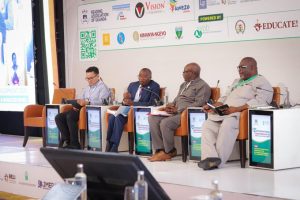
Speaking during the 2nd International Conference on Curriculum Development held at Speke Resort Munyonyo in Kampala, Irumba said NCDC had learned lessons from previous curriculum reforms and was determined to involve parents, teachers, political leaders and other stakeholders before implementation.
“We are still developing and engaging stakeholders. Curriculum is a political tool. A number of these platforms have a political implication.”
He said political ownership would be necessary if the reforms are to succeed. “So everybody must come on board. Our political leaders must buy into the reforms we are introducing.”
Less time in class, more time to discover talent
One of the major proposals is to reduce the amount of time children spend in formal classroom instruction.
Irumba said the current education burden is too heavy for many children, with some reporting to school as early as 5 am or 6 am and leaving at 5 pm, 6 pm or even later.
“We are seeing the challenge that it is too much for our children.” “So one of the principles and what we expect is a curriculum which is lighter compared to what we are having at the moment.”
The proposed changes would also create more space for children to develop talents outside conventional classroom subjects.
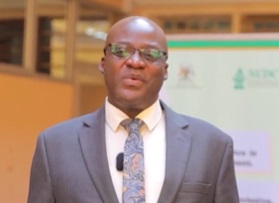
Irumba said children have different abilities that are often overlooked by an education system that measures success primarily through academic performance. “Our children are talented in different ways. And some of these children’s talents many times are not exploited.”
He said the new curriculum would therefore deliberately incorporate talent identification and talent development.
Under the proposal, some primary classes could finish formal lessons by around 2:30 pm, allowing children to spend more time in sports, debate and other activities.
“The children now are going to explore their talents: to play sports, to debate. Because they are wired differently.”
He said the aim is not to assume that every child should excel in the same activity. Instead, schools should create opportunities for children with different abilities, including sports such as football, netball, volleyball and swimming, as well as other forms of talent.
“We are trying to come up with many strategies on how we can enhance the extracurricular activities and the development of the talents of these different learners.”
Some subjects could disappear
The review is also expected to change the subjects taught at primary level.
Irumba confirmed that some subjects will be introduced while others will be dropped in an effort to reduce the overall curriculum load.
“Certainly, we may see some subjects coming on board.” “Others will be left out so that we reduce the load.”
The changes, he said, are partly influenced by Uganda’s commitments under regional agreements. One example is the East African Community’s promotion of Kiswahili as a regional language.
Irumba said Uganda has a responsibility to integrate Kiswahili more strongly into education. “Swahili, for example, has been adopted as a language for the community. And therefore, the countries have a responsibility to integrate Swahili in the education arena.”
Parents remain a weak link
The NCDC official also identified parental involvement as one of the major challenges facing curriculum reform. Irumba said curriculum changes cannot succeed if schools, parents and other stakeholders operate separately.
“The parents need to come on board.” “We are having challenges because all the stakeholders need to be on board.”
He said NCDC was, therefore, engaging stakeholders while the curriculum remains under development rather than waiting until the final product is ready.
The language of thought
Speaking at the same conference, Prof Benson Banda, Director of Zambia’s National Science Centre, argued that African education systems must redesign education so that it works “for Africa, by Africa and with Africa.”

Banda argued that African languages should not be treated as obstacles to modern education but as resources for learning and thought. “Language should become an asset.”
He said African education systems need to examine the relationship between language and cognition rather than assuming that English or another colonial language is automatically the language in which sophisticated thinking occurs.
“I have been asking people in Zambia: In what language do you think?” “Some say English. But thinking is a different thing.” “Thinking is not a language.”
Dr Syafiq Mat Noor of the University of Leeds similarly called for a redistribution of epistemic authority — the power to determine whose knowledge counts — saying communities, teachers, families and learners should have a meaningful role in determining what education should achieve.
Mat Noor similarly argued that Indigenous knowledge cannot be separated from the languages and places in which it developed.
Uganda’s competency-based experiment
Banda praised Uganda’s curriculum reforms, particularly the lower secondary curriculum introduced in 2019, which emphasises generic skills and learner-centred education. “Uganda, you are a pioneer for Africa. I give you credit for that.”
He also cautioned that curriculum reform cannot succeed simply because a new framework has been written.
Banda said his team’s tracking indicated that only 34 per cent of teachers had been trained in portfolio-based assessment, which he argued creates room for misinterpretation of competency-based education.
He also questioned an assessment system he described as having an 80-to-20 assessment-to-course ratio. “You cannot demonstrate everything a learner can do in five years within three hours.”