



KAMPALA — Ugandan passport holders will be able to apply for South Africa’s Electronic Travel Authorisation (eTA) before travelling to the country, following a decision by the South African Government to include Uganda in its electronic travel authorisation system.
The decision was communicated to Uganda’s Ministry of Foreign Affairs by the South African High Commission in Kampala in a letter dated September 29, 2026.
Under the new arrangement, holders of valid Ugandan passports may apply for an eTA before travelling to South Africa. Approval of the authorisation, together with compliance with other immigration and entry requirements, may allow travellers to enter South Africa for ordinary visits, including tourism, holidays and short-term business activities.
The South African Department of Home Affairs has been developing the eTA system as part of a wider move to digitalise immigration services. The system allows travellers to apply online and receive a digital authorisation linked to their passport details.
Ugandans can apply through the South African Department of Home Affairs’ eTA platform.
The move marks a shift from the visa process that Ugandan business travellers and tourists have previously faced and addresses a concern that Uganda’s private sector has raised with the two governments for several years.
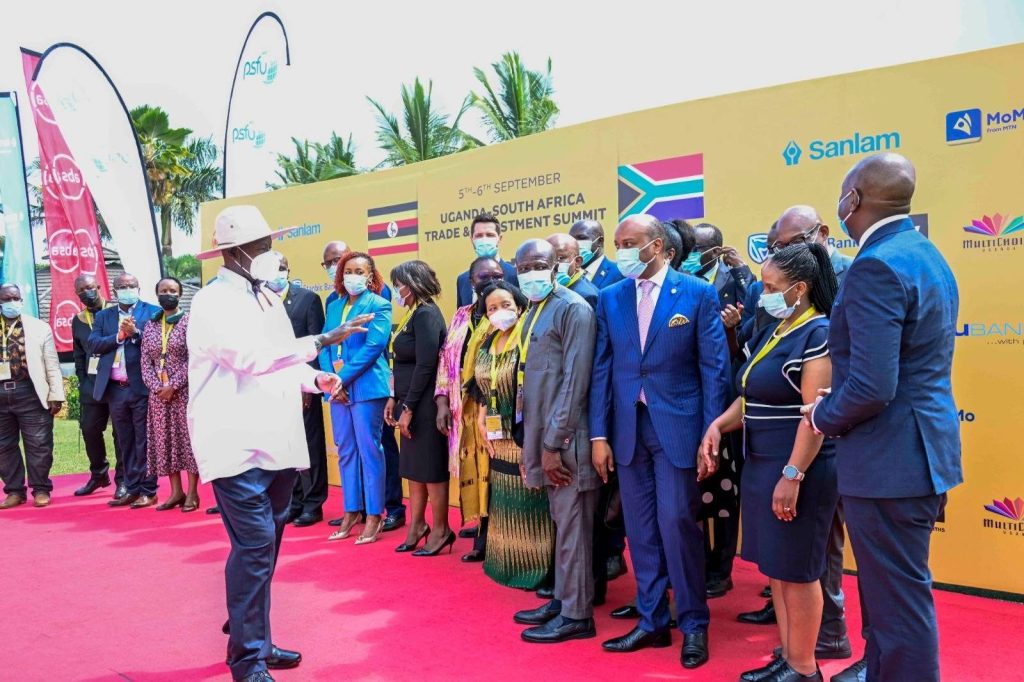
In a 2023 Position Paper presented to President Yoweri Kaguta Museveni and South African President Cyril Ramaphosa, the Private Sector Foundation Uganda (PSFU) identified visa requirements as a major barrier to trade and investment between the two countries.
The paper, presented by then PSFU Board Chairman Humphrey Nzeyi at the Uganda-South Africa Business Summit in February 2023, called for visa restrictions between the two countries to be reduced or removed.
PSFU proposed a visa waiver for the business communities of both countries. Alternatively, it proposed that Ugandans be allowed to travel to and remain in South Africa for at least 90 days without a visa, or be issued multiple-entry visas valid for up to five years.
The private sector argued that the cost and time involved in obtaining South African visas made it difficult for Ugandan businesses to engage their South African counterparts.
At the time, PSFU said ordinary Ugandan travellers to South Africa were required to pay at least US$130 in visa-related fees, while South African visitors to Uganda could apply online for a visa costing US$50 and valid for 90 days.
PSFU argued that easing movement between the two countries would support trade, tourism and investment, particularly in areas such as information technology, health services, agro-processing, biotechnology, chemicals, tourism and crafts.
The foundation also linked easier movement of people to the implementation of the African Continental Free Trade Area (AfCFTA), arguing that restrictions on the movement of people could undermine efforts to increase intra-African trade.
Uganda and South Africa have significant commercial ties. The PSFU paper cited more than 70 South African companies operating in Uganda, with investments valued at about US$3.1 billion by 2019.
It also identified coffee, pharmaceuticals, tobacco, tea, spices, fish products, flowers and aircraft parts among Uganda’s exports to South Africa. South Africa’s exports to Uganda included vehicles, machinery, chemicals, electronics, petroleum products, plastics and household goods.
The paper projected that improved movement between the two countries could contribute to increased trade, tourism and joint investment.
The development was welcomed by Uganda’s Foreign Minister, Adonia Ayebare, who thanked the South African Government for simplifying visa issuance for Ugandans.
“I look forward to leading a Ugandan delegation to South Africa for the Joint Permanent Commission meeting later this month,” Ayebare said.
The South African High Commission said enquiries about the eTA can be directed to the Department of Home Affairs, while Ugandan travellers can also contact the High Commission in Kampala for assistance.
Uganda and South Africa maintain bilateral cooperation in areas including trade, investment, tourism, health, education, agriculture, ICT and transport. The two countries have also established mechanisms for regular consultations through their Joint Commission of Cooperation.