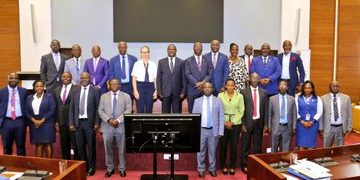



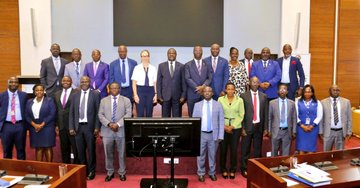
The Ministry of Finance, Planning and Economic Development has inaugurated the Operations Steering Committee (OSC) for the Public Investment Management PLUS (PIMPLUS) programme, marking a significant step in strengthening oversight and efficiency in government spending.
The committee was officially inducted by the Permanent Secretary and Secretary to the Treasury, represented at the event by Deputy Secretary to the Treasury Patrick Ocailap.
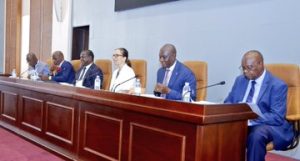
The OSC will serve as the top governance and oversight body for the PIMPLUS programme, offering strategic direction and policy guidance through its technical arm, the Operations Technical Committee (OTC). Officials say the structure is designed to enhance coordination and ensure effective implementation of public investment projects.
The PIMPLUS initiative is aligned with Uganda’s Public Finance Management Strategy 2025–2030, which focuses on promoting growth and improving service delivery. It also supports the government’s broader Tenfold Growth ambition by emphasising prudent resource allocation, transparency, and accountability.
Speaking at the launch, Ocailap called on committee members to prioritise measurable outcomes and ensure value for money in all public investments under the programme.
The Deputy Secretary also reaffirmed the government’s commitment to mobilising resources for critical physical infrastructure plans, particularly those linked to national clean-up efforts under the growth strategy.
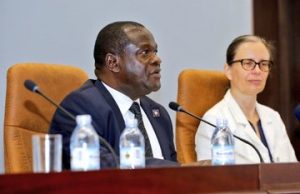
At the same event, Verena Fritz, Lead Governance Specialist at the World Bank, noted that Uganda’s reforms in public investment management could set a benchmark for other countries in the region.
She emphasised the need for coordinated action across ministries and programmes to achieve meaningful results.
Meanwhile, the Director of Budget at the ministry, Hannington Ashaba, said the PIMPLUS programme is now well-positioned for implementation. He stressed that success will depend on disciplined execution, timely decision-making, and sustained commitment across government institutions.
Ashaba also urged the steering committee to actively support ministries, departments, and agencies to meet their performance targets, ensuring that investments translate into tangible outcomes for national development.