



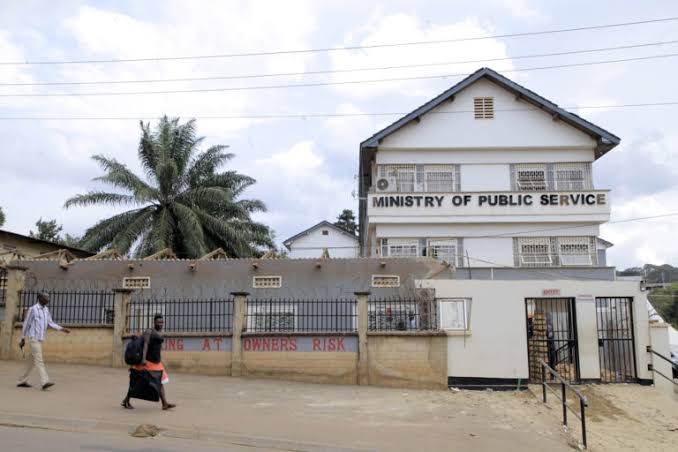
The Government of Uganda is preparing to transition public servants to a new contributory pension scheme under which employees will contribute 5% of their salaries while the Government contributes 10%.
The new Public Service Pension Fund is expected to take effect on July 1, 2027, as part of reforms aimed at moving the public service from the existing non-contributory pension system to a funded scheme.
The Ministry of Public Service has said the new arrangement will operate as a hybrid defined-benefit scheme, retaining the existing formula used to calculate retirement benefits while introducing regular contributions and investment of members’ funds.
The scheme will cover public servants in traditional government service, local governments, the teaching service, Uganda Prisons and government agencies that are not already covered by another pension scheme.
Public servants below the age of 55 will be eligible to join the new scheme, while those aged 55 and above will have the option of joining or remaining under the existing arrangements.
The Ministry has previously said the reform is intended to address funding challenges associated with the current non-contributory system, which has contributed to pension and gratuity arrears.
Under the new arrangement, contributions will be accumulated during a member’s working years and invested in accordance with the law to help finance retirement benefits. The Ministry began nationwide sensitisation of public-service stakeholders on the contributory fund in 2025, with Permanent Secretary Catherine Bitarakwate Musingwiire confirming the 5% employee and 10% Government contribution rates.
The Ministry has also clarified that existing pension rights will be protected. Public servants already in service before July 1, 2027 will have their past service accounted for, with Government remaining responsible for obligations arising from service rendered before the new scheme takes effect.
The reform will also provide contribution-based benefits for members who leave public service before qualifying for a pension. Those who have made contributions but do not qualify for a pension, including employees who resign, will be able to access qualifying contributions in accordance with the scheme’s provisions.
The statutory retirement age of 60 will remain unchanged, as will the existing modes of retirement and the formula used to calculate pension benefits.
Qualifying retirees will continue to receive pension payments for life. Where a pensioner dies after retirement, eligible beneficiaries will continue receiving benefits in accordance with the law.
The Ministry of Public Service is currently overseeing implementation of the reform through the Public Service Pension Fund. Its resource centre lists the Public Service Pension Fund Act 2025 among the laws and policy documents guiding the reform.
Responsible officers have been asked to prepare institutions for the transition by updating and transferring employee records, cleaning up personnel data and providing for the required employee and Government contributions in institutional budgets.
The Ministry has also called for continued sensitisation of public servants and encouraged institutions to provide staff with opportunities to attend information sessions.
The reform is intended to establish a funded and contributory public-service pension system and improve the financing and administration of retirement benefits.