


KYANKWANZI — President Yoweri Kaguta Museveni has urged Ugandans who were recently repatriated from South Africa to abandon the belief that success can only be achieved abroad, encouraging them to take advantage of economic opportunities within Uganda.
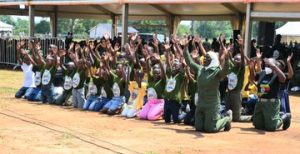
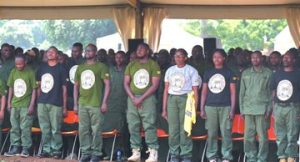
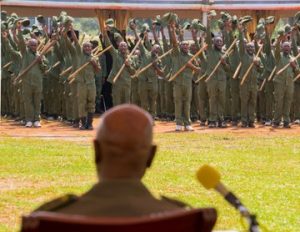
The President made the remarks on Friday while presiding over the pass-out ceremony of 1,030 Ugandan returnees who completed a 15-day rehabilitation and ideological orientation programme at the National Leadership Institute (NALI) in Kyankwanzi.
The returnees were evacuated from South Africa following violent xenophobic attacks targeting foreign African nationals. The programme, coordinated by the National Secretariat for Patriotism Corps (NSPC), focused on counselling, rehabilitation, patriotism, leadership and wealth creation.
“I welcome you from danger, and I thank God that you have returned safely,” President Museveni told the returnees. “I also condole with the families who lost their loved ones during the attacks.”
The President questioned why Ugandans continue to leave a country with abundant natural resources in search of uncertain opportunities abroad.
Using the Luganda proverb “Nantabuuliririrwa yasaabala gwa bbumba,” President Museveni argued that Uganda has significant potential for wealth creation through agriculture, manufacturing, services, artisan work and the digital economy.
“Why would Ugandans leave such a beautiful country to go roaming around looking for jobs elsewhere?” he asked.
He said Uganda’s economic transformation depends on moving citizens from subsistence activities into commercial production and value addition.
To demonstrate the possibilities available locally, President Museveni highlighted examples of Ugandans who have built successful enterprises from small beginnings.
He cited Richard Nyakana of Rwengaju Village in Fort Portal, who he said earns more than Shs200 million annually from intensive farming on about 1.2 acres through dairy farming and poultry production, while employing between 12 and 15 workers.
“If all Uganda’s 40 million acres of arable land were utilised as efficiently as Nyakana’s farm, the country could create about 150 million jobs,” President Museveni said.
He also pointed to Johnson Basangwa of Kamuli District, whose poultry enterprise keeps about 110,000 birds and reportedly generates nearly Shs20 million daily from egg sales.
Another example was Vicky Apio from Lira District, whom the President said transformed Shs907,000 received under the Parish Development Model (PDM) into a farming enterprise after renting land, producing maize and expanding into livestock.
“I feel pity for many of you because some people deceive you with promises of jobs abroad, yet they are misleading you,” President Museveni said.
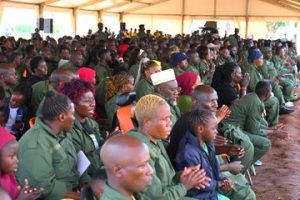
He encouraged the returnees to combine government livelihood initiatives such as the Parish Development Model and Emyooga with their own skills and entrepreneurial efforts.
Government pledges financial support.
President Museveni announced Shs2 billion in support for the returnees to help them restart their lives and businesses.
He also pledged Shs2 million to each household head to assist with transportation back to their home districts.
The President asked the returnees to document businesses and property they lost during the violence in South Africa to enable government assessment of possible interventions.
He said Uganda would continue engaging South African authorities over the attacks, revealing that he had discussed the matter with South African President Cyril Ramaphosa. “I told President Ramaphosa that what is happening is dangerous for Africa,” President Museveni said.
He said President Ramaphosa had indicated that those involved in xenophobic attacks were enemies of South Africa’s ruling African National Congress (ANC).
President Museveni cautioned Ugandans against retaliating against South Africans living or investing in Uganda, saying such actions could create wider tensions on the continent.
Government details evacuation and support efforts.
Prime Minister Robinah Nabbanja described the evacuation as one of the largest humanitarian interventions involving Ugandans abroad.
She said Uganda Airlines repatriated all 1,030 citizens free of charge. “The government remains committed to protecting Ugandans wherever they may be,” Nabbanja said.
The Prime Minister also disclosed that another 525 Ugandans stranded in Cambodia had requested government assistance to return home.
The Acting Minister of State for Foreign Affairs, Hajji Haruna Kyeyune Kasolo, said Uganda had opened diplomatic discussions with South Africa to establish the extent of losses suffered by Ugandan businesses.
He confirmed that three Ugandans died during the attacks. “I appreciate Your Excellency for the condolence contribution of Shs10 million to each of the bereaved families,” Kasolo said.
He added that Uganda’s High Commission in Pretoria had registered more than 600 Ugandans still living in South Africa.
The minister called for stronger regulation of labour externalisation agencies, saying some Ugandans who faced exploitation abroad had travelled through recruitment companies.
The rehabilitation programme provided public services.
NSPC Commissioner Hellen Seku said the programme was designed not only as ideological training but also as a process to restore confidence and hope among citizens who experienced trauma.
She said NALI received 738 adults and 292 children. Four adults and six children required specialised medical attention and were referred to Mulago National Referral Hospital.
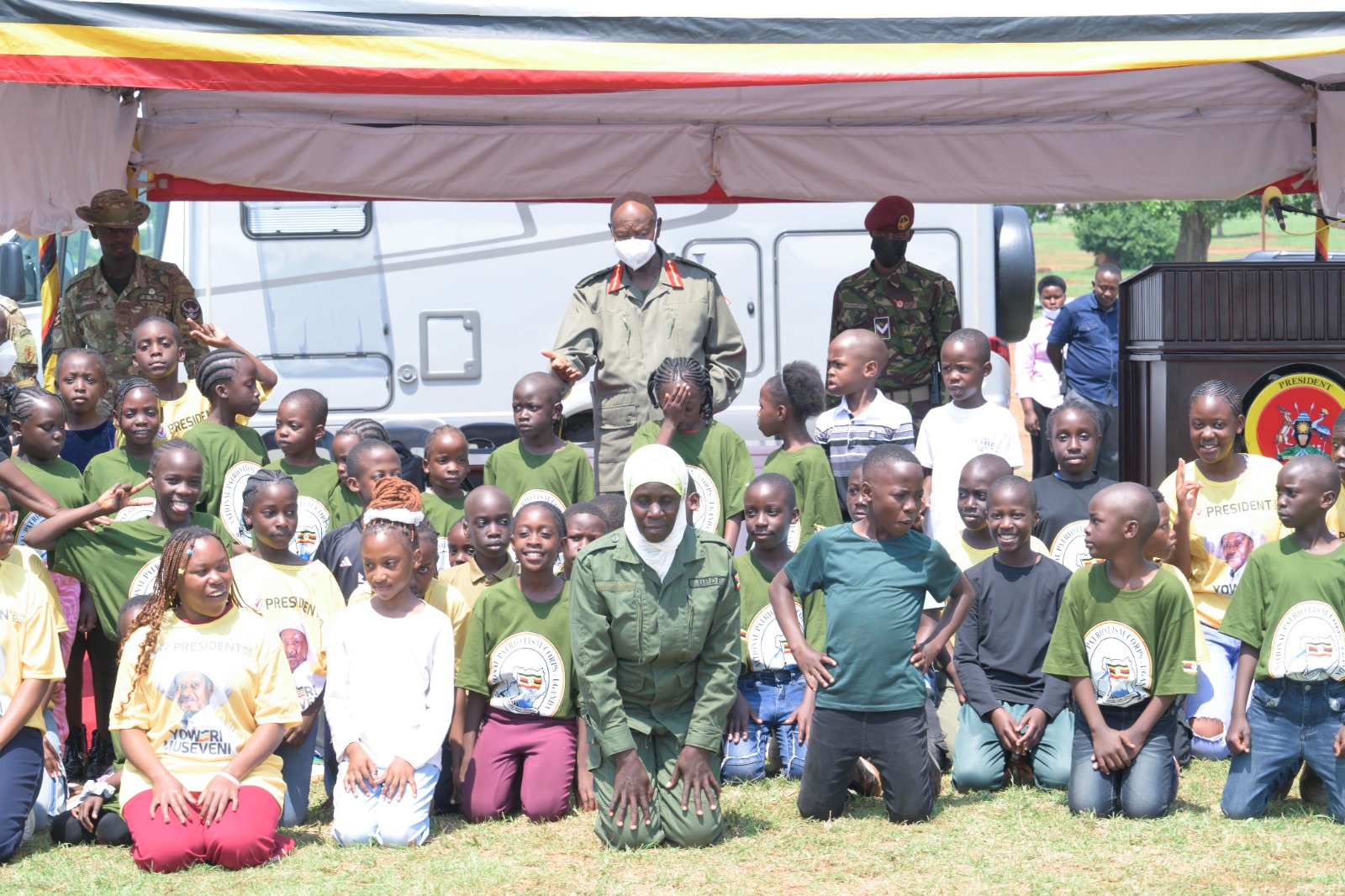
Because of the large number of children, organisers established a temporary nursery school at the institute to allow parents to participate in the programme.
“These people arrived traumatised. The peaceful environment at NALI allowed them to reflect, heal, and begin planning productive lives back home,” Seku said.
Government agencies also provided services during the programme, including registration for national identification documents, business services and health support.
Through collaboration with the National Identification and Registration Authority (NIRA), 650 adults received National Identity Cards while 239 children obtained National Identification Numbers.
Participants also received services from the Ministry of Health, Uganda Registration Services Bureau and other government institutions.
Returnees commit to rebuilding.
Speaking on behalf of the returnees, Felix Mugabi thanked the government for rescuing them from South Africa and supporting their reintegration.
He said many had previously believed that opportunities existed only outside Uganda but had gained a new perspective during the programme. “Many of us left believing success could only be found abroad. Today, we have discovered that Uganda offers enormous opportunities if we embrace hard work and government programmes,” Mugabi said.
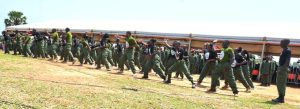
He said the returnees were ready to rebuild through agriculture, manufacturing, vocational skills and entrepreneurship.
Mugabi noted that many possessed skills in automotive engineering, construction, carpentry, tailoring, metal fabrication, leather works, information technology and real estate.
He appealed for additional support to help them establish businesses and form a national association of returnees to coordinate development initiatives.
The ceremony marked the conclusion of two weeks of rehabilitation for Ugandans who returned after experiencing displacement, loss of property and uncertainty while living abroad.