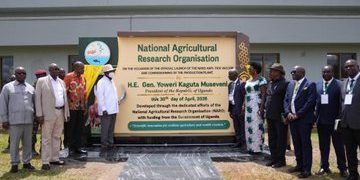



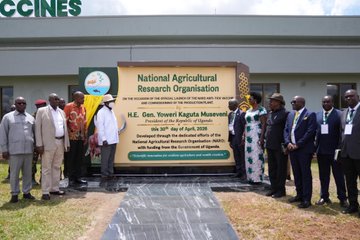
KAMPALA — President Yoweri Kaguta Museveni has commissioned Uganda’s first locally developed anti-tick vaccine at the National Livestock Resources Research Institute (NaLIRRI) in Namulonge, Nansana Municipality, describing the breakthrough as a long-term solution to tick-borne diseases that have persistently affected the country’s livestock sector.
The Shs170 billion initiative, funded by the Government of Uganda, is aimed at tackling the widespread tick challenge that continues to undermine cattle farming.
Speaking during the launch of both the vaccine and its production facility, the President highlighted the scale of the problem in cattle-keeping regions.
He noted that areas such as Sheema, Kajara, and parts of Kashari continue to suffer significant losses despite not being affected by tsetse flies, emphasising that ticks have remained a major obstacle to livestock productivity.
Museveni described the parasites as a long-standing setback and said the newly developed vaccine offers a safer and more sustainable alternative to acaricides, which he warned can be toxic and lose effectiveness over time.
“The cow now kills the tick,” he said, underscoring the science behind the innovation.
The President also reiterated his commitment to strengthening Uganda’s scientific sector, proposing tax incentives for researchers similar to those given to security personnel, in recognition of their contribution to national development. He congratulated the team behind the vaccine and pledged continued government support for research and innovation.
He further confirmed the government’s commitment to provide the Shs600 billion requested by the National Agricultural Research Organisation (NARO) to establish a dedicated vaccine research hub.
The Minister of Agriculture, Animal Industry and Fisheries, Frank Tumwebaze, welcomed the milestone, revealing that the project dates back to 2022 when scientists first presented the concept. He commended the President and government for supporting the initiative through to completion.
State Minister for Animal Industry, Bright Rwamirama, praised sustained public investment in livestock, noting steady growth in dairy farming and an increase in livestock numbers nationwide.
The Director General of NARO, Yonah Baguma, described the development as both a scientific and economic milestone.
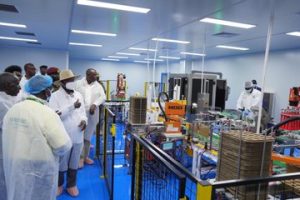
He said the vaccine is expected to protect Uganda’s estimated 16 million cattle while reducing dependence on imported vaccines and acaricides. He added that the facility has the capacity to produce up to 36 million doses annually, with current output at about 3 million doses per month.
According to Dr Baguma, 1.5 million doses have already been produced, and demand is beginning to emerge from neighbouring countries.
He also noted that the project has created hundreds of jobs and positions Uganda as a potential regional hub for veterinary vaccine production.

The vaccine, branded NAROVAC-ATV1, is a recombinant product developed using antigens derived from local tick species. It is administered to calves from one month old in three initial doses—on day 0, day 30, and day 180—protecting for up to one year, with booster doses required thereafter.
The Executive Director of the National Drug Authority (NDA), David Nahamya, confirmed that the manufacturing facility meets all required standards, noting that the authority provided technical oversight throughout the development process.
Farmers who participated in early trials have reported positive outcomes, citing reduced tick infestations and lower treatment costs. The vaccine is expected to retail at approximately Shs10,000, making it accessible to many livestock farmers.
The innovation is widely seen as a major step toward reducing the cost of tick control, cutting reliance on acaricides, and boosting productivity across Uganda’s livestock sector.