


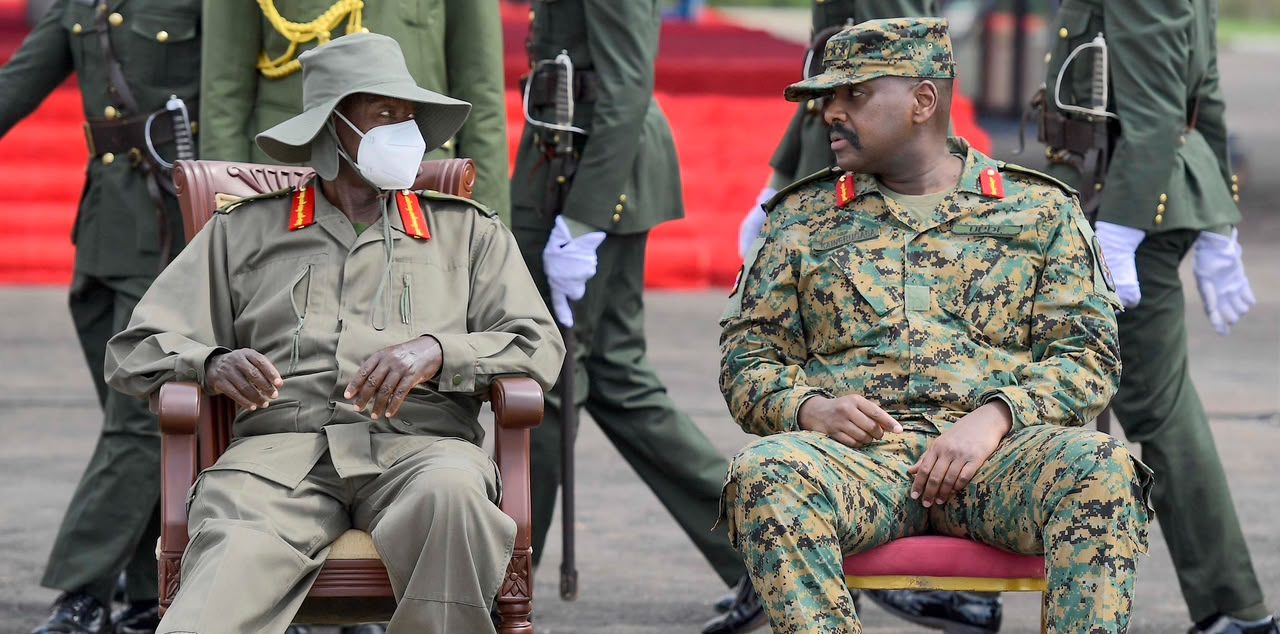
KAMPALA – President Yoweri Kaguta Museveni has defended the recent actions by Uganda’s security agencies against opposition figures and other suspects, insisting that the operations are intended to consolidate peace, strengthen the rule of law, and eliminate what he described as a culture of impunity that has slowed the country’s development.
In a national address delivered on Saturday, July 4, 2026, the President responded to concerns raised by members of the Inter-Religious Council of Uganda over justice, human rights, trade order and environmental protection, arguing that Uganda’s security agencies are acting to safeguard the gains made during the National Resistance Movement’s four decades in power.
“I hope these comments have illuminated what the gaps were and why the limited, supportive actions of the security forces to the real rule of law in the Country,” President Museveni said.
The President said religious leaders had expressed concern that Uganda’s historic achievements in restoring peace and human rights risked being undermined by allegations of enforced disappearances and illegal detentions.
However, he maintained that the National Resistance Army, now the Uganda Peoples’ Defence Forces (UPDF), was founded on principles of justice rooted in indigenous African traditions, which prioritise accountability and restoration over technical legal procedures.
“Our concept of justice was mainly based on the indigenous concept of justice,” President Museveni said. “The indigenous communities insist on full accountability or restorative justice… In the end, what matters is: ‘What was the truth?'”
The President recounted incidents during the liberation struggle, including the public execution of fighters accused of murdering civilians in Semuto in 1982, saying such actions earned the NRM public trust because they demonstrated commitment to justice.
“It is that initial act of balanced justice that catapulted the prestige of the NRM in Buganda and Uganda. The Baganda said: ‘Banobalina amazima’—these are people of truth and justice.”
Criticism of the legal system
President Museveni criticised Uganda’s legal system, arguing that some judicial officers have enabled impunity through indiscriminate granting of bail and police bonds.
“Even with the colonial law, bail is, apparently, only given when the accused cannot interfere with the case. However, you have seen rampant cases of policemen giving bonds or magistrates giving bail to village thieves that are threatening rural agriculture,” he said.
He also blamed corruption, careerism and opportunism among some military, political and administrative officials for creating governance gaps after many of the original NRA commanders died in the years following 1986.
Defends recent security operations
President Museveni said recent security operations targeting individuals and institutions were “long overdue” and aimed at protecting Uganda’s stability.
“The recent limited actions by Security forces against some individuals and institutions are, really, long overdue actions to fill those gaps,” he said.
He argued that the country must reinforce peace and economic progress with stronger action against corruption, crime and what he called foreign-backed efforts to undermine Uganda.
“‘Wakili twebakka kutulo’ created mainly by the UPDF, and ‘boona bagaggawale’ created by the NRM… must also be reinforced by no more sleep, no more corruption and now no more impunity by selfish people and agents of foreign interests.”
The President also paised the anti-corruption campaign, citing the exposure of an alleged bribery racket operating within State House.
“There is, therefore, a counter-offensive against corruption, crime and impunity,” he said.
Comments on Dr Kizza Besigye
President Museveni specifically referred to opposition politician Kizza Besigye, who remains before court on criminal charges.
The President questioned why Dr Besigye had allegedly resisted standing trial. “Take the case of Besigye. He was arrested on the 17th of November, 2024. All this time, however, he has been refusing trial, misusing the legal system,” President Museveni said.
He added: “Why would this great democrat and human rights fighter spend so many calories on refusing to come to trial where he has got opportunity to prove his innocence?”
President Museveni further stated that suspects accused of threatening witnesses should not necessarily expect bail.
“The arrested opposition law-breakers may not get bail because they threaten the security of the witnesses,” he said.
Rejects claims of democratic backsliding
Responding to criticism that Uganda is reverting to authoritarian practices, President Museveni rejected comparisons with previous regimes.
“Those who have been putting forward the slogan ‘Bizeemu’—meaning ‘the bad things of the past have come back’—are wrong,” he said.
He contrasted current legal proceedings involving opposition politicians with past governments where detainees allegedly disappeared or were killed without trial.
“Those who want to know the truth, wait for the trials of the accused people,” he added.
At the same time, President Museveni said security personnel would also be held accountable where they abuse their powers, citing a compensation settlement with the family of a man known as “Zebra,” who died after coming into contact with security forces in 2021.
“I cannot allow impunity in our system even on the side of the security forces,” he said.
Trade order and hawkers
The President also defended ongoing efforts to remove hawkers from streets, saying the practice undermines legitimate businesses, reduces tax revenue and poses health risks.
“Hawking is an economy and health killer,” President Museveni said.
He urged local governments to establish designated workplaces for former hawkers but insisted that all businesses should be licensed, identifiable and tax compliant.
Wetland protection
On environmental conservation, President Museveni vowed that government would continue evicting encroachers from wetlands and natural forests.
“The operation to restore the wetlands and protect our natural forests will continue,” he said.
He warned that wetland destruction threatens Uganda’s rainfall patterns and long-term water security, while directing authorities to investigate renewed encroachment in the Mabira Forest.
Call to participate in elections
President Museveni concluded by urging Ugandans to participate in upcoming National Resistance Movement village meetings, Local Council I elections and Women Council elections, saying the polls offer an opportunity to elect leaders committed to fighting corruption.
“I am hearing of the corruption in the health centres, in the PDM, etc. The medicines for those problems are two. One, report the corruption… Secondly, use the LC-1 elections and the Women Council elections to elect leaders that will fight corruption,” he said.
“Corrupt people are easy to defeat—just report them.”
The address comes amid sustained public debate over human rights, the role of security agencies and the administration of justice, issues that the President said had been raised during his recent engagements with the Inter-Religious Council of Uganda.