



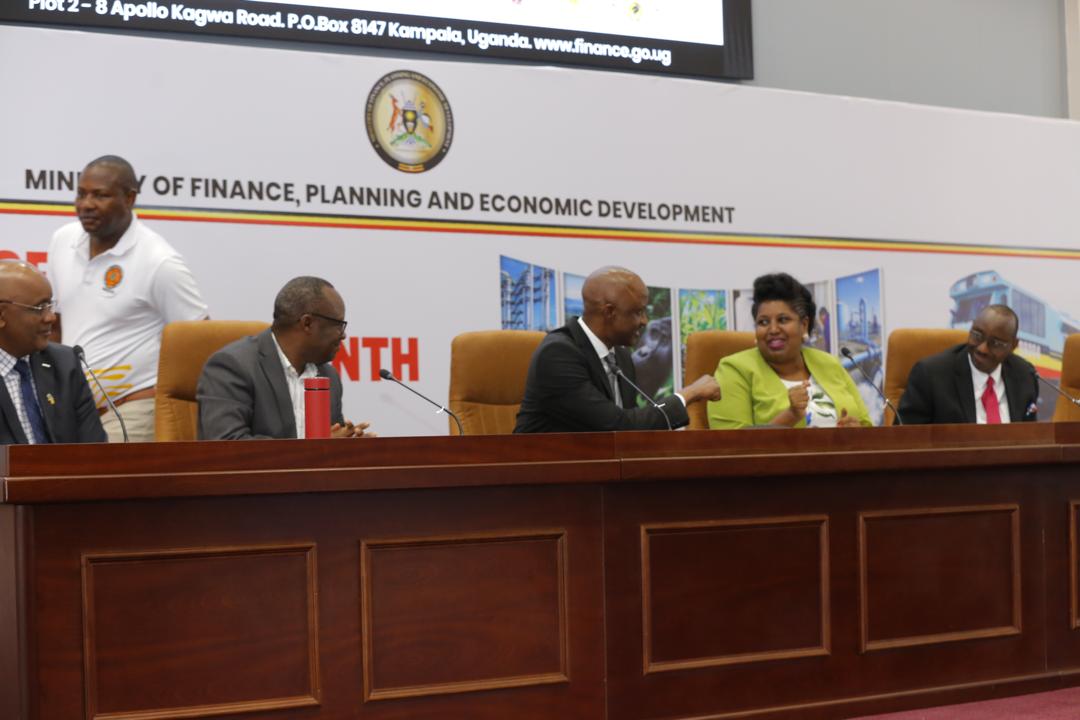
KAMPALA — The Vice Chairperson of the Board of Directors of the Private Sector Foundation Uganda (PSFU), Ms Sarah Kagingo, has welcomed the government’s fiscal reforms and increased engagement with businesses, while calling for greater investment in youth innovation, technology and private sector-led growth in the FY2026/27 budget.
Speaking at the launch of National Budget Month in Kampala, Kagingo said the budget theme, “Full Monetisation of Uganda’s Economy through Commercial Agriculture, Industrialisation, Expanding and Broadening Services, Digital Transformation and Market Access,” aligns with the country’s demographic and economic realities.
“The theme of this year’s budget is both timely and instructive,” Kagingo said. “Uganda is a youthful country, with more than half of our population aged 17 years and below. This demographic reality presents both an opportunity and a responsibility.”
She said PSFU was committed to preparing young Ugandans for the future economy through skills development and entrepreneurship initiatives.
“Through the PSFU NextGen Mentorship Programme, we are supporting young Ugandans to acquire skills and credentials in emerging fields such as Artificial Intelligence. We want them to innovate, experiment, learn, refine their ideas, and scale successful enterprises,” she said.
“We therefore look forward to seeing continued support for innovation, technology and youth enterprise in this budget.”
Praise for Spending Cuts
Kagingo also applauded the government’s recent decision to reduce expenditure on public holiday celebrations and other non-essential functions, describing it as a positive step towards directing resources to more productive sectors of the economy.
“Allow me also to commend the Government’s commitment to fiscal discipline and expenditure rationalisation,” she said.
“We particularly welcome the recent announcement that the government will significantly reduce spending on public holiday celebrations and other non-essential public functions. Resources must increasingly be directed towards productive investments that generate growth and jobs.”
The Ministry of Finance recently announced that beginning in FY2026/27, the Government will no longer finance large-scale public holiday celebrations, with savings redirected towards priority development programmes under the ATMS strategy.
UNBS Funding Eases Business Concerns
Kagingo noted that one of the longstanding concerns raised by the private sector had been delays in product certification by the Uganda National Bureau of Standards (UNBS), which affected businesses seeking access to domestic and export markets.
“We appreciate the Ministry of Finance for responding to these concerns,” she said. “We are pleased that resources intended to support UNBS operations and certification services have now been released, which will help businesses access markets more efficiently.”
Applauds Economic Stability
The PSFU vice chairperson praised the Government and the Ministry of Finance for maintaining macroeconomic stability despite global economic uncertainties.
“Uganda’s economy remains one of the strongest-performing in the region. Growth projections remain robust and are expected to accelerate further with the commencement of commercial oil production. This progress is not accidental,” she said.
“We commend Government, particularly the Ministry of Finance, for maintaining macroeconomic stability. Uganda continues to enjoy one of the lowest inflation rates in the region, a stable currency, and a favourable investment environment.”
According to Kagingo, these factors have strengthened investor confidence and positioned Uganda as an attractive destination for both domestic and foreign investment.
Warns Against Ebola Misinformation
Kagingo, however, expressed concern over the economic impact of misinformation surrounding Uganda’s Ebola outbreak, saying inaccurate international reporting was already affecting businesses, particularly in tourism and hospitality.
“We have observed instances where international media reports have incorrectly grouped Uganda with neighbouring countries facing different public health situations,” she said.
“This has already begun affecting businesses, especially within the tourism and hospitality sectors. Tour operators and hotels have reported cancellations despite Uganda’s strong record in managing disease outbreaks and protecting public health.”
She commended the Government and stakeholders for challenging misleading narratives and promoting accurate information about Uganda’s public health situation.
Calls for Land Reforms and More Access to Finance
Kagingo also highlighted land access as a major issue for businesses, describing land as a critical factor of production that requires continued government attention.
“Land remains a critical factor of production, and we welcome ongoing government efforts aimed at resolving land-related challenges and increasing access to productive land for investment and development,” she said.
She further praised the government’s continued investment in parish-level wealth creation programmes, saying they were helping expand access to finance and stimulate economic activity at the grassroots.
Private Sector Recommendations Reflected in Budget
Kagingo credited the Ministry of Finance’s open-door policy for enabling the private sector to influence policy and budget decisions.
“The private sector appreciates the open-door policy maintained by the Ministry of Finance. We have consistently been given opportunities to engage, provide feedback and contribute proposals during the budget process,” she said.
As evidence of that engagement, she pointed to increased funding for domestic arrears owed to suppliers and contractors.
“We have seen significant increases in funding for domestic arrears, with allocations rising from approximately Shs200 billion to about Shs1.4 trillion. This is a major step towards addressing one of the most persistent challenges facing businesses that provide goods and services to the government.”
Kagingo also welcomed ongoing efforts to recapitalise development finance institutions and expand access to affordable financing for businesses.
Partnership for Growth
She concluded by reaffirming the private sector’s commitment to working with the government to achieve the objectives of the FY2026/27 budget.
“On behalf of the private sector, I thank the Government for listening to our concerns and for maintaining constructive engagement with businesses across Uganda’s economy,” Kagingo said. “We remain committed to working together to ensure that this budget delivers growth, jobs, investment and prosperity for all Ugandans.”
The remarks came as the Ministry of Finance officially launched National Budget Month ahead of the reading of the FY2026/27 National Budget on June 11, with the Government emphasising that the coming budget will focus on the ATMS sectors—Agriculture, Tourism, Minerals, and Science, Technology and Innovation—as the key drivers of Uganda’s tenfold economic growth strategy.