



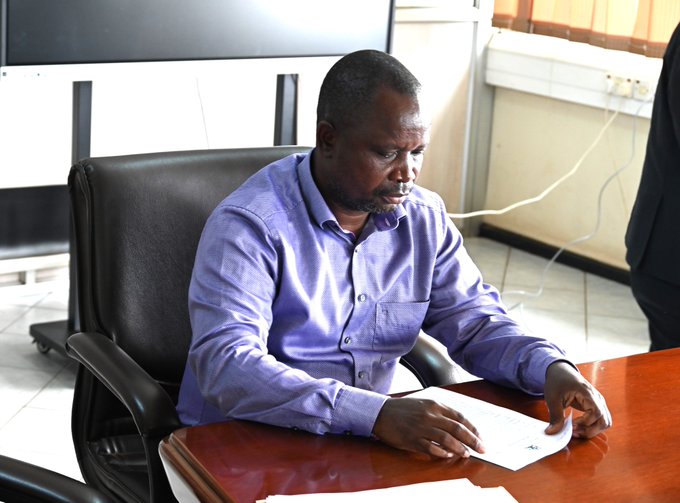
KAMPALA — The Inspector General of Government (IGG), Lady Justice Naluzze Aisha Batala, has directed the Clerk to Parliament, Hon. Adolf Mwesige, to immediately interdict seven senior officials of the Parliament of Uganda who are facing corruption-related charges.
The directive, issued through a statement dated July 31, 2026, affects officials who are currently on remand at Luzira Prison following their arraignment before the Anti-Corruption Court on July 1, 2026.
The officials were charged with offences including embezzlement and causing financial loss, contrary to Sections 18(a)(i) and (ii), and 19(1) of the Anti-Corruption Act, Cap. 116.
Among those affected is Chris Ariko Obore, the Director of Communications and Public Affairs at Parliament.
Other officials ordered to be interdicted are: Daniel Adilo — Director of Human Resources; Rajab Kaaya Ssemalulu — Principal Research Officer; Emmanuel Emuron Okwi — Principal Protocol Officer; Vincent Otebata — Capacity Development Officer; Leonard Okema — Executive Secretary, Office of the Speaker; and Stella Itute — Office Supervisor, Office of the Sergeant-at-Arms.
The IGG said the interdictions are necessary to prevent the accused officers from continuing to exercise official powers while criminal proceedings against them are ongoing.
The directive was issued under the powers granted to the Inspectorate of Government by Article 230 of the Constitution of Uganda and Section 13(6) of the Inspectorate of Government Act, Cap 32.
According to the IGG, public interest requires that the officials be removed from active duty to protect the integrity of Parliament and ensure that the administration of justice is not compromised.
“The Inspector General of Government may, during the course of his or her duties or as a consequence of his or her findings, make such orders and give such directions as are necessary and appropriate in the circumstances,” the statement said, citing the legal provisions empowering the office.
The Inspectorate of Government said the action does not determine the guilt or innocence of the accused officials but is intended to preserve institutional accountability and allow court processes to proceed without interference.
The cases remain before the Anti-Corruption Court, where the accused officials will continue to face trial.