


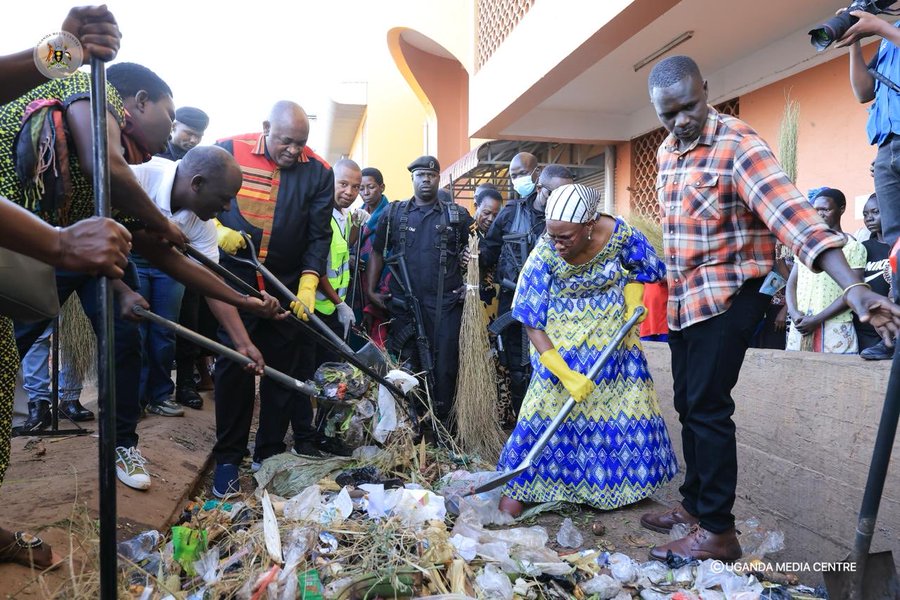
The government has launched a campaign to collect electronic waste (e-waste) and announced plans to introduce cleanliness competitions among cities, districts and communities as part of efforts to improve waste management and sanitation.
E-waste refers to discarded electrical or electronic devices, appliances, and IT equipment that are no longer wanted, functional, or intended for reuse.
The initiatives were announced during the fourth National Cleaning Day held in Lira City on Saturday, October 31, 2026, where government officials and residents participated in cleaning activities across the city.
Health Minister Dr Chris Baryomunsi said the campaign would encourage households and communities to separate electronic waste from ordinary garbage to facilitate proper handling and recycling.
“We would like to appreciate the Ministry of ICT and National Guidance for providing guidance on waste management, particularly the need to separate electronic waste, or e-waste, from other waste that we collect,” Baryomunsi said.
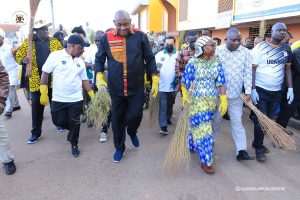
He said an e-waste collection campaign had been launched alongside the national cleaning exercise, urging residents to separate electronic waste, plastics, grass and organic waste.
“It is important to separate these different categories of waste because government is at an advanced stage of putting in place arrangements to turn waste into value,” he said.
Baryomunsi said the government was working on interventions to transform waste into useful products, including converting organic waste into fertiliser and recycling plastics.
He also announced plans for a cleanliness competition among Uganda’s cities, with awards and trophies for those that perform best. The competition will later be extended to districts and communities to identify the cleanest areas.
“We are going to organise a competition among cities in Uganda, and we shall give awards and trophies to those that perform best,” he said.
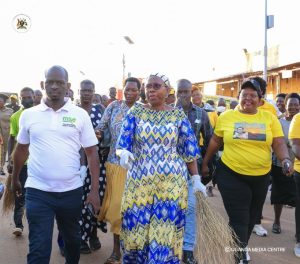
“We shall also extend the competition to districts so that we can identify the cleanest district and community; more importantly, we want to establish which city emerges as the cleanest in Uganda. The competition begins now.”
Baryomunsi urged Ugandans to make cleanliness part of their daily routines rather than relying on monthly national exercises or enforcement by government agencies.
“The National Cleaning Day is when we rally all Ugandans together, but cleaning should be part and parcel of our everyday lives in Uganda,” he said.
Government Chief Whip and Lira City Woman MP Dr Jane Ruth Aceng also called on residents to sustain the cleaning efforts beyond the monthly national campaign.
In a statement following the exercise, Aceng thanked leaders and residents for turning up in large numbers and encouraged households to make every day a cleaning day.
“While we hold one National Cleaning Day a month as a national event, I encourage all of us to make every day a cleaning day in our individual households so that we can have a cleaner and healthier nation,” she said.
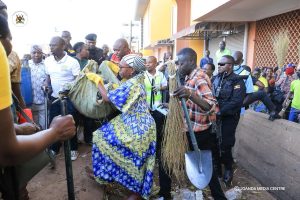
Aceng also commended Lira residents for maintaining a relatively clean environment and urged them to continue observing proper waste management practices.
The exercise brought together officials from the National Environment Management Authority (NEMA), the Ministries of Health and Water and Environment, Lira Regional Referral Hospital, Lira City authorities, schools, non-governmental organisations and other stakeholders. Cleaning activities covered Lira Central Market, Juba Road, Obote Avenue and Coronation Park, among other areas.
Baryomunsi said maintaining proper hygiene and sanitation was necessary to prevent diseases. He also urged residents to keep the city clean as it prepares to host activities for the African Games, with Akii-Bua Stadium among the planned venues.
The National Cleaning Day is a monthly government initiative aimed at mobilising communities to improve sanitation and environmental cleanliness.