


KAMPALA — Uganda’s Chief of Defence Forces (CDF), Gen Muhoozi Kainerugaba, has called on Eastern African countries to strengthen military self-reliance and reduce dependence on unpredictable external support as security threats in the region continue to evolve.
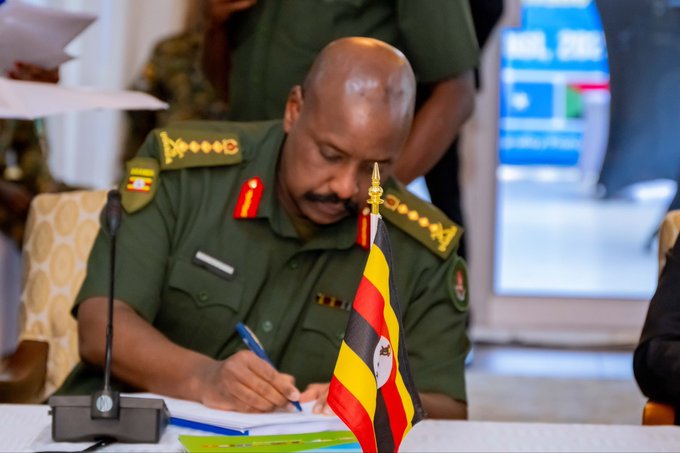
Kainerugaba made the call on Thursday, August 13, 2026, while opening the 36th Ordinary Session of the Eastern Africa Standby Force (EASF) Chiefs of Defence and Security Committee in Kampala.
The meeting brings together defence and security leaders from EASF member states to assess regional security challenges and strengthen the force’s preparedness to respond to emerging crises.
Kainerugaba, who chairs the EASF Chiefs of Defence and Security Committee, said changing external support arrangements require countries in the region to invest more in their own military capabilities, financing and operational readiness.
He pointed to the transition from the African Union Mission in Somalia (ATMIS) to the African Union Support and Stabilisation Mission in Somalia (AUSSOM) as an example of why the region must be prepared to act with greater independence.
“The ongoing transition to the African Union Support and Stabilisation Mission in Somalia is a clear reminder that our region must remain ready for change,” Kainerugaba said.
He said countries should not wait for crises before preparing their forces.
“We cannot afford to depend on unpredictable circumstances. We must remain prepared to respond whenever the African Union and member states require collective action,” he added.
Uganda pledges EASF funding
Kainerugaba pledged Uganda’s full financial commitment towards meeting its obligations to the regional standby force.
He acknowledged that sustaining military readiness, conducting exercises and maintaining operational capabilities require significant resources, but said financial constraints should encourage countries to find sustainable solutions rather than increase dependence on external partners.
“Sustaining readiness, conducting exercises, and maintaining operational capability require resources that are often stretched,” he said.
“I would like to inform the director that we are going to fully meet our obligation in terms of funding,” Kainerugaba added.
He said the region’s resource constraints should “sharpen our resolve to find practical and lasting solutions.”
Threats evolving
The UPDF chief said Eastern Africa faces a changing security environment characterised by evolving conflicts, extremist threats, sophisticated illicit networks and rapidly advancing technology.
“Conflicts are changing rapidly, extremist threats are evolving, illicit networks are becoming more sophisticated, and technology is reshaping the way operations are planned and conducted,” he said.

Kainerugaba argued that modern military preparedness should no longer be judged by troop numbers alone.
“Preparedness is no longer measured by numbers alone. It is measured by agility, interoperability, foresight, and the ability to respond decisively under uncertain circumstances,” he said.
He cited the recent EASF Force Verification Exercise hosted by Uganda as an example of the importance of maintaining operational readiness before crises occur.
“A standby force earns credibility not only through the missions it undertakes, but through the confidence it inspires before deployment becomes necessary,” Kainerugaba said.
He further warned that preparedness cannot be improvised during emergencies.
“Preparedness cannot be improvised in crises. It must be built in advance, maintained consistently, and tested regularly,” he said.
EASF praises Uganda
EASF Director Brig Gen Ronald Rwivanga of the Rwanda Defence Force commended Uganda for its continued support to the regional security mechanism.
“Uganda has consistently demonstrated outstanding commitment to the ideals of regional peace and security, and we remain grateful for its leadership and continued support to the Eastern Africa Standby Force,” Rwivanga said.
He specifically praised Uganda for hosting the recent EASF Force Verification Exercise, saying the arrangement helped the regional force reduce operational costs.
The EASF is one of the African Union’s regional standby arrangements established to enhance the continent’s capacity to respond collectively to peace and security challenges.
The Kampala meeting comes as countries in the region grapple with persistent insecurity, including terrorism, armed conflicts, organised crime and other transnational threats, while also confronting changing patterns of international security assistance.