



Uganda has invited coffee buyers, roasters, importers and investors from the United Kingdom and Ireland to explore direct sourcing, value addition and regional market access, as the government moves to reverse declining coffee exports to the UK.
The appeal was made on Monday at the Marriott Hotel in Kampala during the Uganda-UK and Ireland Coffee Familiarisation Trip, which brought together specialist roasters, green coffee importers and distributors to meet local producers.
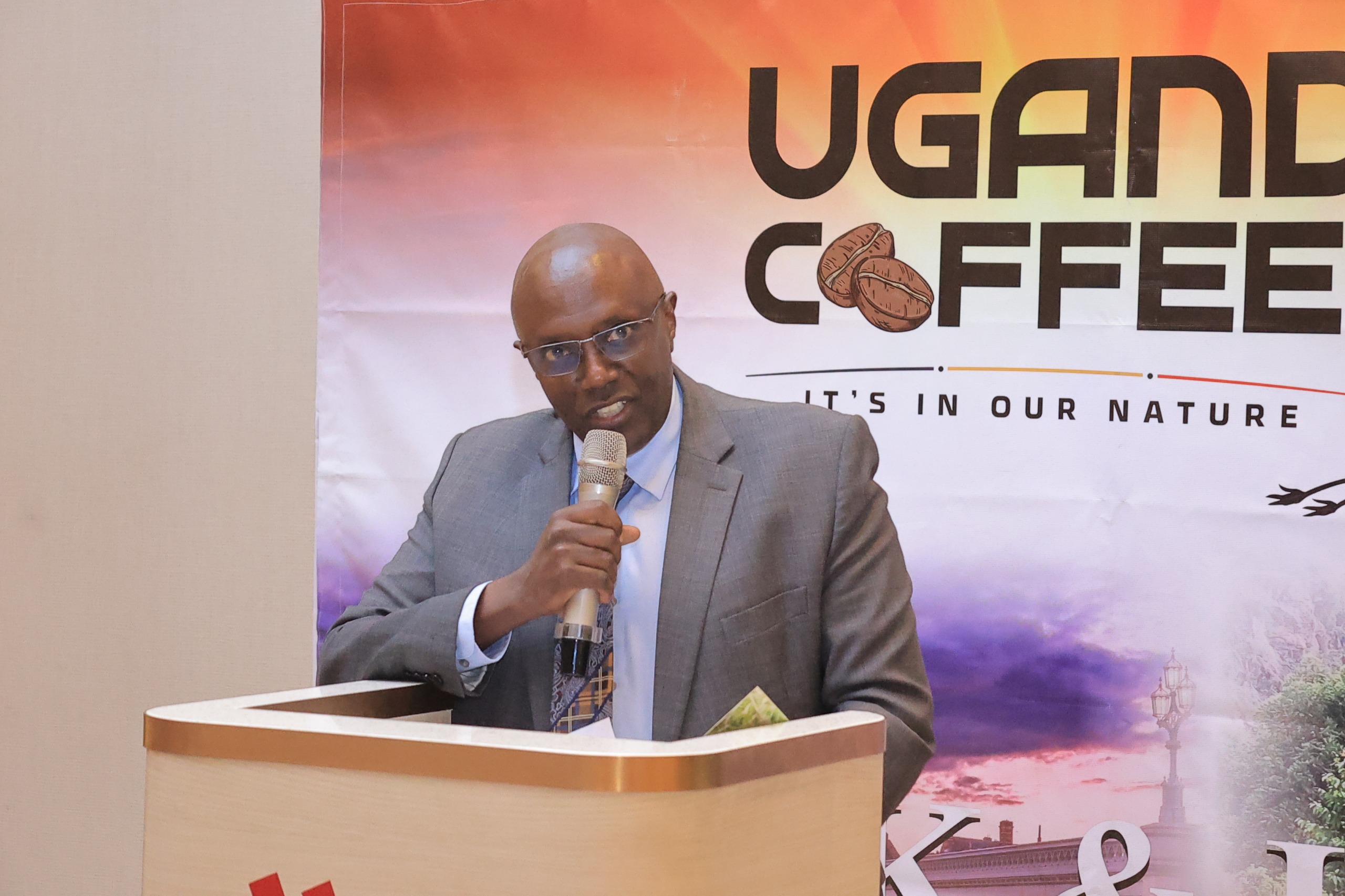
The UK drinks about 103 million cups of coffee daily, which Gordon Katwirenabo, Assistant Commissioner for Coffee Quality Assurance and Value Addition at the Ministry of Agriculture, called an enormous opportunity. “We are therefore excited to learn more about the UK market and explore how we can strengthen our commercial relationships with buyers, roasters, importers and distributors,” he said.
Research commissioned by the British High Commission shows the gap. The UK imported coffee worth about US$1.4 billion in 2024, while Uganda’s exports to that market were valued at roughly US$39.9 million.
Uganda is among Africa’s largest coffee producers and is the leading Robusta producer. Coffee contributes about 24 per cent of foreign exchange earnings and supports an estimated 12.5 million people. The country exported about 8.1 million 60-kilogram bags worth US$2.1 billion in the last reporting year, and the government wants annual production raised from 3.5 million bags in 2017 to 20 million by 2030.
But much of that coffee leaves as green beans. “We therefore want to encourage more investment in processing, roasting, grinding and packaging so that Uganda can capture greater value from its coffee,” Katwirenabo said.
He invited investors to explore processing, packaging, commercial farming, irrigation and climate-smart agriculture. Only about seven per cent of Uganda’s coffee is consumed locally, leaving room for coffee shops, roasteries and coffee tourism. Investors would also gain access to the East African Community market of about 300 million people.
Uganda is also pitching traceability. About 1.5 million farmers have been registered and more than 1.65 million farm polygons mapped, to support compliance with the European Union Deforestation Regulation.
Richard Kabonero of the Ministry of Foreign Affairs said the visit shows how long-standing ties with the UK can become commercial partnerships. “We hope this engagement will go beyond familiarisation and generate concrete business partnerships,” he said.
Robert Byaruhanga, President of the Uganda Coffee Federation, urged the delegation to taste the coffees and meet growers.
British High Commissioner Lisa Chesney said the real value lay beyond the statistics. “Behind every bag of coffee are farmers, cooperatives, women, exporters and communities whose skills, hard work and dedication sustain one of Uganda’s most important economic sectors,” she said.
She added that if one per cent of Ugandans drank four more cups a week, it could generate an additional US$47 million for the economy.