


For many, retirement means slowing down. But for Oken Joseph, a former soldier residing in Kaliro Village in Lamwo District, hanging up the uniform in 2015 marked the beginning of sustainable agriculture.
Today, Joseph is not just a farmer, he is an environmental steward, an entrepreneur, and a role model for his community. Through hard work and strategic partnerships, he has transformed his land into a thriving, multi-income ecosystem.
Joseph’s agricultural evolution took a massive leap forward through his involvement with ECOTRUST. The organization provided him with 100 mahogany seedlings and invaluable training that shifted his entire approach to the land.
He has gained knowledge across a wide spectrum of essential disciplines, including sustainable land management practices like afforestation, soil fertility, and conservation, integrated crop management and livestock management, and socio-economic skills, and gender-relation dynamics.
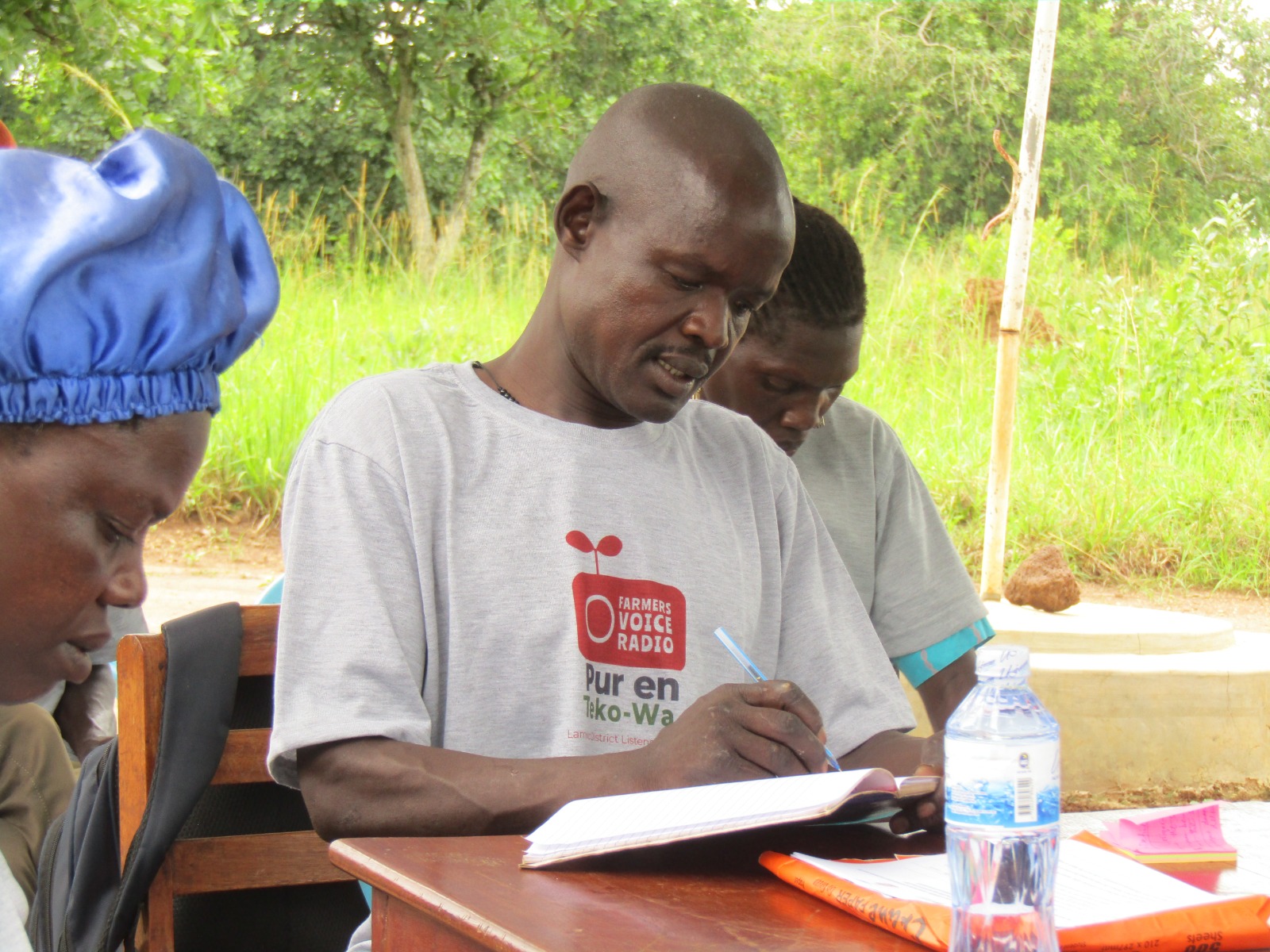
Beyond field training, Joseph became an avid contributor to the Pur em Tekowo radio show on Jambo FM. This platform enabled him to interact directly with agricultural experts, sharpening his skills and inspiring him to build a resilient farm with multiple revenue streams.
Oken’s farm perfectly shows how agroforestry works by combining trees, crops, and livestock on the same land.
He nurtures a flourishing woodlot of over 700 trees, including black teak, mangoes, and his newly planted mahogany. He doesn’t let the space between these trees go to waste, instead, he practices smart intercropping by growing beans within the forested areas and integrating beehives for honey production.
One of Joseph’s biggest revelations was learning the hidden dangers of bush burning, a traditional method he once used to clear crop residues.
“When I was practicing bush burning, I noticed that all the living organisms in the soil were gone, and the color of my plants was changing for the worse,” Joseph recalls.
Today, he and his children work together to lay crop residues back into the garden as mulch. As these materials rot, they form nutrient-rich humus and keep the soil moist. Furthermore, he has adopted crop rotation and learned to match specific crops to the soil types best suited for them, drastically increasing his yields.
In the past, farming on sloped land was a guessing game. Now, equipped with modern conservation skills, Joseph utilizes contour plowing on hillsides to prevent soil erosion and retain vital water on his plots.
True sustainability is economic as well as environmental. By applying his financial training, Joseph joined a Village Savings and Loan Association (VSLA) formed by his ECOTRUST farmer group. This collective financial empowerment allows members to pool resources, with two members receiving a rotating payout monthly to boost their enterprises.
With his improved yields and savings, Joseph has successfully diversified into livestock, steadily growing a piggery and introducing cattle to his farm.
The ultimate measure of Joseph’s success is his ability to provide for his family. He currently pays school fees for eight children, six of his own, alongside his sister and a close relative.
When cash flow is tight, Joseph’s resourcefulness shines through a barter system with the local school to cater for the children’s school fees.
“Sometimes, it is my produce that enables me to pay school fees. When I don’t have cash, I give beans to the school administration, and in turn, the children receive an education.” Oken says
Perhaps the most profound transformation occurred within his own household. The gender-awareness component of his training completely reshaped how he interacts with his family.
“I now sit with my wife and discuss important issues. This has limited the number of arguments at home. I even interact differently with my children. They are free with me; I dropped the soldier attitude towards them.” Oken says.
By replacing military rigidity with open dialogue, Oken has fostered a peaceful, collaborative environment where his wife and children work alongside him as true partners in the family business.
While tree planting is a long-term game that often discourages impatient farmers, Joseph looks at the bigger picture. To him, trees are a permanent bank account for the planet and his lineage.
“Most people discouraged me about planting trees since they take long to grow. However, I believe that they will benefit my family members even when I am not around. They also positively impact the environment.” Oken says.
Oken’s transformation has proven that with the right knowledge, an open mind, and a dedication to the earth, a farmer can secure both his family’s future and environmental sustainability.