



Uganda and the Inter-African Coffee Organisation (IACO) have renewed calls for African countries to increase local coffee processing and capture a larger share of revenue from the global coffee industry.
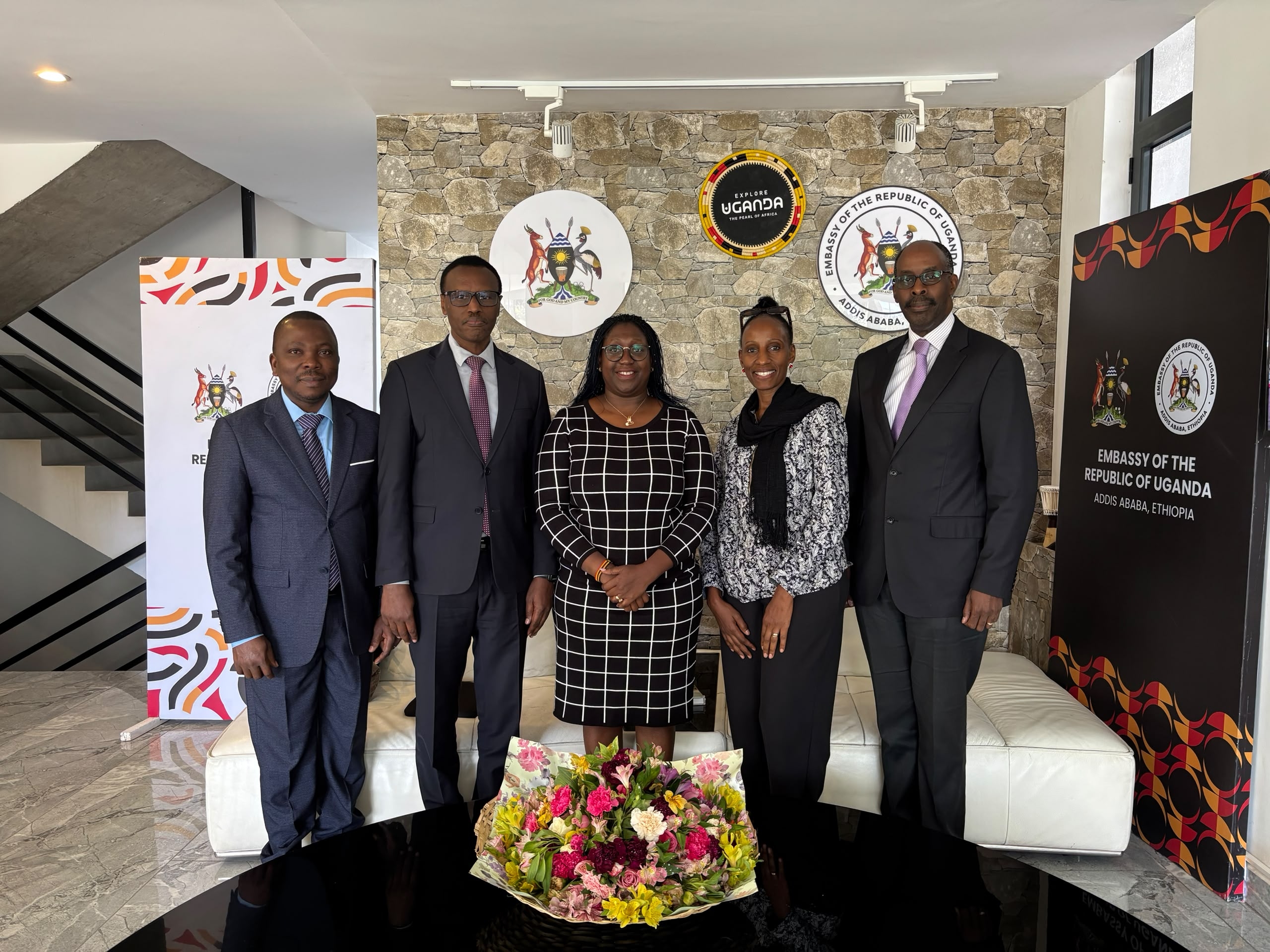
The commitment was reaffirmed on Wednesday, October 28, 2026, during a meeting between Uganda’s Chargé d’Affaires at the embassy in Addis Ababa, Ethiopia, Margaret Kafeero, and IACO Secretary-General Solomon Rutega.
The discussions focused on the opening of IACO’s new office at the African Union (AU) headquarters in Addis Ababa and efforts to implement a continental framework aimed at transforming Africa’s coffee sector.
Rutega said the initiative followed the AU’s adoption of coffee as a strategic commodity at its 37th Summit, a move linked to the Kampala Declaration developed by the G25 African coffee-producing countries.
“We are entering an era of aggressive restructuring to fundamentally alter global trade dynamics,” Rutega said.
He noted that although the global coffee industry generates more than $465 billion annually, African producing countries receive less than $3 billion, arguing that the disparity underscores the need for greater investment in local processing and value addition.
Rutega said the new Addis Ababa office would help coordinate the implementation of the continental strategy and strengthen cooperation between the AU and IACO.
A key objective, he said, is to move African countries away from exporting predominantly raw green coffee beans towards producing roasted, processed and packaged coffee for domestic and international markets.
He cited estimates showing that the value of coffee could rise from about $2 per kilogram of raw beans to approximately $40 per kilogram of finished product, depending on the level of processing and the products involved.
Rutega said expanding value addition could increase earnings for producing countries and improve livelihoods for millions of households dependent on coffee farming.
Kafeero welcomed the establishment of the Addis Ababa office and reaffirmed Uganda’s commitment to the initiative, linking it to efforts to expand intra-African trade under the African Continental Free Trade Area (AfCFTA).
“Uganda fully embraces the opening of the new IACO office here in Addis Ababa, which will undoubtedly accelerate our regional trade ambitions under the African Continental Free Trade Area,” Kafeero said.
She said Africa’s integrated market, with a population of approximately 1.5 billion people, offered opportunities for coffee-producing countries to expand regional trade and develop stronger domestic processing industries.
Kafeero also highlighted the complementary positions of Uganda and Ethiopia in the continental coffee industry, noting Ethiopia’s historical association with Arabica coffee and Uganda’s strength in Robusta production and exports.
Africa accounts for a significant share of global coffee production, with Uganda and Ethiopia among the continent’s leading producers. Both countries have an interest in expanding processing capacity, developing coffee brands and retaining more of the value generated along the supply chain.
The meeting concluded with both parties expressing their commitment to cooperation in advancing the African Union’s Agenda 2063, improving returns for coffee farmers and strengthening Africa’s position in the global coffee market.
The initiative comes amid wider efforts by African coffee-producing countries to move beyond commodity exports and build industries that capture more value through processing, packaging and marketing.