



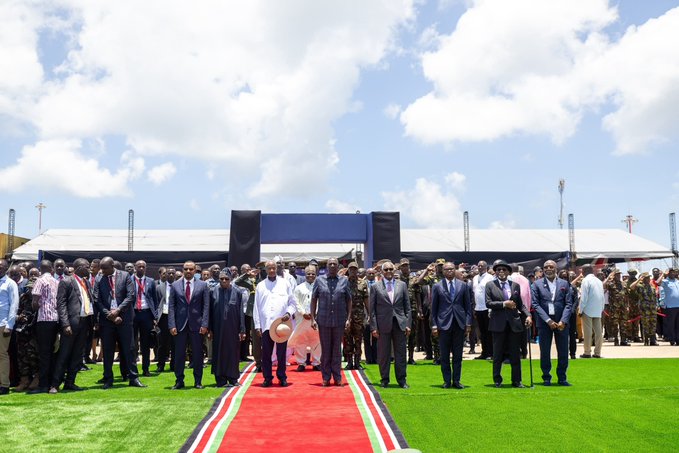
Lamu, Kenya — Nigerian industrialist Aliko Dangote has broken ground on a $16 billion petroleum refinery in Kenya’s Lamu County, launching construction of a project designed to process 700,000 barrels of crude oil a day and supply refined petroleum products to markets across East Africa.
Ugandan President Yoweri Kaguta Museveni, Kenyan President William Ruto and other African leaders attended the groundbreaking ceremony in Makowe, including Ethiopian Prime Minister Abiy Ahmed.
The Dangote East Africa Petroleum Refinery is expected to be completed in 2030 and is intended to reduce the region’s reliance on imported refined fuel while supporting the development of petrochemical and other industries.
The facility will be modelled on Dangote’s refinery in Nigeria and is expected to process crude from Uganda, South Sudan and other regional and international suppliers. Reuters reported that the project is expected to create more than 50,000 jobs, while other reports have put the potential employment impact at about 60,000 jobs.
Dangote has also offered regional governments a combined 30% equity stake in the refinery. Kenya and other East African countries are expected to participate in the investment, with Rwanda among the countries that have expressed interest.
The project is being developed at Lamu Port, giving it access to deep-water maritime infrastructure and positioning the facility within the wider Lamu Port-South Sudan-Ethiopia Transport (LAPSSET) corridor.
For Uganda, the refinery could provide an additional regional source of refined petroleum products and a potential outlet for crude oil from the country’s Albertine Graben. The Lamu project is moving ahead while Uganda’s planned 60,000-barrel-per-day refinery at Kabaale remains at the pre-construction stage, with its final investment decision expected in 2027.
The project represents one of the largest private-sector industrial investments proposed for East Africa and is intended to shift part of the region’s petroleum trade from importing refined products toward local processing.
The refinery is also expected to deepen regional integration by linking crude-producing countries such as Uganda and South Sudan with Kenya’s maritime infrastructure and petroleum market.