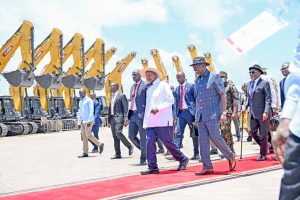



LAMU, Kenya — President Yoweri Kaguta Museveni has firmly maintained that Uganda’s domestic refinery in Hoima will still be built, even as regional leaders explore broader infrastructure corridors across East Africa.
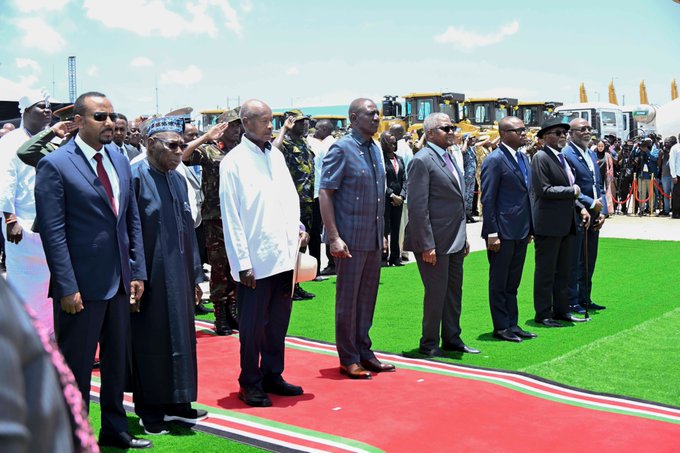
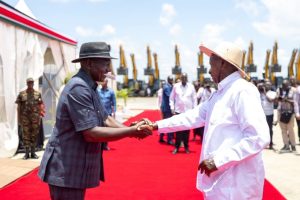
“I thank President William Ruto for inviting me to Lamu County, for the groundbreaking ceremony of the Dangote East Africa Petroleum Refinery,” he said.
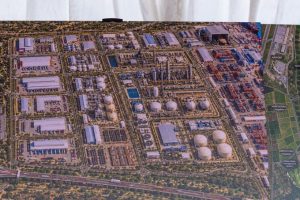
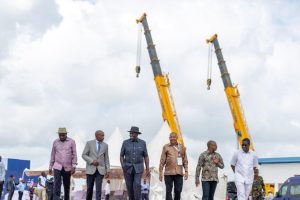
He made the remarks on Wednesday during the groundbreaking ceremony for the Dangote East Africa Petroleum Refinery, which is designed to process 700,000 barrels of crude oil per day and serve markets across the region. The project is expected to be completed within about 40 months.
He added: “Uganda’s refinery will be built, and our cooperation with Tanzania on Tanga stands. There is no harm in having more refineries in the region. What Africa needs is value addition, industrialisation and bigger integrated markets. East African political integration must ultimately be treated as a matter of strategic survival.”
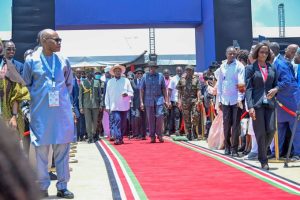
Museveni said a regional integration would allow countries to share resources and build stronger industries as construction begins on Aliko Dangote’s $16 billion refinery in Lamu, Kenya.
“I am happy to see Africa waking up and moving away from the 70-year betrayal of exporting raw materials. Mr Dangote, who started as an importer and has become a national and continental asset, is a good example of the transformation we need,” Museveni said, linking the refinery to what he described as a shift towards African ownership and value addition.
He said Uganda had previously planned a smaller refinery in Hoima and had discussed the possibility of a regional refinery in Tanzania with Dangote, Kenyan President William Ruto and Tanzanian President Samia Suluhu Hassan.
“In Uganda, we have some petroleum and had plans to build a small refinery in Hoima. I also discussed with Mr Dangote, President Ruto and President Samia the idea of building a refinery in Tanga. I support this project, but I will not invest yet,” Museveni said.
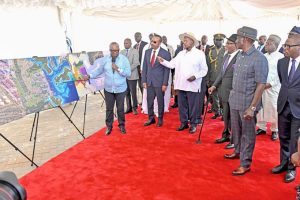
The President praised Dangote’s evolution from an importer of manufactured goods to an industrialist producing and adding value within Africa.
“Mr Dangote started as part of the bourgeoisie compradore, as Mao Zedong wrote many years ago. He was importing cement and selling it. But now Dangote belongs to the bourgeoisie nationale producing and adding value here in Africa,” Museveni said.
Refinery to serve East Africa
Dangote said the Lamu project emerged from an initial discussion with President Ruto and Museveni during a conference in Kenya.
“This project started almost like a joke. President Ruto invited me to attend a conference in Kenya, where we had a small meeting on the sidelines with him and President Museveni. That is where we first discussed the idea of setting up a refinery in the region,” Dangote said.
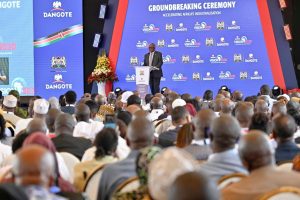
He said the project was intended to address Africa’s longstanding dependence on exporting raw materials while importing finished products.
“For too long, our continent has been rich in resources but poor in value addition. I firmly believe Africa cannot build lasting prosperity by exporting what it has and importing what it needs,” he said.
The refinery will have a planned capacity of 700,000 barrels per day and is expected to include petrochemical production, including an annual polypropylene capacity of one million tonnes, as well as base-oil production.
Dangote said more than 110 pieces of equipment were already on site, with another 400 expected within 60 days.
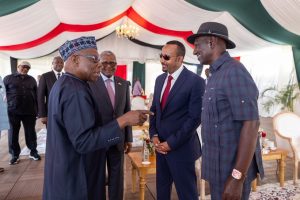
He pledged that the refinery would be commissioned within 40 months. “Your excellencies, I want to assure you that we will come back here to commission this refinery 40 months from today,” he said.
The project is expected to create about 60,000 jobs during construction. Dangote also announced plans for a training school in Lamu that will train 1,000 local engineers and technicians.
The group has reserved up to 30% of the refinery’s equity for East African countries, with Kenya and Rwanda already moving towards participation.
Dangote said the refinery would supply Kenya and other regional markets, including Uganda, Rwanda, Tanzania, Ethiopia, South Sudan, the Democratic Republic of Congo, Mozambique and Zambia, while also enabling exports through the Indian Ocean.
Ruto credits Museveni
President William Ruto said the refinery represented a move towards African countries using their natural resources to drive industrialisation rather than simply exporting raw materials.
“At the UN General Assembly, I told delegates that Africa does not come to plead. I said Africa’s resources must be the beginning of our industries, not merely Africa’s contribution to global prosperity,” Ruto said.
He described investors as partners in national development and assured Dangote of government support. “Investors are our partners in the development of our nations, not our enemies,” Ruto said.
Ruto also credited Museveni with helping advance the project. “I want to thank our father, President Museveni. When we sat down with Aliko Dangote, it was your vision that brought us this far. Mzee, we don’t take your vision for granted. You are the one who pushed us,” he said.
The Lamu refinery is being developed at Lamu Port along the Lamu Port-South Sudan-Ethiopia Transport (LAPSSET) corridor and is expected to supply refined petroleum products to markets across East and Central Africa.
The project has, however, faced legal challenges over land rights and environmental concerns. A Kenyan court has ordered the maintenance of the status quo in a case brought by local residents challenging aspects of the development.
For Uganda, the project comes as the country continues preparations for its planned 60,000-barrel-per-day refinery at Kabaale in Hoima, with the final investment decision expected in 2027.