


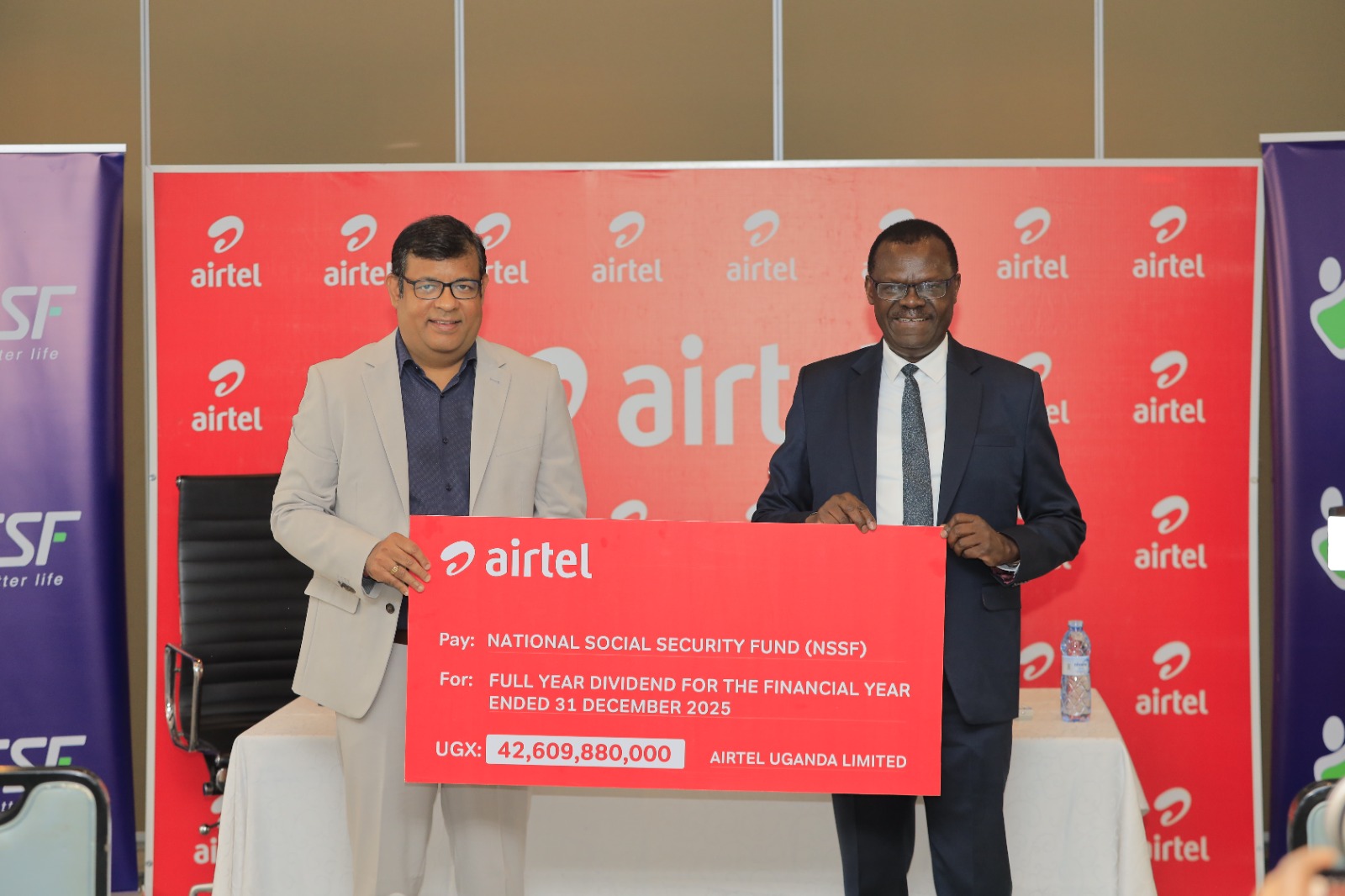
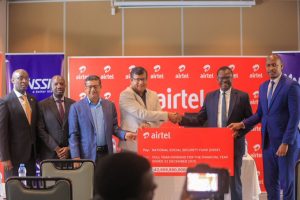
Kampala — Airtel Uganda has paid the National Social Security Fund (NSSF) a dividend of Shs42.6 billion, reflecting the Fund’s investment in the telecommunications company.
Airtel Uganda Managing Director and CEO Soumendra Sahu handed over a cheque worth Shs42,609,880,000 to NSSF Managing Director Patrick Ayota at an event in Kampala.
NSSF owns a 10.6% stake in Airtel Uganda and is the company’s largest Ugandan institutional shareholder.
Sahu said the dividend demonstrated the potential of long-term investments by Ugandan institutions to generate returns.
“The NSSF demonstrated confidence in the fundamentals of our business. We remain committed to delivering value to our shareholders,” Sahu said.
He attributed the company’s performance to expansion of its network, improved operational efficiency and efforts to improve customer service.
The payment comes shortly after NSSF announced a 22.53% interest rate for the 2025/26 financial year, its highest declared rate to date, with Shs5.44 trillion set to be credited to members’ accounts.
Ayota said Airtel’s dividend and share-price performance illustrated the importance of investing members’ savings in productive businesses.
“We commend Mr Sahu and the management of Airtel Uganda for creating shareholder value while also focusing on the long-term growth of the company. So we are long-term shareholders with you,” Ayota said.
He said NSSF bought 4.21 billion Airtel Uganda shares for about Shs199 billion on behalf of its members, with an effective purchase price of Shs47.17 per share after a volume discount.
According to Ayota, the value of the shares had risen to Shs152 per share by the end of June 2026, representing an increase of more than 300% from the effective purchase price.
“When people wonder where our record 22.53% interest rate came from, part of it came from Airtel,” Ayota said.
Airtel Uganda has also expanded its technology offering, becoming the first telecommunications company in Uganda to commercially launch satellite-to-mobile connectivity through a partnership with Starlink.
The service is intended to extend SMS and limited data connectivity to compatible smartphones in areas beyond the reach of conventional terrestrial mobile networks.
Sahu said the technology formed part of the company’s broader strategy to extend connectivity to underserved communities.
“Whether through expanding our terrestrial network or introducing satellite-to-mobile technology, we want the value we create as a business to reach further across Uganda,” he said.
Airtel Uganda said it will continue investing in network expansion, technology and partnerships as it seeks to support Uganda’s digital economy while generating returns for its customers and shareholders.