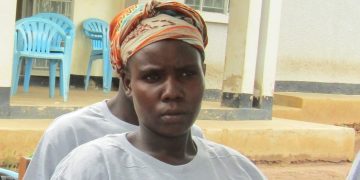



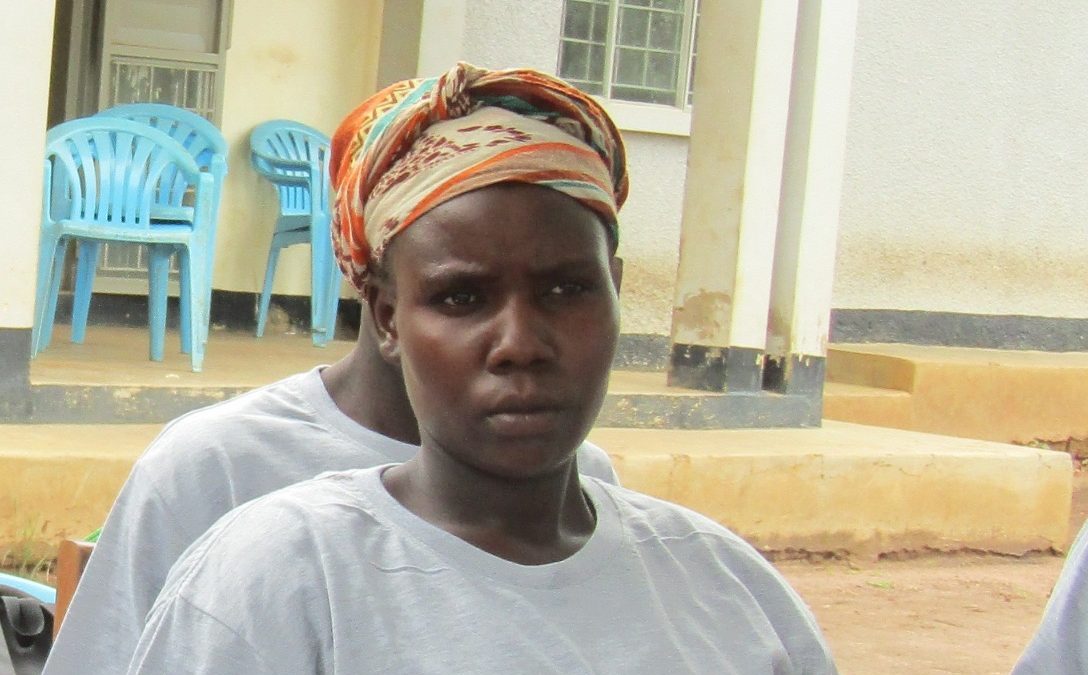
For years, Lakisa Oliver’s livelihood depended on the steady hum of her sewing machine.
As a tailor in Alenyo North Village, Lamwo District, every day’s income depended on whether a customer walked through her door with an order. While tailoring enabled her to provide for her family, relying on a single source of income offered little protection against the uncertainties of rural life.
Today, that story has changed dramatically.
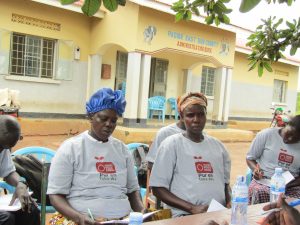
In just seven months, Oliver has transformed herself from a village tailor into a successful agripreneur, value addition champion, and community leader—a journey she attributes to knowledge gained through the Pur en Teko-Wa Farmers Voice Radio listeners’ group, an initiative of the Environmental Trust of Uganda (ECOTRUST) that equips rural communities with practical information to improve their livelihoods.
The first lesson that reshaped her outlook was the importance of diversifying income.
“When one has multiple sources of income, they get more money and improve their lives significantly,” Oliver says. “That is why I invest every amount of money I earn into expanding my agribusinesses.”
Inspired by this approach, she ventured beyond tailoring into crop farming and poultry production. She now grows sim sim and sunflower while raising chickens, creating multiple streams of income that shield her household from seasonal shocks and fluctuating markets.
However, Oliver’s biggest breakthrough came from learning the power of value addition.
Instead of selling raw sim sim immediately after harvest when prices are lowest, she now processes it into neatly packaged sim sim paste, which commands significantly higher returns. Each container sells for UGX 1,000, allowing her to earn more from the same harvest.
She has adopted the same strategy with sunflower, processing the seeds into organic sunflower cooking oil during the harvest season instead of selling them as raw produce.
The additional income has enabled her to establish a cycle of growth—saving part of her earnings while reinvesting the rest to expand production.
Oliver has also embraced climate-smart agriculture after learning sustainable farming practices through the radio programme.
She abandoned traditional bush burning for land preparation after learning how it destroys soil nutrients and organic matter. Instead, she now manages crop residues in ways that conserve soil moisture and improve fertility, leading to healthier crops and better yields.
Her commitment to sustainable farming extends beyond crops.
Recognising the long-term value of forestry, Oliver has planted more than 700 trees across two acres of land. She views the plantation as an investment that will eventually provide poles and timber, creating another dependable source of income for her family.
The knowledge she acquired has not remained on her own farm.
Oliver has become a resource person within her family and community, sharing what she has learned with relatives and fellow farmers.
Among those who have benefited most is her husband, who operates a tree nursery business in Lamwo. Encouraged by Oliver, he shifted to producing high-quality seedlings, improving both the quality of his nursery stock and the profitability of his business.
Understanding that financial growth requires discipline, Oliver also joined the Pur en Teko-Wa Savings Group, where members save collectively and access funds to invest in their enterprises.
Through the savings scheme, she raised enough capital to purchase day-old chicks, steadily expanding her poultry enterprise.
Looking ahead, Oliver plans to work with fellow farmers to aggregate their produce before taking it to market.
She believes collective marketing will enable farmers to negotiate better prices, reduce dependence on middlemen and attract larger buyers who often require consistent volumes.
Oliver’s remarkable transformation demonstrates the power of access to information. Within a matter of months, practical knowledge has enabled her to diversify her income, embrace sustainable agriculture, invest in value addition, build savings, and inspire those around her.
Her story illustrates that when rural women are equipped with the right knowledge, skills and financial opportunities, the benefits extend far beyond individual households—strengthening families, transforming communities and driving sustainable rural development.