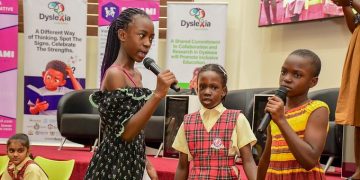



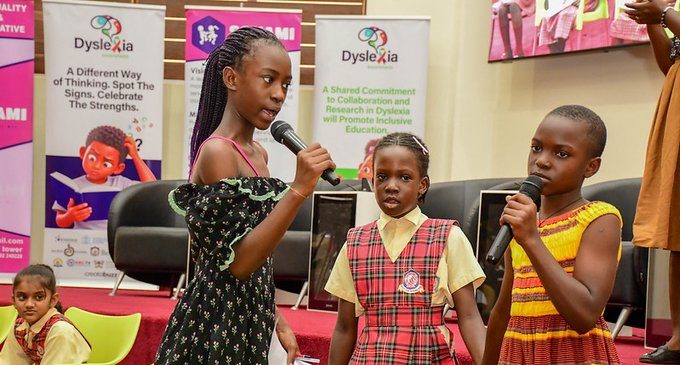
Makerere University and education stakeholders have called for stronger research, early screening and teacher training to improve support for learners with dyslexia in Uganda.
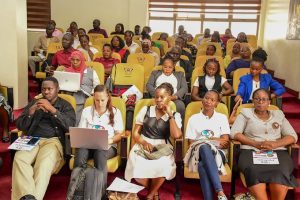
The call was made on October 2, 2026, during the fourth Annual Dyslexia Awareness Day held at the Makerere University School of Public Health Auditorium in Kampala. The event brought together researchers, educators, parents, learners and representatives of government and disability organisations.
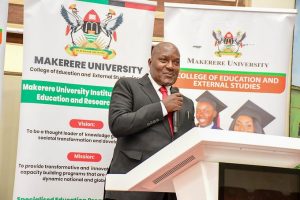
Representing Makerere Vice Chancellor Prof Barnabas Nawangwe, Prof Bruce Kirenga, Principal of the Makerere University College of Health Sciences, said more research was needed to establish the magnitude and nature of dyslexia in Uganda.
Nawangwe called for stronger collaboration between researchers, educators, parents and government institutions to move the discussion from awareness and evidence to practical changes in education.
“Teachers and parents endeavour to learn the differences of your learners and children,” Nawangwe said. “Dyslexia raises a platform for research so that we can be able to tackle the problem and find possible solutions to support learners with this condition.”
Makerere’s College of Education and External Studies was represented by Dr Charles Kyasanku, who spoke on behalf of its Principal, Prof Anthony M. Mugagga.
Kyasanku highlighted Makerere’s role in teacher training, research, assessment and inclusive education as part of efforts to improve understanding of dyslexia.
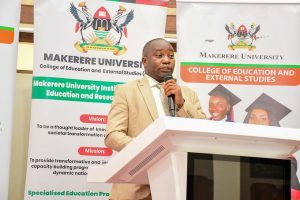
Prof. Fred M. Masaazi, Director of the Makerere Institute of Teacher Education (MITER), stressed the importance of collaboration among university leaders, educators, and researchers to advance awareness and inclusive education for learners with dyslexia.
“Collaboration among university leaders, educators and researchers is vital to advance awareness and inclusive education for learners with dyslexia,” he noted.
Dr Michael Walimbwa, a CEES faculty member who moderated the event, said gaps remained in public understanding of dyslexia.
“Significant gaps remain in societal understanding of dyslexia; we need to increase awareness and public understanding of dyslexia,” he said.
Ministry calls for earlier identification
In remarks delivered on her behalf by Sarah Bugoosi, Commissioner for Technical Support Services at the Ministry of Education and Sports, Permanent Secretary Dr Kedrace Turyagyenda said early identification of dyslexia and other learning difficulties could prevent learners from being wrongly labelled as lazy, stubborn or incapable.
Turyagyenda recounted the case of a child who could speak well and present ideas clearly but struggled when required to write.
“Recently, I also had a challenge with a child who could speak very well and present everything perfectly, but when it came to writing things down, we wondered: ‘But sincerely, this boy looks very normal. He can do everything,’” Turyagyenda said in remarks read at the event.
She said the child was eventually assessed by specialists, who produced a detailed report identifying the difficulties he was experiencing. “Basically, he could do everything, but there were other issues,” she said.
Turyagyenda said she wished the assessment had been conducted when the child was in Primary One or even at nursery level, arguing that earlier identification could have helped the learner progress through school without being subjected to negative labels.
“The boy would have progressed through school in a better way without being called stupid, stubborn, or someone who simply did not want to learn,” she said.
Turyagyenda said the experience demonstrated the need for schools and parents to recognise that learning difficulties may not always be immediately visible.
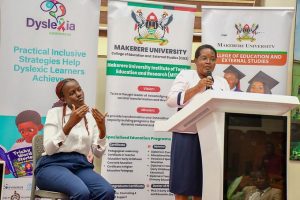
On her part, Commissioner Bugoosi said schools should not label children who struggle with reading and learning as unintelligent or unwilling to learn.
“Do not curse children who have difficulties in learning; instead, support and help them to learn without difficulty and ridicule,” she said. “Learners with dyslexia are not stupid. Having challenges in class does not mean they cannot be high achievers.”
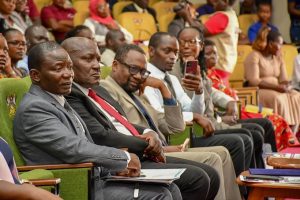
Bugoosi said the ministry would focus on three areas: strengthening early screening and assessment, building teachers’ capacity to support learners with learning difficulties, and promoting inclusive learning environments.
She said the ministry would work with the Uganda National Institute of Special Education and district education officers to integrate basic screening tools for learning differences at primary level.
She also said continuous professional development for teachers would include training on dyslexia and other learning difficulties.
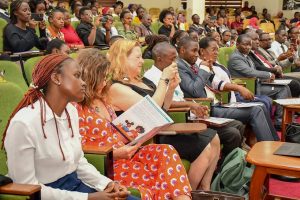
On classroom support, Bugoosi said learners with dyslexia should receive reasonable accommodation, including additional time during examinations where applicable, as well as access to assistive technologies and learner-friendly teaching methods.
The Ministry of Education and Sports has a department responsible for Special Needs and Inclusive Education, whose mandate includes increasing enrolment, participation and completion of schooling among learners with special learning needs.
Dr Vincent Muwonge, a research fellow at Makerere’s Makerere Institute of Teacher Education and Research, said parents also had a role to play in early identification.
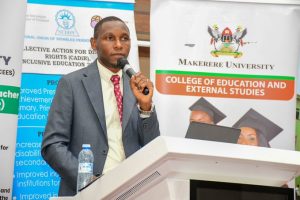
“Early identification of dyslexia starts with parents. Let us support children with dyslexia through their education and life journey,” he said while presenting on neurodiversity and dyslexic strengths.
The meeting also heard from people with direct experience of dyslexia.
Marion Kirabo, a Makerere University School of Law alumna, spoke about her experience of living with dyslexia and eventually earning a Bachelor of Laws degree.
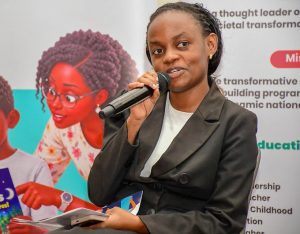
She attributed her progress partly to support from her family and teachers and called for stronger support systems for learners experiencing similar challenges.
Annemaaike Kruisselbrink of Backup Uganda said the purpose of the discussion was to help teachers and educators understand dyslexia and develop strategies for supporting learners.
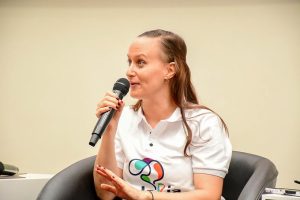
Rosalin K. Abigail, Executive Director of Africa Dyslexia Organisation, presented on neurodiversity in Africa.
The event also featured virtual presentations by Lauda Fidelis, 14, and Devotio Alvin, 18, from Indonesia, who shared their experiences of dyslexia.