


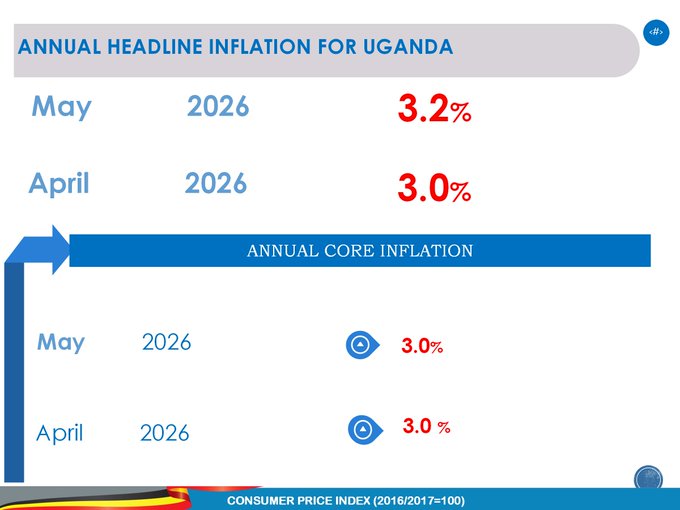
KAMPALA — Uganda’s annual inflation rate rose slightly to 3.2 percent in May 2026 from 3.0 percent recorded in April, according to the latest report released by the Uganda Bureau of Statistics (UBOS).
The increase was mainly driven by higher transport fares and rising fuel prices, which pushed up the cost of living for many households.
According to UBOS, the prices of services and energy products registered the biggest increases during the month.
According to the report, annual inflation for services increased to 4.6 percent in May from 4.1 percent in April. This was largely due to a sharp rise in road passenger transport costs, which jumped from 2.2 percent in April to 10.6 percent in May.
Fuel prices also rose significantly during the period. Annual inflation for liquid fuels climbed to 16.6 percent in May, up from 7.7 percent in April.
The report shows that petrol prices increased by 16.6 percent compared to 8.7 percent in April, diesel prices rose by 21.5 percent compared to 10.8 percent in April, kerosene prices jumped by 25.4 percent compared to 7.5 percent in April while cooking gas prices increased by 1.1 percent after recording a slight decline in April.
As a result, inflation for Energy, Fuel and Utilities increased to 9.1 percent in May from 6.1 percent in April.
Despite the rise in fuel and transport costs, food prices remained relatively stable.
Annual inflation for food crops and related items slowed to 0.2 percent in May from 0.6 percent in April. Prices of several staple foods either declined or increased at a slower rate.
UBOS reported that matooke prices fell by 3.4 percent after increasing by 14.1 percent in April. Sweet potatoes dropped by 10.5 percent, while fresh bean prices declined by 30.1 percent. Dry beans also became cheaper.
The report also noted lower inflation for several household food items, including maize flour, rice and sugar.
However, some fresh food products became more expensive during May. Tomato prices rose by 18.5 percent, onions by 4.6 percent, pineapples by 8.3 percent and green pepper by 8.6 percent.
On a monthly basis, inflation increased by 0.7 percent in May compared to 0.6 percent in April.
Among the major sectors of the economy, transport recorded the highest annual inflation rate at 6.7 percent, followed by housing, water, electricity, gas and other fuels at 4.5 percent.
Education services inflation remained unchanged at 4.1 percent, while insurance and financial services recorded the highest inflation rate among all categories at 12.6 percent.
Geographically, Kampala’s high-income households and Masaka recorded the highest annual inflation rates at 3.9 percent. Mbale registered the lowest inflation rate at 1.7 percent.
The report also showed that average retail fuel prices continued to rise. A litre of petrol increased from Shs5,428 in April to Shs5,940 in May, while diesel rose from Shs5,222 to Shs5,756.
Other commodities that registered price increases included beef, rice, tomatoes, onions, fresh fish and groundnuts.
UBOS said the overall Consumer Price Index increased from 140.13 in April to 141.09 in May, reflecting the continued rise in the cost of some goods and services across the country.
While inflation remains relatively low compared to historical levels, the latest figures indicate that fuel and transport costs are becoming the biggest contributors to rising consumer prices in Uganda.