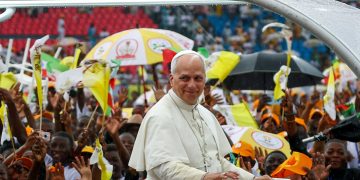



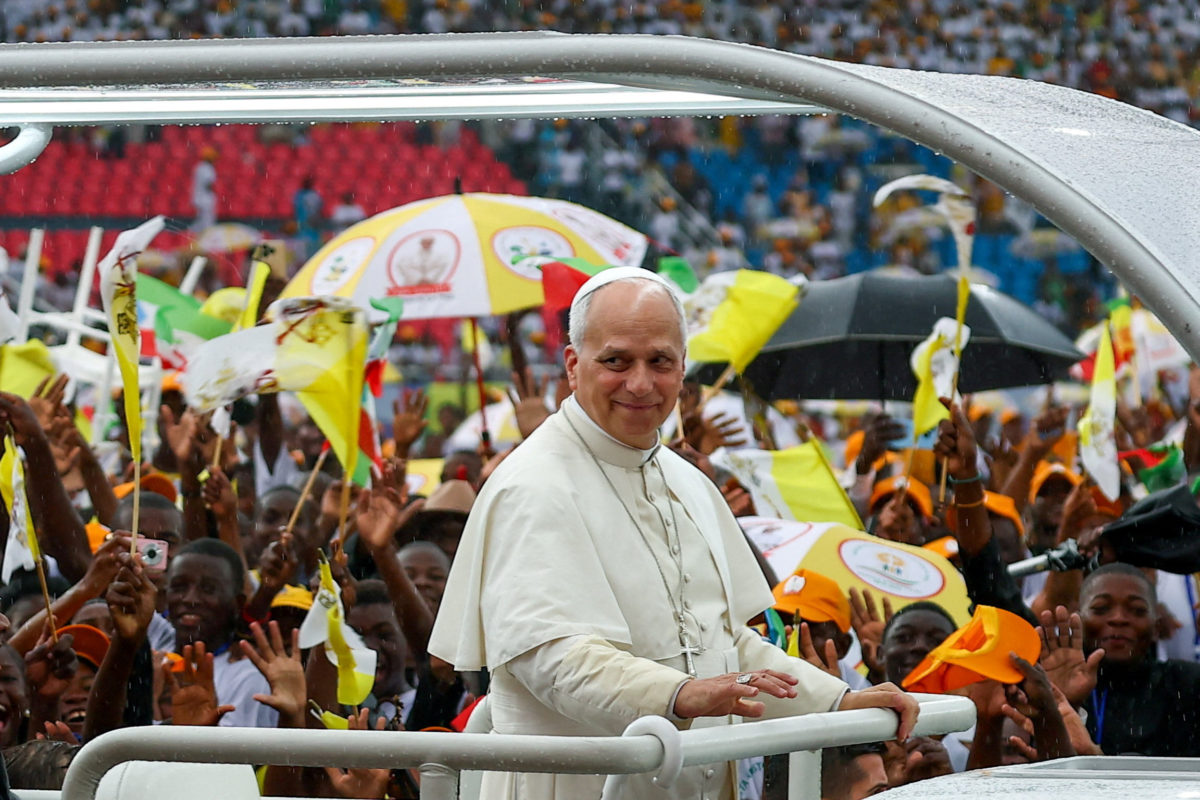
Rome / Africa — The Vatican has described Pope Leo XIV’s 11-day Africa tour (April 13–23, 2026) as one of the most ambitious apostolic journeys in recent papal history, marked by strong calls for peace, justice, and interfaith dialogue across four countries.
According to Vatican News, the pontiff’s first major overseas mission covered Algeria, Cameroon, Angola, and Equatorial Guinea, spanning 11 cities and nearly 18,000 kilometres of travel.
The tour, which included visits to mosques, prisons, hospitals and large public Masses, was framed around themes of reconciliation, governance, environmental justice, and the Church’s growing role in Africa, where Catholicism is expanding rapidly.
“As a pastor, not a politician”
Throughout the journey, Pope Leo repeatedly emphasised that his mission was pastoral rather than political.
According to Vatican reports, he said he travelled “as a pastor” to encourage the faithful and strengthen communities, avoiding direct political confrontation even amid global tensions.
Strong messages on peace and justice
In his addresses, the Pope issued some of his strongest public statements yet on conflict and governance.
He warned against violence and exploitation, condemning what he described as “the madness of war” and urging leaders to prioritise human dignity over power and profit.
Observers quoted by Vatican media said the Pope also criticised authoritarian tendencies and economic systems that deepen inequality, particularly in resource-rich regions.
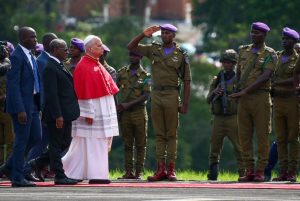
Africa at the centre of the Church’s future
The Vatican noted that the trip underscored Africa’s strategic importance to the Catholic Church, which now counts over one-fifth of its global faithful on the continent.
The Pope encouraged interfaith dialogue, particularly during his landmark visit to Algeria, where he stressed respect between religious communities and highlighted shared human values.
Reflection from Equatorial Guinea
Following the tour, Church leaders in Equatorial Guinea described the visit as a transformative moment for both religious and civic life.
Bishop Juan Domingo Beka Esono Ayang, President of the country’s Episcopal Conference, said the Pope’s message went beyond symbolism.
“The Holy Father has called both the Church and Christians engaged in social life to work for the coming of the Kingdom,” he said in remarks shared by Vatican media. “The future is not something to be awaited passively; it calls for the commitment of each and every one of us.”
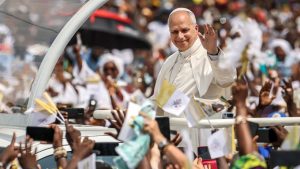
He added that the Pope’s emphasis on reconciliation must be understood in practical terms: “Communion does not mean uniformity. We must recognise the richness of the different cultures and peoples… it is this recognition that leads to true inclusion and prevents exclusion.”
Prison visit leaves lasting impression
One of the most talked-about moments of the tour was the Pope’s visit to a prison in Bata, where he met inmates and encouraged hope and rehabilitation.
“If we say that the Holy Father’s visit is a blessing, then that grace must reach every reality of the people,” Bishop Beka said. “They are our brothers and sisters… this is not their final destiny. They must hold on to hope.”
Legacy of a historic journey
The Vatican said the tour concluded on April 23 with the Pope returning to Rome, where he reflected on the journey during an in-flight press conference.
Church leaders across the visited countries described the trip as a “historic milestone” that combined spiritual encouragement with urgent social messages on peace, governance, and human dignity.