


KAMPALA — The Uganda Cancer Institute (UCI) has announced a historic breakthrough in the country’s healthcare system after successfully discharging Uganda’s first bone marrow transplant (BMT) patient, describing the milestone as a turning point in advanced cancer and haematology treatment.
The patient, Mr Sande Stephen, who had been battling multiple myeloma, was officially discharged at UCI Mulago after a successful transplant procedure carried out locally for the first time in Uganda.
“History is home! Uganda marks a massive medical win today as we discharge Sande Stephen, the nation’s first-ever bone marrow transplant patient,” the Uganda Cancer Institute said in a statement on X. “After battling multiple myeloma, Stephen’s journey proves that world-class, life-saving care is no longer a distant dream.”
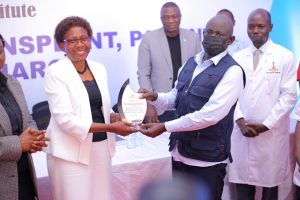
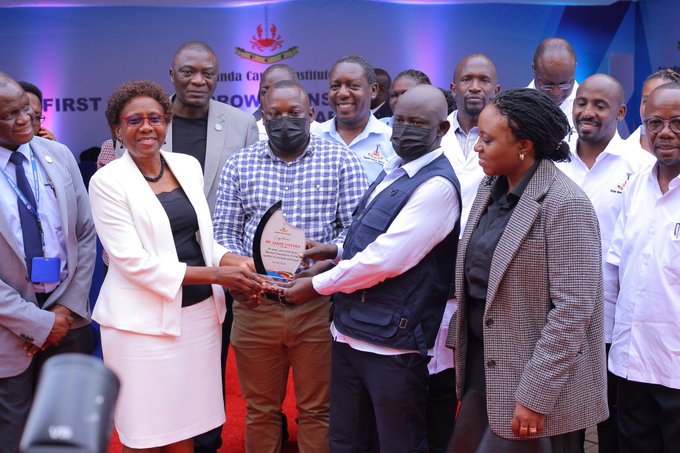
Minister of Health Dr Jane Ruth Aceng described the achievement as a defining moment for Uganda’s health sector, saying it reflects years of investment in local capacity building. “For decades, this cure meant selling land to go abroad,” Dr Aceng said. “Today, we have proven that ‘Made in Uganda’ care is world-class. Sickle cell cure is next.”
She added that the success aligns with Uganda’s broader Vision 2040 goals, particularly reducing medical tourism and strengthening domestic specialised care.
“This achievement is a direct result of government commitment to Vision 2040, especially our goal to eliminate medical tourism,” she said. “Every year, Ugandans spend millions seeking haematological care abroad. By successfully performing this transplant at UCI, we are proving that our specialists are second to none.”
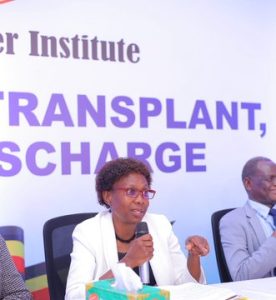
Dr Aceng also praised the medical team for handling what she described as a highly complex procedure. “You have demonstrated that with the right investment in infrastructure and training, Uganda can be a regional hub for specialised oncology and complex haematology,” she said. “You have managed the delicate post-transplant recovery phase with world-class precision.”
Minister of Health, Dr Diana Atwine, also commended the team, emphasising the technical achievement behind the procedure. “You have handled the complex challenges of high-dose chemotherapy and the delicate post-transplant recovery phase with world-class precision,” she said, adding that the milestone positions Uganda as a future leader in specialised care.
The government further highlighted plans to expand the Transplant and Cellular Therapy program at UCI, with officials indicating that the success of the procedure opens the door for a future cure for sickle cell disease in Uganda. “We are not just building centres; we are building a second chance at life for our people,” Dr Aceng said.
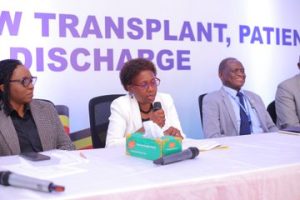
Mr Sande Stephen expressed gratitude to the government and medical staff for what he described as life-saving support.
“I am deeply grateful to the Government of Uganda for funding my treatment,” he said. “I have recovered well and am finally heading home. I would like to thank the Hon. Minister of Health, Dr Jane Ruth Aceng, and ask her to extend my appreciation to President Yoweri Kaguta Museveni for his unwavering support to the health sector.”
He also encouraged Ugandans to trust local medical expertise. “As I leave, I urge the public to start trusting our own Ugandan doctors; their expertise is world-class,” he said.
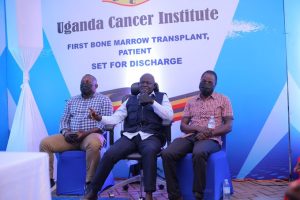
The pioneer patient credited members of the medical team for his recovery journey. “Dr Okuku got me from the bed, to the wheelchair, to now walking and going back to work,” he said. “He encouraged me and referred me to the bone marrow transplant team. I thank you.”
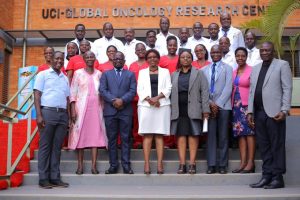
The transplant team, led by Dr Okello Clement, Head of the Bone Marrow Transplant Programme at UCI, was praised as the driving force behind the breakthrough.
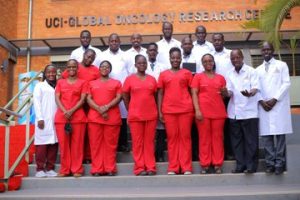
The Ministry of Health said the achievement represents a major step forward in reducing dependence on foreign treatment and building Uganda’s capacity for highly specialised care.
Officials and stakeholders described the milestone as the beginning of a new era in which Ugandans can access complex, life-saving procedures within the country, strengthening confidence in the national health system.