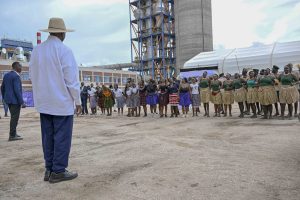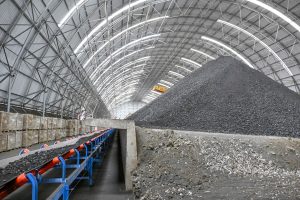



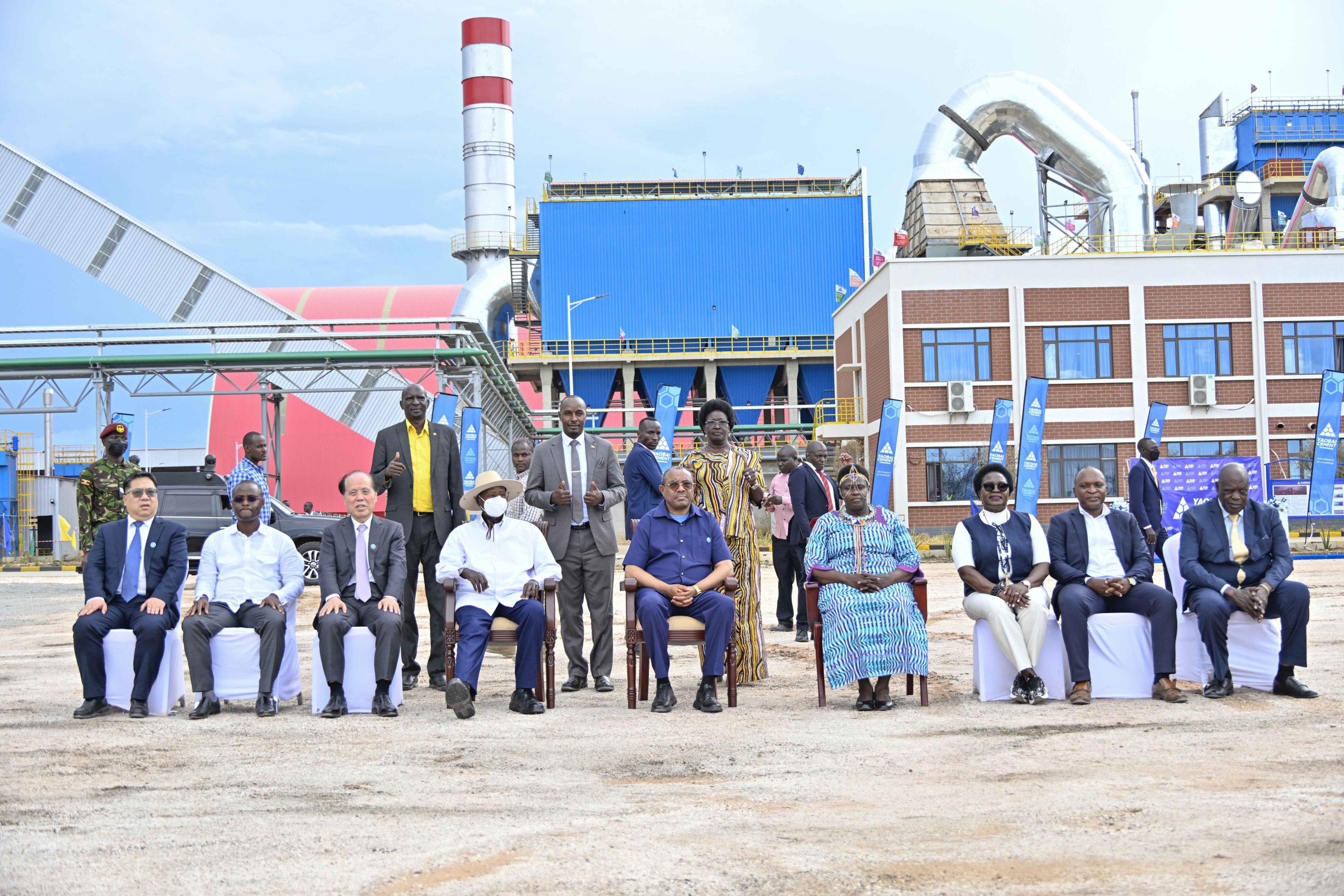
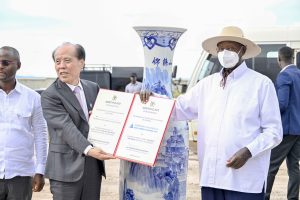
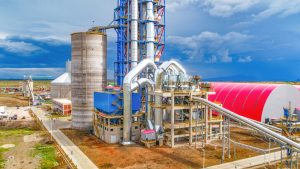
MOROTO — President Yoweri Kaguta Museveni has commissioned Phase One of a 6,000-tonne cement clinker production line by Yaobai Cement in Nanduget, Moroto District, in a move aimed at reducing Uganda’s dependence on imported clinker.
The commissioning ceremony was attended by former Ethiopian Prime Minister Hailemariam Desalegn Boshe, who played a key role in facilitating the investment by West China Cement.
President Museveni praised both investors and partners for supporting Uganda’s industrialisation agenda, particularly in cutting import costs.
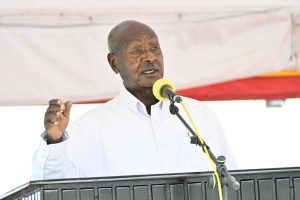
“I am very glad that Mr Zang, with the guidance of Hailemariam, has saved us from importing clinker,” President Museveni said, noting that clinker constitutes about 85 percent of cement production and had previously been sourced from abroad.
The President also expressed appreciation to the Government of China for encouraging its citizens to invest in Africa, citing ongoing investments in infrastructure and manufacturing sectors. He pledged continued government support through favourable tax policies aligned with national investment priorities.
Reflecting on regional transformation, Museveni highlighted the progress in Karamoja. “Karamoja, once among the least developed regions, is now emerging as an industrial hub due to its abundant natural resources,” he said, reiterating government plans to improve infrastructure, including key roads linking Moroto, Kotido and surrounding areas.
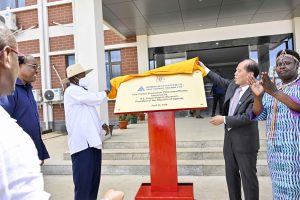
Former Ethiopian Prime Minister, Hailemariam Desalegn, now Africa Regional Ambassador for West China Cement, emphasised the broader significance of China–Africa partnerships.
He said such investments are “capable of aiding development and real economic transformation,” underscoring the mutual benefits of cross-continental collaboration.
Vice President Jessica Alupo commended the government for creating an enabling environment for investors. She said Uganda’s stable and attractive investment climate continues to draw major industrial projects into the country.
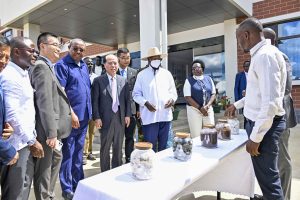
Energy and Mineral Development Minister Ruth Nankabirwa highlighted Karamoja’s transformation.
She noted that the region’s shift “from a conflict-prone area into a centre of industrial growth” demonstrates the impact of sustained peace and infrastructure development.
Local investor Ambrose Byoona revealed that the project was inspired by President Museveni’s long-standing vision to establish a clinker factory in Karamoja.
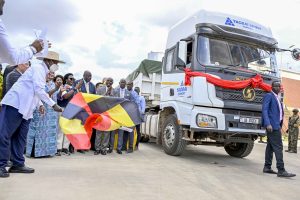
Moroto District LCV Chairperson Anjello Pulkol said the factory is already improving livelihoods. He noted that the investment has created jobs and credited the President for restoring peace in the region, which made such developments possible.
Chairman of West China Cement, Zang Jiewen, described the project as a milestone for Uganda’s industrial sector. “The plant represents a major milestone in strengthening Uganda’s industrial base,” he said, thanking President Museveni, the Chinese Embassy and other stakeholders for their support.
Zang disclosed that the project, valued at over $300 million, is expected to produce up to 2 million tonnes of clinker annually and 3 million tonnes of cement, generating approximately $300 million in annual output and creating more than 3,500 jobs at full capacity.
He added that the factory will significantly cut Uganda’s clinker import bill, saving an estimated $200 million annually in foreign exchange.
Beyond Uganda, the plant is expected to supply regional markets including South Sudan, western Kenya and the Democratic Republic of Congo, strengthening the East African construction supply chain.
China’s Chargé d’Affaires in Uganda, Fan Xuecheng, praised Uganda–China relations, noting that such partnerships continue to deliver tangible development outcomes.
He reaffirmed China’s commitment to supporting Uganda’s industrialisation through strategic investments and cooperation.