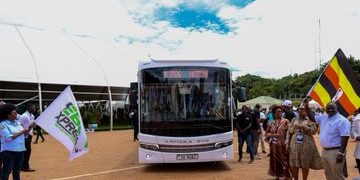



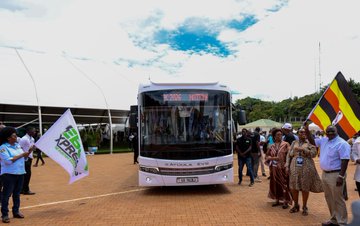
Kampala, Uganda — Kampala has taken a significant step toward modern, sustainable urban mobility with the official launch of the e-Bus Xpress, a new public transport system powered by locally manufactured electric buses.
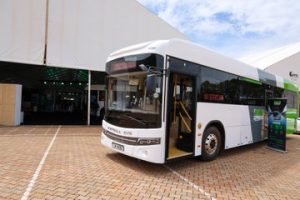
The service, unveiled during National Science Week 2026, is operated by E-Bus Xpress using the Made-in-Uganda Kayoola EVS buses produced by Kiira Motors Corporation. The initiative brings together government, private sector, and innovation partners to deliver a cleaner, smarter, and more efficient commuter experience.
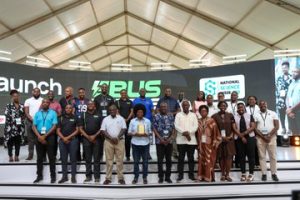
Speaking at the launch held on Sunday at Kololo Independence Grounds, Works and Transport Minister, Gen. Katumba Wamala, emphasised the importance of translating science into real economic impact.
“What was once discussed as a possibility is now becoming reality through practical innovations that people can see, experience, and believe in,” he said. “We must take these achievements beyond boardrooms and exhibitions to the wider public.”
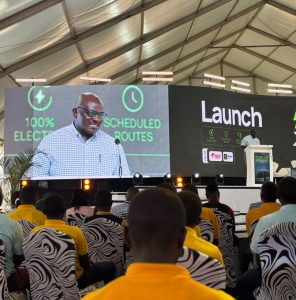
The Minister of State for Kampala Capital City and Metropolitan Affairs, Kyofatogabye Kabuye, highlighted the urgency of fixing the city’s transport challenges despite improvements in road infrastructure.
“Kampala’s biggest challenge remains the management of public transport and traffic flow,” he said. “Infrastructure alone is not enough without efficient, organised public transport systems. With initiatives like the e-Bus Xpress, we must embrace modern, reliable solutions.”
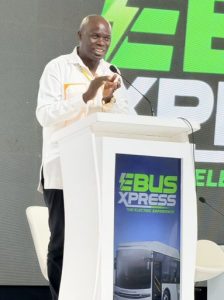
From a science and innovation perspective, the Minister for Science, Technology and Innovation, Dr Monica Musenero, described the project as a turning point in Uganda’s economic transformation.
“Science is not just a sector—it is an approach to the economy,” she said. “The launch of the e-Bus Xpress is a real, living example of connecting science to the economy. It shows how ideas from universities can translate into solutions that directly impact everyday life.”
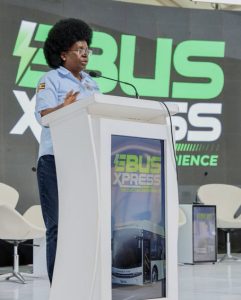
She added that modern transport systems can improve productivity by turning commuting time into productive time, helping address economic losses caused by congestion.
The Executive Director of E-Bus Xpress, Eng. Ian John Kavuma said the initiative goes beyond transportation. “Our vision goes beyond transporting people and goods. It’s about empowering communities and helping Ugandans realise their dreams through locally made solutions,” he said.

Kavuma revealed that the long-term goal is to produce 1,500 electric buses by 2030, a move expected to boost local manufacturing, create jobs, and reduce emissions.
On the digital side, telecom giant MTN Uganda has partnered with the project to power connectivity and payments. Speaking at the launch, the company’s Senior Manager for Government and Large Enterprise, Paul Luyima, outlined how technology will transform the commuter experience.
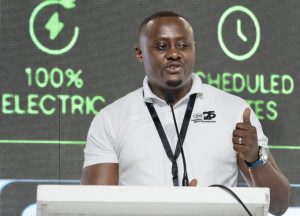
“Now our role as MTN is to enable this entire e-bus ecosystem through connectivity and digital solutions,” he said. “If you have a report to send or work to finish within your 30-minute commute, you can actually do it while on the move.”
He added: “We’ve also implemented a cashless payment system, allowing passengers to easily pay using MTN MoMo. At the same time, we are supporting other networks to ensure payments are seamless across the board.”
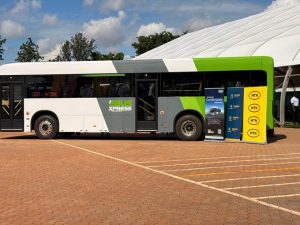
The e-Bus Xpress launches with eight buses currently operating on the Kampala city centre–Ntinda route, charging a fare of Shs2,000. The buses feature air conditioning, onboard Wi-Fi, and cashless payment systems designed to deliver a more comfortable and efficient travel experience.
The project has been supported by multiple stakeholders, including the Ministry of Works and Transport, Kampala Capital City Authority, the STI Secretariat, and private sector partners such as Britam and Victoria Motors.
As Uganda pushes forward with science-led development, officials say the e-Bus Xpress signals a broader shift toward innovation-driven solutions in public services. “Uganda is not just imagining the future of transport,” Dr Musenero said. “We are building it, launching it, and scaling it today.”