



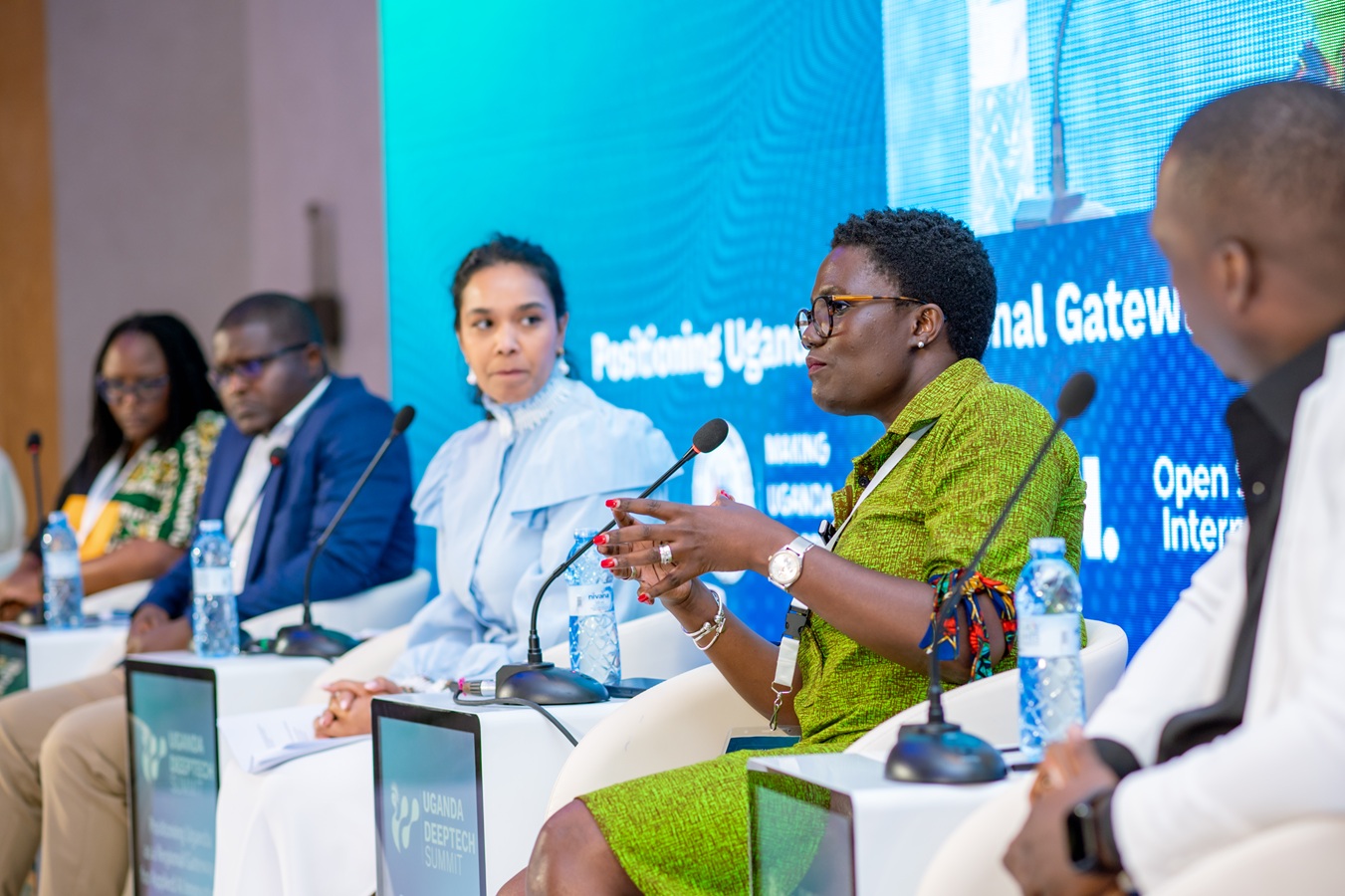
Uganda’s push to position itself at the forefront of Africa’s artificial intelligence (AI) future took centre stage at the Uganda DeepTech Summit, a flagship event under the National Science Week 2026.
The summit brought together global policymakers, researchers, innovators, and technology leaders. It was agreed that Uganda must urgently bridge the gap between its education system and the rapidly evolving demands of an AI-driven economy.
Uganda has made notable strides in digital transformation, particularly in mobile innovation, financial inclusion, and e-governance. Experts say the country risks falling behind if it does not transition from basic digitisation to deploying intelligent, AI-driven systems.
Speaking at the summit, the Minister of Science, Technology and Innovation, Monica Musenero Masanza, underscored both the progress made and the structural challenges that remain.
“For too long, our systems have produced knowledge without translating it into economic value. The gap between what we teach and what the market needs is what we have called the ‘Black Box’. We must now close that gap by turning science into products, industries, and jobs,” she said.
The latest State of Science, Technology and Innovation (STI) report has revealed that industrialisation linked to STI stands at 10.6%, while commercialisation remains as low as 5.5%. Access to financing for innovation is also limited at 16.8%, highlighting a disconnect between academic output and real-world application.
At the heart of the discussions was a growing consensus that Uganda’s education system, largely inherited from colonial-era frameworks, has not kept pace with the demands of modern technology industries. Participants pointed out that while curricula exist, they are often overly theoretical and insufficiently aligned with industry needs.
Participants argued that the solution lies in developing African-built AI tools tailored to local needs. In sectors like agriculture and healthcare, critical to Uganda’s economy, AI applications designed for the local context could deliver a transformative impact.
“As the Tech summit convenes experts from the private sector, government and academia from all over the world, we must utilize these insights on how different markets are utilising AI in different sectors through data center infrastructure development, application development, upskilling and more and apply this acquired knowledge within the STI ecosystem to build AI enabling infrastructure in different sectors, noted David Gonahasa, from the Science, Technology and Innovation Secretariat.
Key proposals emerging from the summit included integrating private sector players into academia to provide students with hands-on experience, establishing research labs for graduates to continue developing practical solutions, and revising assessment methods to prioritise innovation over rote learning.
There was also a strong call to upskill educators. Experts warned that resistance to AI in classrooms could widen the skills gap further.
“AI is already shaping how students learn, whether we like it or not,” said one education specialist. “The question is whether teachers will lead that process or be left behind by it.”
Beyond education, the summit highlighted broader systemic gaps that continue to limit Uganda’s AI ambitions. These include a shortage of high-performance computing infrastructure, fragmented data ecosystems, and underinvestment in research and development. Currently, Uganda invests just 0.17% of its GDP in STI, far below the 2.5% target outlined in Vision 2040.
Despite these challenges, there are signs of progress. Government-led initiatives have begun to demonstrate the economic potential of science and innovation. Over the past five years, the STI ecosystem has generated assets worth an estimated USD 1.52 billion: more than four times the initial government investment and created over 150,000 jobs.
“The runway has been built,” Minister Musenero said, “Now it is time for takeoff.” For Uganda, that takeoff will hinge not just on adopting new technologies, but on building the human capital and local solutions needed to compete in a global digital economy on its own terms.