


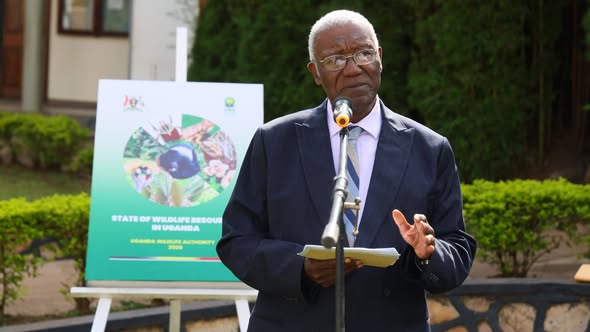
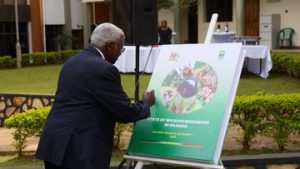
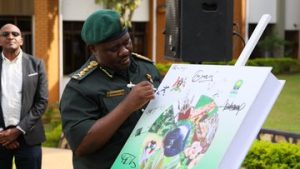
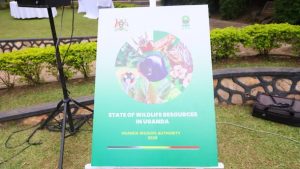
KAMPALA — Uganda Wildlife Authority (UWA) has launched the “State of Wildlife Resources Report”, a comprehensive national assessment highlighting both progress and ongoing challenges in protecting the country’s biodiversity.
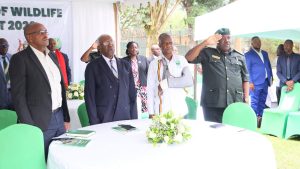
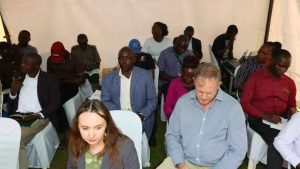
The report was unveiled at UWA offices in Kamwokya, Kampala, on Tuesday, in collaboration with partners including the Wildlife Conservation Society, the National Environment Management Authority, and the Jane Goodall Institute.
Speaking at the launch, Tourism, Wildlife and Antiquities Minister Tom Butime commended the team behind the report, describing it as a vital document reflecting Uganda’s commitment to conservation. “A report only matters when it’s used—Uganda’s wildlife is our shared responsibility,” he said.
Butime emphasised that wildlife remains a cornerstone of Uganda’s economy, supporting tourism, biodiversity, climate regulation, and community livelihoods. He also praised partners for their continued collaboration in advancing conservation efforts.
The report highlights ongoing restoration initiatives, including rhino conservation and growth in areas like Kidepo Valley National Park and Ajai Wildlife Reserve.
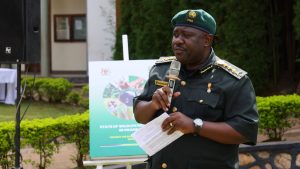
According to UWA Executive Director Dr James Musinguzi, the agency remains committed to innovation and partnerships despite persistent threats. “Despite persistent threats, UWA remains unwavering in its commitment to innovations in monitoring and protection of wildlife resources, strong partnerships, and community engagement to ensure that Uganda’s wildlife not only survives, but thrives for generations to come,” he said.
The report also underscores the growing use of technology in conservation, including digital surveillance systems and real-time monitoring tools such as EarthRanger, which are improving protection across wildlife areas.
However, officials warned that significant challenges remain, including poaching, habitat loss, climate change, invasive species, and human-wildlife conflict.
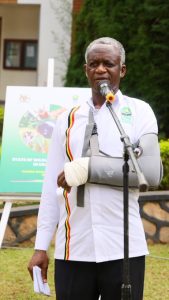
UWA Board Chair James Kalema called for policy reforms to strengthen conservation outcomes. “The State of Wildlife Resources Report will guide tourism planning and conservation by helping Uganda better understand seasonal wildlife population trends,” he said, adding that there is a need to review the Uganda Wildlife Act and enhance real-time data use.
The government has pledged continued support through infrastructure development, capacity building, and improved access to conservation areas, including road upgrades in tourism corridors such as Kabale–Ruhija and Buhoma.
The report stresses the importance of public engagement and evidence-based decision-making, urging stakeholders—from government and investors to communities and learners—to actively use its findings.
Uganda remains one of Africa’s most biologically diverse countries, supporting over 18,000 recorded species of flora and fauna, including over 4,800 species of native plant species, more than 1,000 bird species, globally significant mountain gorillas, chimpanzees, elephants and giraffes, all of which are vital for ecosystem stability, water regulation, climate resilience and future agricultural adaptation.
The report particularly highlights the growing conservation significance of Uganda’s flora, documenting threatened indigenous cycads, crop wild relatives of coffee, finger millet, pearl millet, sorghum and eggplants, as well as several foods, medicinal, fuel, and construction plant species whose habitats are increasingly under pressure from land conversion, invasive species spread, agricultural expansion and climate-related changes.
These plant resources, some of which are strictly endemic to Uganda, are identified as critical national genetic assets for food security, ecological restoration and biodiversity resilience. On the animal population front, the latest surveys indicate continued positive recovery among several species under active conservation management.
Buffalo populations increased from 32,235 in 2021–2022 to 41,548 in 2023–2025, hippopotamus populations rose from 8,226 to 9,026, Uganda kob from 166,526 to 175,109, waterbucks from 16,638 to 22,623, zebras from 17,762 to 20,942, topis from 1,805 to 3,809, common elands from 3,510 to 3,619, while Nubian giraffes increased from 2,414 to 2,519 during the same period.
Uganda has also continued to register one of the continent’s most notable species recovery successes especially the Southern White Rhinoceros population, which increased from 43 to 61 rhinos under sustained breeding and protection management. Uganda’s international standing as a key great ape conservation destination remains reinforced, with mountain gorilla numbers remaining stable at 459, while chimpanzee estimates increased from 5,072 to 6,075 across major forest ecosystems.
The report shows that conservation gains are not uniform across all species. While several herbivore populations continue to recover, some flagship wildlife populations remain under pressure. Elephant populations in monitored Protected Areas declined from 6,621 in 2021–2022 to 6,352 in 2023–2025, while lion numbers reduced from 314 to 291.
This underscores the need for intensified habitat protection, prey base recovery, ecological corridor management and stronger human-wildlife conflict mitigation. The report warns that Uganda’s wildlife remains under significant and growing pressure. Expanding human settlements, agricultural encroachment, infrastructure development, extractive activities and continued fragmentation of wildlife habitats are steadily reducing ecological space for wildlife movement and regeneration.
The report also identifies invasive alien and problematic native plant species, climate variability, illegal wildlife use, unsustainable resource extraction and persistent human-wildlife conflict as major threats affecting both floral and fauna populations. These pressures continue to undermine ecosystem integrity and threaten the long term sustainability of conservation gains if not addressed through sustained investment and coordinated national action.