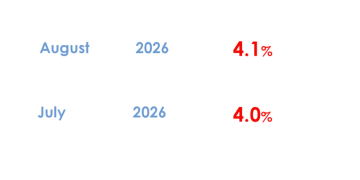



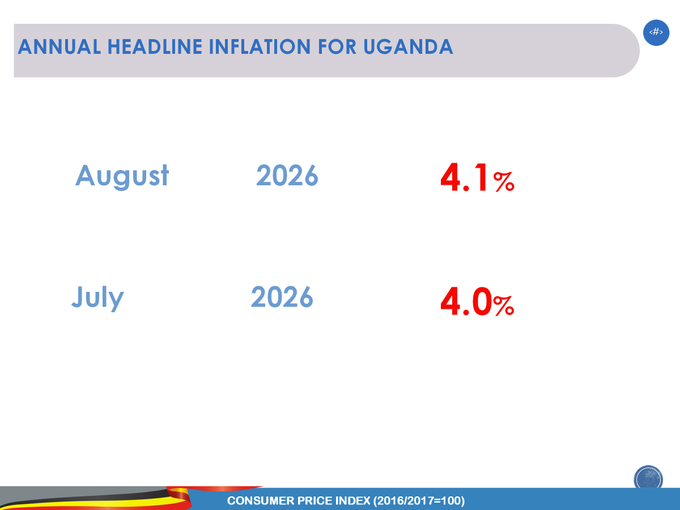
KAMPALA — The cost of living in Uganda rose slightly in August, with annual inflation increasing to 4.1 percent, up from 4.0 percent in July, according to the Uganda Bureau of Statistics (UBOS).
The increase means prices of goods and services were, on average, 4.1 percent higher in August 2026 than they were in August 2025.
UBOS said the rise was mainly linked to higher prices of several food items, including rice, maize grain, Nile perch, cassava flour, matooke, Irish potatoes, mangoes and pineapples.
The figures were released as part of the latest Consumer Price Index, which tracks changes in the prices of goods and services bought by households.
Food prices rise
Inflation for food crops and related products increased to 2.1 percent in August, from 1.6 percent in July.
Some food prices recorded sharp increases during the month.
The price of Irish potatoes rose by 12.2 percent over the year, compared with an increase of just 0.6 percent in July.
Smoked Nile perch recorded an annual price increase of 23.3 percent, up from 10.5 percent in July.
Cassava flour was among the biggest movers, with its price rising by 30.3 percent over the year, compared with 25.7 percent in July.
Rice prices increased by 4.7 percent, up from 2.2 percent in July.
Maize grain prices, which had fallen by 16.2 percent in July, recorded an annual increase of 1.6 percent in August.
The price of maize flour continued to fall, although only slightly, declining by 0.4 percent compared with a 2 percent drop in July.
Not every food item became more expensive.
Matooke prices were still 7 percent lower than a year earlier, although the fall was smaller than the 15 percent decline recorded in July.
Fuel remains expensive
Energy, fuel and utilities continued to record some of the highest annual price increases, although inflation in this category eased slightly.
Annual inflation for energy, fuel and utilities stood at 14.3 percent in August, down from 14.9 percent in July.
Petrol prices were 28.5 percent higher than a year earlier, compared with 29 percent in July.
Kerosene prices increased by 31.2 percent, slightly lower than the 31.6 percent increase recorded in July.
Charcoal prices rose by only 2.1 percent, down from 4.5 percent in July.
The figures suggest that while fuel prices remain considerably higher than they were last year, the pace of increase has started to slow.
Airtime and other services
Some services also became more expensive.
Airtime calling charges increased by 10.1 percent in August, compared with no change in July.
Hairdressing services recorded an annual increase of 0.9 percent, down sharply from 5.1 percent in July.
International flight charges also increased compared with last year, but the rate of increase slowed from 24.1 percent in July to 17 percent in August.
The price of crude waragi fell by 3.6 percent over the year.
Prices rise during the month
The increase in prices was also visible in the month-to-month figures.
Monthly headline inflation rose to 0.3 percent in August, from 0.2 percent in July.
Monthly core inflation, which excludes some items whose prices tend to change sharply, increased from 0.1 percent to 0.2 percent.
Food prices were among the main reasons for the monthly increase.
Matooke prices rose by 8.4 percent in August after falling by 14.8 percent in July.
Mango prices jumped by 24.8 percent, while pineapple prices increased by 26.4 percent.
Dry bean prices rose by 2.4 percent after falling by 0.6 percent in July.
Other household items also became more expensive. Bathing soap prices increased by 5.5 percent, cassava flour by 2.6 percent and live chickens by 5.1 percent.
Kampala records highest inflation
There were significant differences in inflation across the country.
Kampala High Income recorded the highest annual inflation at 4.9 percent, although this was slightly lower than the 5 percent recorded in July.
Jinja followed with 4.8 percent, up from 4.2 percent in July.
Mbarara recorded the lowest inflation among the geographical centres measured by UBOS, at 2.9 percent, down from 3.2 percent in July.
In Kampala High Income, the increase was partly linked to higher prices in information and communication services.
In Jinja, food and non-alcoholic beverages played a major role, with inflation in the category rising to 4.1 percent from 2.5 percent in July. Information and communication inflation also increased sharply.
Mbarara, meanwhile, benefited from slower increases in housing, water, electricity, gas and other fuels, as well as transport.
What the numbers mean for households
The 4.1 percent headline inflation rate does not mean that every household experienced a 4.1 percent increase in its monthly expenses.
Families spend their money differently. A household that buys a lot of food, for example, may feel the impact of rising cassava flour, fish, fruits and vegetables more strongly than a household whose major expenses are rent, transport or education.
And this is where inflation statistics meet ordinary life.
Uganda’s annual headline inflation has therefore remained relatively moderate, but the latest figures show that some essential goods are rising much faster than the overall inflation rate.