


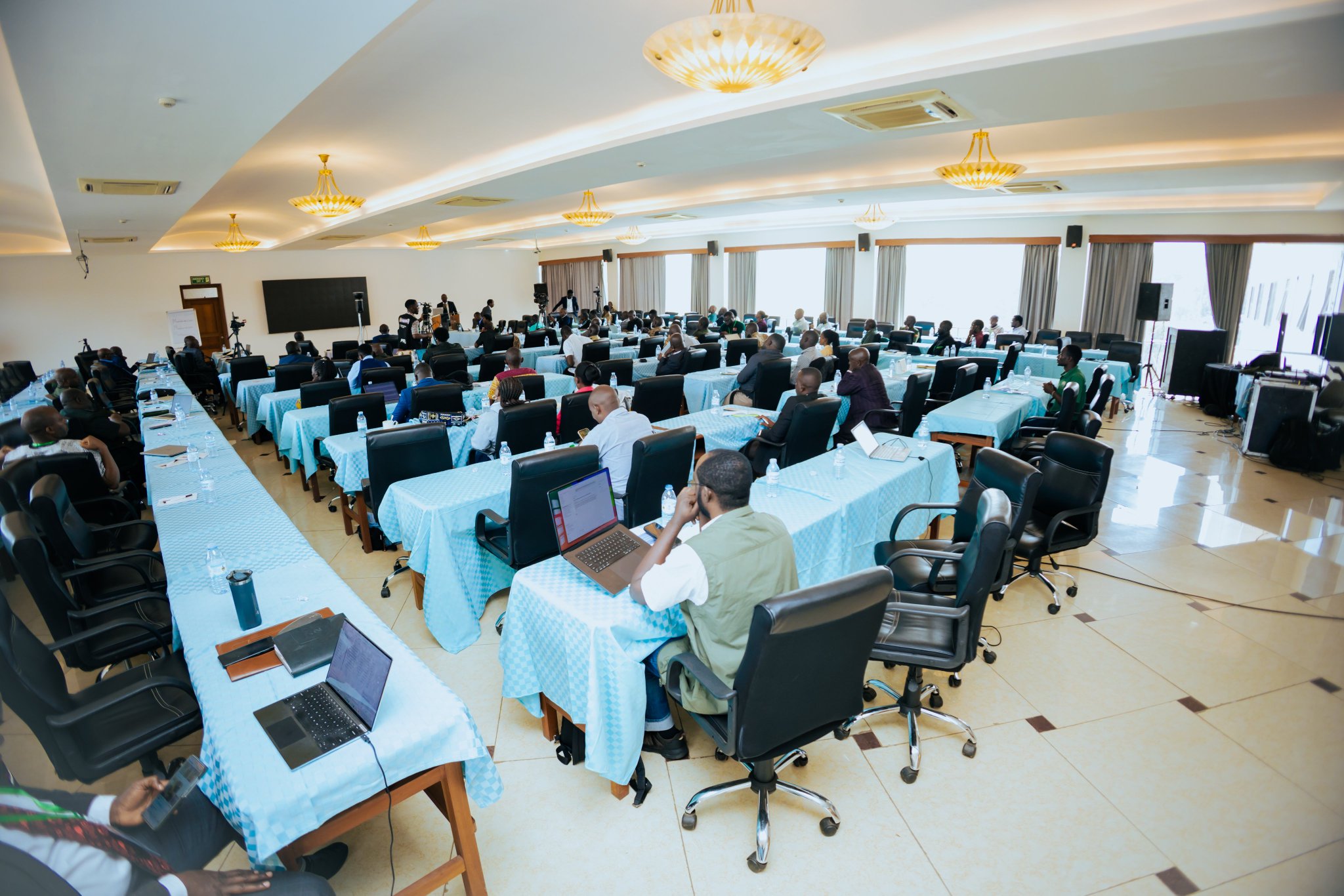
Experts in conservation and wildlife management have reaffirmed the central role of research in safeguarding Uganda’s biodiversity, calling for stronger collaboration, increased data-driven interventions, and more coordinated action across institutions.
Speaking at the inaugural National Biodiversity and Innovation Research symposium, John Makombo, Commissioner for Biodiversity Management at Uganda Wildlife Authority (UWA), emphasised that research remains the backbone of effective conservation.
“A lot of work has been done in UWA estates to improve wildlife conservation, but research has been critical in helping us understand exactly what we are managing,” Makombo said. “You cannot manage what you do not know. Research continues to uncover new insights that guide our interventions.”
Makombo noted that UWA has increasingly relied on research to test conservation strategies and assess their effectiveness. He pointed to ongoing studies examining the impact of climate change on wildlife distribution, which are helping conservationists anticipate future shifts and plan accordingly.
“Through research, we can test different interventions and determine what works best. We are already seeing how climate change is altering wildlife habitats and movement patterns, and this helps us prepare for what lies ahead,” he added.
Beyond ecological monitoring, UWA has also invested in disease-related studies, particularly zoonotic diseases that can be transmitted between animals and humans.
According to Makombo, findings from this research are directly shaping wildlife management policies and practices.
The symposium also highlighted the importance of breaking institutional silos to maximise the impact of research.
Emmanuel Akampurira, Manager Research at the Uganda Wildlife Research and Training College, described the gathering as a crucial platform for collaboration.
“This symposium has brought together key players in the wildlife sector, allowing us to share research findings and take stock of what has been done,” Akampurira said. “As academicians, we often focus on publications, but forums like this enable us to translate research into practical, actionable solutions.”
He stressed that conservation challenges are too complex for any single institution to address alone, underscoring the need for partnerships across government, academia, and the private sector.
Echoing these sentiments, Dr Caroline Asiimwe, Assistant Commissioner for Research and Ecological Monitoring at UWA, said research is indispensable in informing evidence-based conservation and protected area management.
However, she warned that Uganda’s biodiversity is under growing pressure from multiple threats, both within and outside protected areas.
“We are witnessing a decline in biodiversity, with some species such as lions in Kidepo Valley National Park recording decreasing numbers, alongside a rise in human-wildlife conflict,” Asiimwe noted.
She added that climate change and invasive species are intensifying these challenges, calling for deeper research into the underlying drivers.
“Climate change is not only affecting ecosystems directly but is also contributing to the emergence of invasive species. There is a need to better understand these dynamics and undertake more studies that can help reduce pressure on biodiversity,” she said.
Makombo reiterated UWA’s commitment to working with stakeholders to address the issues raised during the symposium.
“As UWA, we are mandated to collaborate with all stakeholders to mitigate these challenges, reduce their impact on biodiversity, and restore affected ecosystems,” he said.