


Uganda used two high-level meetings in New York on September 23 to push for stronger legal protections for women and girls and greater African cooperation against terrorism and violent extremism.
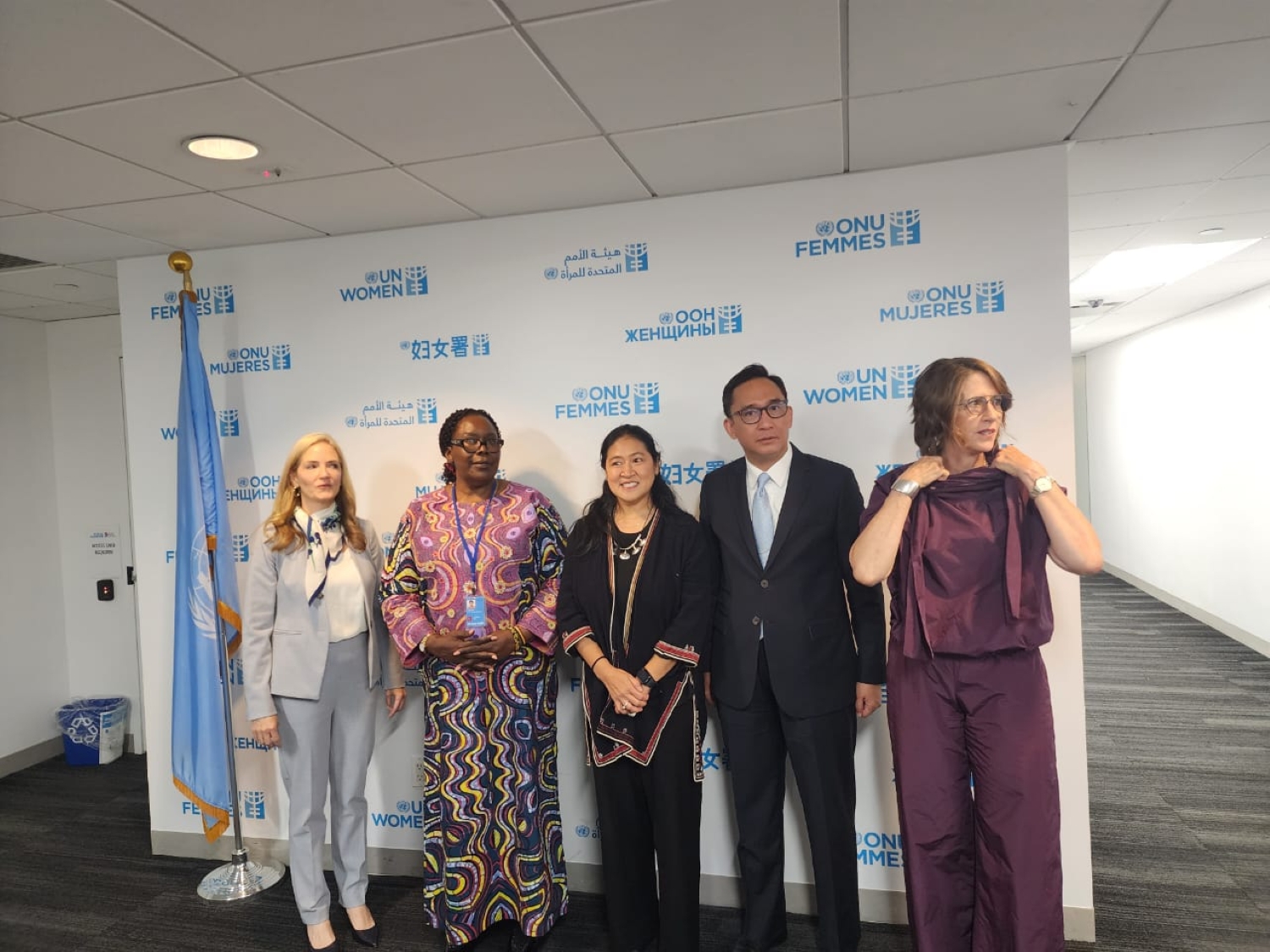
The interventions, made on the sidelines of the 81st United Nations General Assembly, were led by Ambassador Rebecca Amuge Otengo, Uganda’s Permanent Representative to the African Union and the UN Economic Commission for Africa.
At a UN Women side event on legal equality for women and girls by 2030, Otengo highlighted Uganda’s constitutional guarantees and recent legal reforms, including the 2022 Succession Amendment Act, which provides for equal inheritance rights and protection of family residences.
She said legal reforms must translate into practical improvements in women’s lives through accessible institutions, effective enforcement and survivor-centred justice.
Uganda identified three priorities for accelerating progress: reforming discriminatory laws and strengthening institutions and accountability; ensuring meaningful participation of women in lawmaking and enforcement; and extending legal equality to marginalised groups, including women affected by conflict, women with disabilities and those living in rural areas.
The UN Women meeting focused on continuing legal barriers affecting women in areas including citizenship, nationality, inheritance, property ownership, political participation and access to justice. UN Women’s 2026 review similarly says legal equality remains incomplete globally and calls for accelerated action towards the 2030 target.
Uganda’s position also comes against a backdrop of remaining gaps in its own legal and institutional framework. UN Women data show that Uganda had achieved 77.8% of the relevant legal frameworks under the SDG indicator for gender equality, with gaps remaining across areas including violence against women, employment and economic benefits, and marriage and family.
Uganda calls for joint action against terrorism
At a separate meeting on “Good Neighbourliness and Regional Responses to Security and Terrorism Challenges in Africa,” Otengo called for stronger regional cooperation to counter terrorism and violent extremism.
She said the threats were transnational and could not be addressed effectively through isolated national responses.
“Terrorism and violent extremism do not respect borders,” Otengo said. “Terrorist groups exploit ungoverned spaces, local grievances, weak border controls, illicit financial flows, and transnational criminal networks. No Member State can defeat a cross-border threat through national action alone.”
Uganda called for greater intelligence-sharing, joint threat assessments and closer cooperation between security and law-enforcement agencies.
Otengo also urged adequate funding for the African Union Counter-Terrorism Centre to improve coordination between national and regional institutions, facilitate intelligence-sharing and strengthen institutional capacity.
The Ugandan delegation further called for integrated border management through the African Union Border Programme and implementation of the Niamey Convention, while urging greater involvement of communities living along borders.
Uganda argued that security measures should be accompanied by investment in public services, livelihoods and legitimate cross-border trade, with border areas developed as economic and social links rather than security flashpoints.
The delegation also called for the African Standby Force and its regional components to become fully operational, with predictable financing, logistics and the capacity for timely deployment.
Uganda identified youth unemployment, exclusion, radicalisation, disinformation, arms trafficking and terrorism financing among factors that can contribute to insecurity, while highlighting women, youth, traditional leaders, civil society and the private sector as partners in prevention and community resilience.
Otengo also called for clearer coordination between the African Union, Regional Economic Communities and Regional Mechanisms to reduce duplication and clarify responsibilities.
On financing, Uganda backed stronger support for African-led peace and security operations, including implementation of UN Security Council Resolution 2719, which provides a framework for financing African Union-led peace support operations through UN assessed contributions.
“Africa’s borders should unite rather than divide security efforts,” Otengo said. “Africa’s borders must not divide our security efforts.”
The security meeting placed regional cooperation, border governance, continental institutions and sustainable financing at the centre of Uganda’s position on terrorism, while linking security to development and regional integration. Uganda’s intervention was also reported separately from New York on September 24.
The two interventions put Uganda’s UN General Assembly agenda around two distinct but interconnected questions: how legal equality can become enforceable rights for women and girls, and how African states can build collective institutions capable of responding to threats that cross national borders.