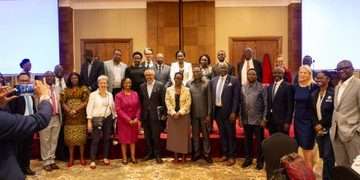



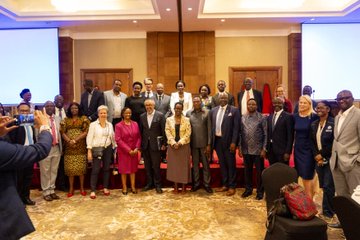
KAMPALA — Uganda’s Ministry of Health has announced plans to support the Democratic Republic of Congo (DRC) in containing the ongoing Ebola outbreak, emphasizing that regional cooperation will be critical in defeating the deadly disease.
The commitment was made during a high-level meeting convened by the Ministry of Health with support from the World Health Organization. The meeting brought together WHO Director-General Tedros Adhanom Ghebreyesus, ambassadors, heads of mission and development partners to receive an update on Uganda’s Ebola response efforts.
Leading the Ministry’s delegation, Permanent Secretary Dr. Diana Atwine reaffirmed Uganda’s commitment to transparency, timely information sharing and evidence-based interventions in managing the outbreak.
She attributed the progress registered so far to strong political support from President Yoweri Kaguta Museveni, whom she credited with consistently championing Uganda’s response to public health emergencies.
Dr. Atwine said Uganda was prepared to extend support beyond its borders to help neighbouring DRC contain the outbreak.
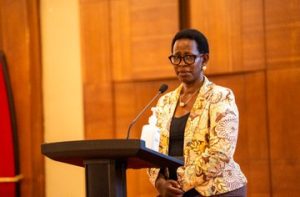
“DRC is our brother country and through regional partnerships and efforts, we shall be able to defeat this outbreak,” she said.
As part of efforts to strengthen surveillance and testing capacity, Uganda has already established two Ebola laboratories at key border entry points, one in Mpondwe on the Uganda-DRC border and another in Arua.
The Permanent Secretary also appealed to countries that have imposed travel restrictions on Uganda to reconsider their decisions, arguing that such measures are not supported by scientific evidence and could undermine response efforts.
Echoing her remarks, Dr. Tedros said travel bans and trade restrictions are ineffective tools for controlling Ebola outbreaks and may instead hamper the delivery of essential supplies, personnel and equipment required to manage the disease.
“Travel restrictions are not helpful in controlling Ebola outbreaks and can negatively affect the movement of essential supplies, personnel and commodities needed to support response efforts,” Dr. Tedros said.
He warned that unnecessary restrictions risk undermining trust, transparency and international cooperation, while commending countries that have adhered to WHO recommendations by avoiding travel and trade barriers.
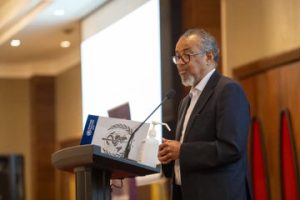
The WHO Director-General further stressed that governments must remain at the centre of outbreak response efforts, with development partners aligning behind national priorities.
“Governments remain in the driving seat of the response and partners are required to support efforts including one plan, one budget and one monitoring and evaluation framework,” he said.
Dr. Tedros praised Uganda’s management of the outbreak and commended the Ministry of Health under the leadership of Dr. Atwine for its coordinated response.
He also reaffirmed WHO’s continued commitment to supporting Uganda through technical expertise, logistical assistance and other resources required to contain the outbreak.
The meeting highlighted the importance of regional collaboration in managing cross-border health threats and reinforced calls for coordinated action between Uganda, the DRC and international partners to prevent further spread of Ebola in the region.