


KAMPALA — Uganda is expanding access to lenacapavir, a long-acting HIV prevention drug, as health officials report strong demand for the six-month injection, particularly among highly informed and financially empowered men.
The drug is currently available free of charge through the Ministry of Health programme, with support from the Global Fund and manufacturer Gilead Sciences.
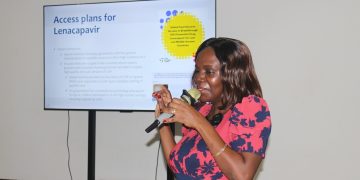
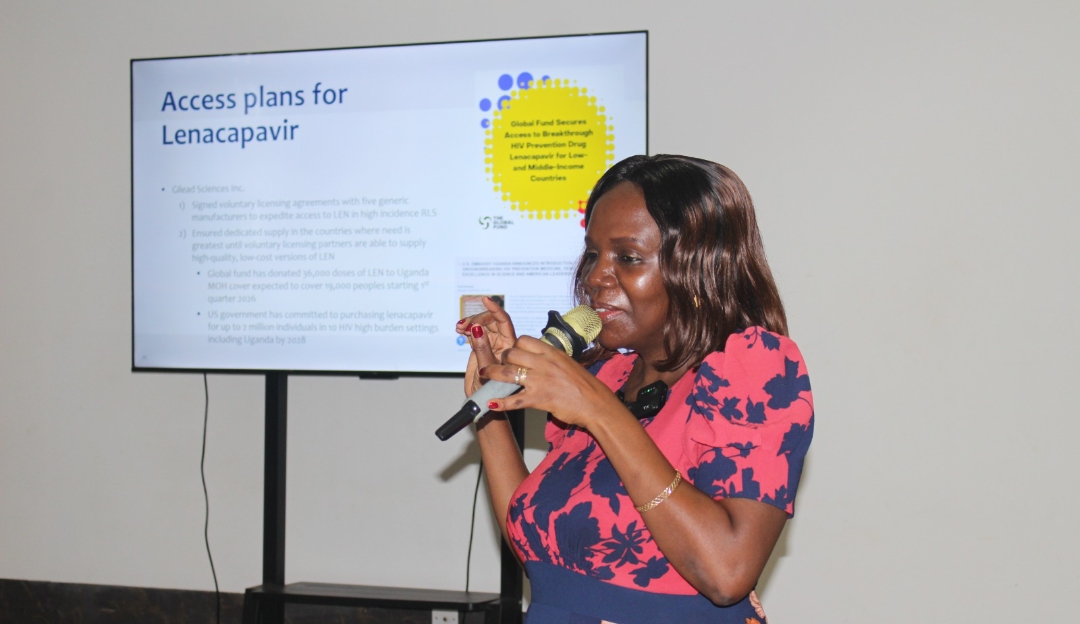
Speaking during a media health engagement at Skyz Hotel Naguru in Kampala on Tuesday, Dr Flavia Matovu Kiweewa, Director of Research at Makerere University-Johns Hopkins University (MU-JHU) Research Collaboration and National Principal Investigator, said lenacapavir had evolved from a treatment option for people with highly resistant HIV into a powerful prevention tool.
“Before you test a drug for prevention, it has to be proven to work in treating that condition,” Dr Matovu said. “So, for HIV prevention, the drug must already have demonstrated that it can treat HIV.”
Lenacapavir was initially developed and approved as an antiretroviral treatment for people who had exhausted other HIV treatment options.
According to Dr Matovu, such patients had often progressed from first-line to second- and third-line treatment after developing resistance, leaving them with few effective options.
“Lenacapavir was tested in heavily treatment-experienced individuals—people who were not responding to other forms of therapy—and it was able to suppress their viral load,” she said.
Its effectiveness in controlling highly resistant HIV later raised another question: could the same drug prevent HIV infection in people who had not yet acquired the virus?
“That is how lenacapavir came to be tested for HIV prevention,” Dr Matovu said. “The results showed that it is highly effective at preventing HIV infection.”
Uganda rollout
Uganda has so far received about 36,000 doses of lenacapavir, with approximately 19,200 doses arriving in March and additional supplies subsequently delivered.
Dr Matovu said more than 6,000 people may have already been initiated on the prevention programme, although the number continues to change as the rollout expands.
The initial programme covered 103 health facilities, but the Ministry of Health plans to increase the number to about 300 facilities.
“The idea is to distribute the available doses across the country rather than have them concentrated only in Kampala, Lira or another major town,” she said.
However, supply remains limited, with relatively small quantities being allocated to individual facilities. As a result, doses are being used quickly in areas where demand is high.
Any person at risk can access lenacapavir
One of the significant changes in Uganda’s approach has been the expansion of eligibility.
Dr Matovu said demand for the drug emerged even before prevention guidelines were opened more broadly, with professionals and people outside traditionally defined HIV priority populations seeking access.
Among those seeking the drug, she said, were ministers, Members of Parliament, professors, bankers and businesspeople.
“That tells you that someone you may not think is at risk may actually perceive themselves to be at risk,” she said.
The programme has therefore moved away from restricting access to specific categories such as sex workers or other traditionally identified priority populations.
“Any person in Uganda who feels they are at risk of HIV can access lenacapavir,” Dr Matovu said.
Men dominate uptake
Despite the wider eligibility, uptake has not been evenly distributed between men and women.
“More than 70 per cent of those currently benefiting from lenacapavir are men,” Dr Matovu said.
She attributed the imbalance largely to differences in access to information.
“Men are getting information through mainstream media, social media, newspapers and other platforms,” she said. “They may therefore learn about the new prevention option more quickly and feel empowered to seek it. We also want to see more women accessing it,” she said.
Free for now
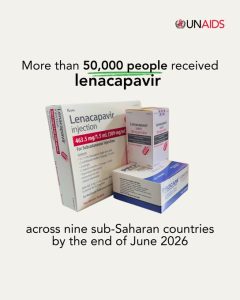
For users, lenacapavir is currently provided at no cost through the government programme. “The cost of lenacapavir is currently free to the user through the Ministry of Health programme,” Dr Matovu said.
She said the Global Fund is financing the programme while Gilead supplies the drug, adding that generic versions are expected in the future.
“We hope that once generic versions become available, lenacapavir could also be accessed through private pharmacies and clinics,” she said.
Protection does not begin immediately
Dr Matovu also warned users against assuming that the injection provides immediate protection.
People receiving the injection must take accompanying tablets to rapidly raise drug levels in the body.
“You receive the injection and two tablets, and then you take two additional tablets the following day,” she said.
“Within approximately 48 hours—two full days—you should have enough drug in your system to provide protection.”
During that period, she advised users to either abstain from sex or use condoms. “If you do not take the accompanying tablets, it can take about 28 days for the injection alone to reach protective drug levels,” she said.
Expansion and future research
The drug is already available at facilities in several parts of Uganda, including Kampala, Mbarara, Mukono, Mityana, Fort Portal, Lira and Arua, with plans to expand to about 300 sites.
Dr Matovu said researchers are also studying whether a single injection could eventually protect against HIV for an entire year.
The PURPOSE 365 study is examining the drug’s pharmacokinetics—how it behaves and remains in the body—over 12 months. “If the results are positive and the product is licensed, we could potentially have a once-yearly lenacapavir injection for HIV prevention in the coming years,” she said. “That would be a major development.”
But as Uganda expands the programme, Dr Matovu said the challenge is no longer simply making the drug available. It is ensuring that information and access reach everyone who could benefit.