


Uganda’s conservation community is charting a new path anchored in science, collaboration, and digital innovation, as stakeholders rally around a shared vision to protect the country’s rich but increasingly threatened biodiversity.
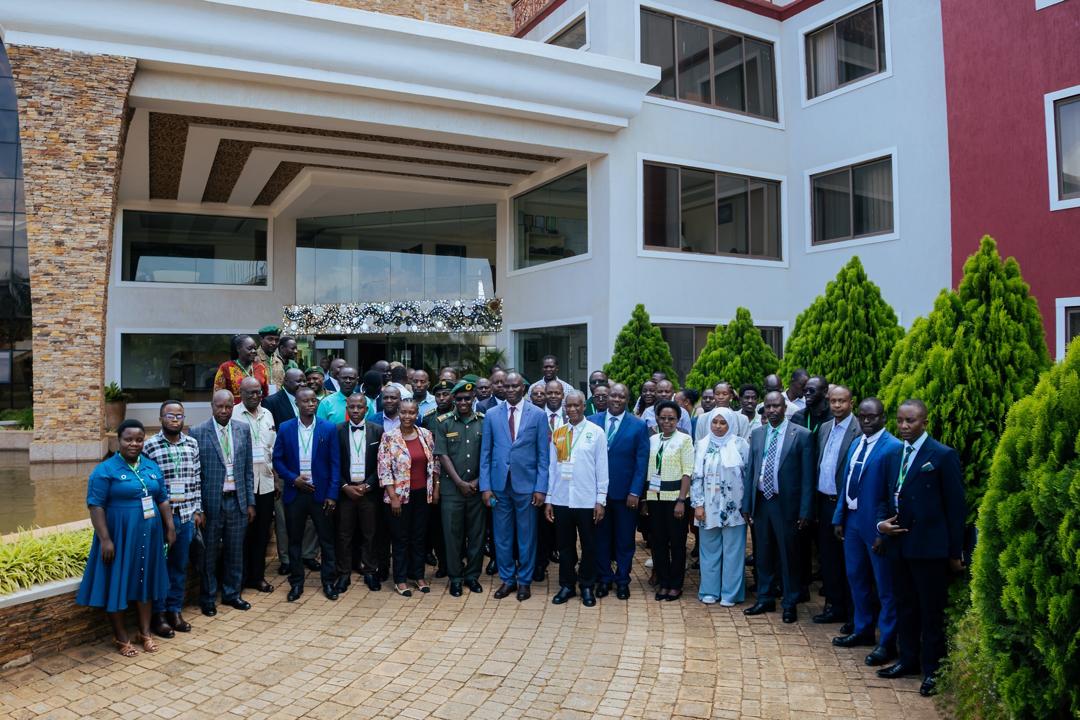
The undertaking was made at the National Biodiversity and Conservation Research Symposium 2026, where stakeholders from government, academia, and conservation organisations converged under the theme “Biodiversity Under Threat: Science, Innovation and Collaborative Responses.”
Speaking at the symposium, Uganda Wildlife Authority (UWA) Executive Director James Musinguzi underscored the urgency of addressing growing threats to biodiversity through research. From climate change and habitat degradation to human-wildlife conflict and illegal resource extraction, the pressures facing Uganda’s ecosystems are intensifying.
“There are many threats affecting biodiversity and wildlife, and these must be addressed using empirical data and research,” he noted. “We must adopt data-driven approaches if we are to deliver sustainable solutions.”
Musinguzi emphasised that science must take centre stage in wildlife management, particularly within protected areas, where long-term conservation success depends on informed decision-making. He also called for a shift away from fragmented efforts among government institutions, urging a more coordinated approach to maximise impact despite limited resources.
“We want to move away from working in silos and instead pool our resources to create meaningful change,” he said.
He hinted at a planned establishment of a centralised national biodiversity data repository that will serve as a hub for research, knowledge sharing, and innovation. The platform is expected to consolidate data from various institutions, making it accessible to researchers, policymakers, and global partners.
He noted that such a repository will not only help bridge existing knowledge gaps but also position Uganda as a contributor to global conservation science. Musinguzi explained that by making biodiversity data widely available, the country can attract research partnerships, inform policy, and even generate funding opportunities.
Robert Baluku, Principal of the Uganda Wildlife Research and Training College (UWRTC), pointed out that Uganda’s biodiversity is not only an environmental asset but also a critical pillar for livelihoods and economic development. As such, protecting it requires integrating science with policy, community engagement, and innovation.
He noted that conservation efforts have often been undermined by fragmented data and duplicated research.
“One of the greatest needs in conservation today is a shared wildlife research database,” he said. “Too often, institutions work independently, limiting the impact of their work. A centralised system will enable collaboration, improve efficiency, and accelerate solutions.”
In line with this vision, stakeholders announced plans to launch a Wildlife Research Journal, a dedicated publication aimed at disseminating scientific findings and amplifying local research on a global stage.
The journal will provide a credible platform for conservation scientists to publish their work, ensuring that knowledge generated within Uganda informs both national strategies and international discourse.
“We want to ensure that research conducted here does not remain on shelves but is shared widely to influence conservation practice and policy. We want knowledge to be shared, not stored,” Baluku said. “This journal will provide a credible platform for dissemination and elevate Uganda’s contribution to global conservation science.”
Baluku added that UWRTC is positioning itself as a centre of excellence in applied wildlife research, aligning its work with Uganda’s National Development Plan IV, which prioritises science, technology, and innovation in ecosystem management.
Chief Guest Basil Ajer, representing the Minister of Tourism, Wildlife and Antiquities, reinforced the central role of research in shaping Uganda’s conservation future.
He underscored the need to invest in scientific inquiry as the backbone of policy and decision-making.
Ajer noted that without strong research systems, conservation efforts risk being reactive rather than strategic. He called for increased support toward research institutions, data systems, and innovation, highlighting that science must guide interventions in the face of evolving environmental pressures.
“Research is not optional, it is fundamental,” he emphasised, pointing out that credible data is essential for designing policies that balance conservation with national development priorities.
The Chairperson UWA Board of Trustees, Professor James Kalema, further echoed the call for deeper scientific investment, stressing the importance of understanding ecosystems through continuous research and documentation.
He highlighted that biodiversity conservation must be grounded in strong ecological knowledge, warning that gaps in data and documentation weaken conservation outcomes.
Kalema also emphasised the importance of linking research to practical action, ensuring that findings translate into real-world solutions.
Beyond research and policy, discussions also highlighted the role of communities in conservation, particularly in addressing human-wildlife conflict. Participants stressed that sustainable solutions must integrate local knowledge and promote community participation.