


KAMPALA — The Titular Head of Muslims in Uganda, Prince Kassim Nakibinge Kakungulu, has called on Members of Parliament to place national interests above partisan politics and legislate in ways that promote unity and improve the welfare of Ugandans.
Speaking during a luncheon hosted for the Muslim Parliamentary Caucus at his residence in Kibuli on Friday, June 19, 2026, Prince Nakibinge said Uganda possesses numerous sectors that unite its people, including education, healthcare and economic development, and urged legislators to focus on these shared priorities rather than political divisions.
“There is no reason why we should waste our energies on those trivialities. Rather, let us utilise our energies for the good of our people. When you perform well, you take the credit. Thus, you should strive for it so that everybody believes in your capacity,” Prince Nakibinge said.
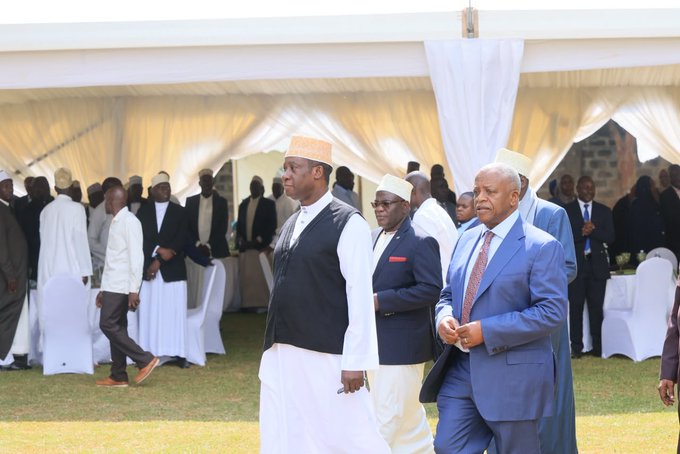
The event, which followed Juma prayers at Kibuli Mosque, brought together Muslim legislators and other dignitaries to reflect on national development and the role of Parliament in advancing the country’s interests.
Former Prime Minister Amama Mbabazi, who was the chief guest, echoed Prince Nakibinge’s call for political cooperation, stressing that the interests of Uganda and the welfare of its citizens should transcend party affiliations.
“Uganda’s transformation requires unity of purpose. Listen to one another, respect differing viewpoints, seek common ground, and present a united front on issues of development, poverty eradication, education, youth empowerment and ethical governance,” Mbabazi said.
He added that while political competition is a vital component of democracy, it should not hinder collaboration on matters that are critical to the country’s future.
Mbabazi also challenged legislators to play a central role in guiding Uganda’s transition into an oil-producing nation by ensuring that petroleum revenues are invested strategically to generate sustainable and long-term prosperity.
“Oil is finite; therefore, it must be viewed as a springboard, not a destination,” he said. “The revenues generated from petroleum should be invested strategically to promote both vertical and horizontal integration across the economy. They should strengthen sectors that will continue to create wealth long after the last barrel of oil has been extracted.”
Citing estimates that Uganda’s petroleum reserves could support production for between 25 and 30 years, Mbabazi warned against relying solely on oil wealth and urged lawmakers to prioritise investments that will secure future generations.
He identified agriculture and agro-processing, science and technology, energy generation, manufacturing, transport infrastructure, education and skills development as key sectors capable of driving long-term economic transformation.
“Prioritising these sectors can build an independent, integrated and self-sustaining economy that can thrive for generations beyond the lifespan of our oil reserves. You are custodians of an exhaustible national asset whose benefits must extend far beyond the present generation,” he noted.
The Chairperson of the Muslim Parliamentary Caucus, Hon. Hassan Kirumira, reaffirmed the caucus’s commitment to advancing the welfare and interests of the Muslim community while contributing to Uganda’s broader national development agenda.
The meeting highlighted growing calls for greater political cooperation and strategic planning as Uganda prepares to enter the oil production era and confronts the challenges of sustainable economic transformation.