


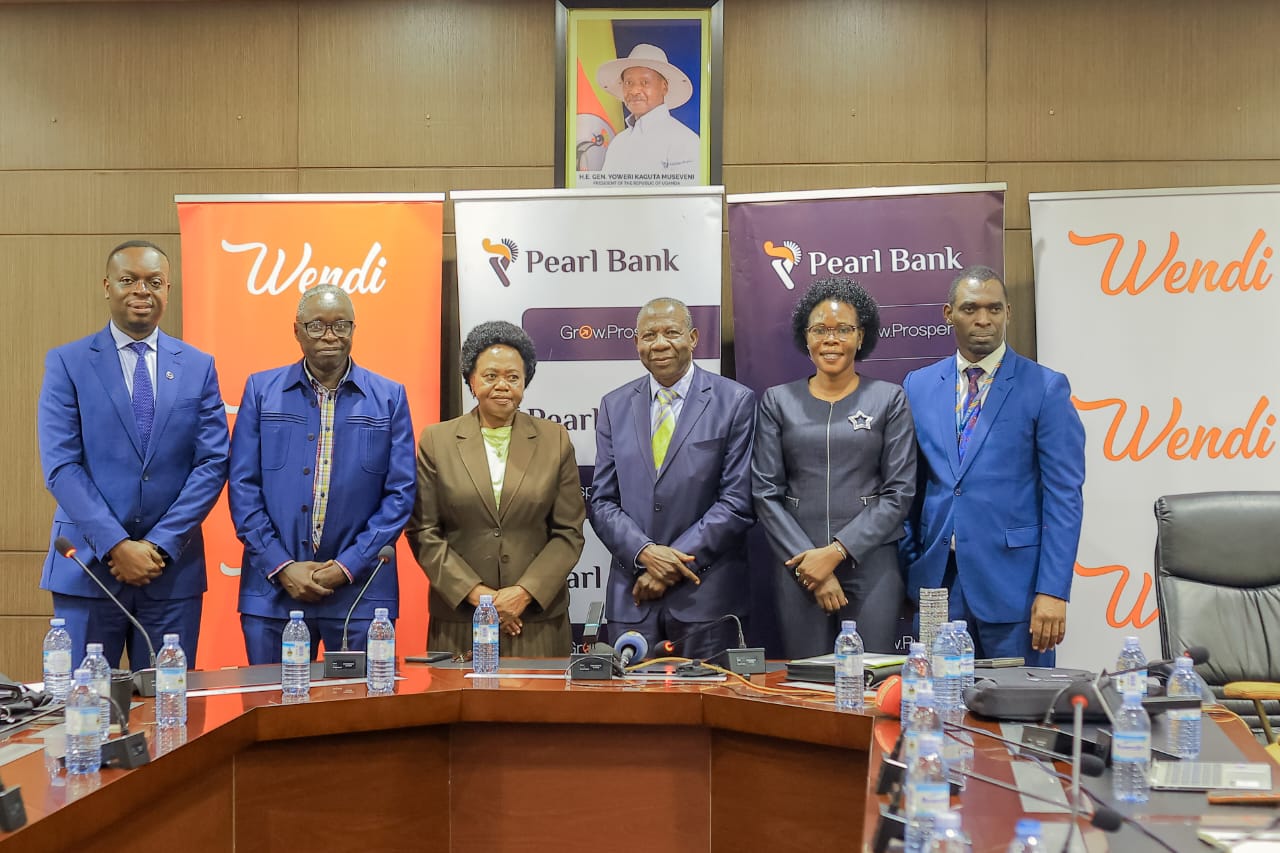
The Minister of Finance, Matia Kasaija, has praised the strong performance of Pearl Bank Uganda, describing it as evidence of a growing economy and rising confidence in local financial institutions.
Speaking at the bank’s Annual General Meeting held in Kampala on May 5, 2026, Kasaija commended the board and management for delivering robust results in the 2025 financial year.
“During last year’s AGM, I told colleagues that money had come—and Pearl Bank, you did not disappoint. The 2025 performance reaffirms this. Colleagues, money has come,” Kasaija said.
Strong financial performance
Pearl Bank reported a 34 percent increase in net profit to UGX 47.3 billion in 2025, up from UGX 35.4 billion in 2024. Total income rose to UGX 298 billion, while customer deposits surged by 43 percent to UGX 1.4 trillion.
Kasaija said the figures reflect broader economic expansion across sectors. “When I look at Pearl Bank’s performance, I see more than numbers. I see evidence that the Ugandan economy continues to move from strength to strength,” he noted.

He added that the bank’s growth aligns with government priorities under the ATMS (Agriculture, Tourism, Mineral Development, and Science & Technology) strategy aimed at achieving tenfold economic growth by 2040.
Call for innovation and digital expansion
The Finance Minister urged the bank to deepen its investment in technology and financial inclusion. “If we are to bring more Ugandans into the formal financial system, we must meet them where they are—on their phones, in their communities, in their daily transactions,” he said.
“Invest more in digital platforms. Leverage technology, including emerging tools like artificial intelligence, to lower the cost of service and improve access.”
Ugandan banks must compete regionally
State Minister for Investment and Privatisation Evelyn Anite echoed the call for growth, highlighting Pearl Bank as a model of a successful homegrown institution. “It is inspiring to see a fully Ugandan bank delivering results at this level. Pearl Bank is not just participating in the market—it is proving that Ugandan institutions can compete,” Anite said.
She emphasised the bank’s competitive advantages, including a strong customer base, alignment with government priorities, and agility to innovate. “The opportunity before Pearl Bank is clear—leverage these strengths to compete, not just locally, but regionally,” she added.
Anite challenged the bank to expand its reach, particularly among rural communities, women, and youth entrepreneurs, while accelerating digital transformation. “Do not just be a good Ugandan bank. Be a great African bank,” she urged.
Rebrand signals transformation
The AGM marked the bank’s first financial results under its new identity following its rebrand from PostBank Uganda to Pearl Bank, a transition approved by shareholders and cleared by the Bank of Uganda.
Board Chairman Andrew Otengo Owiny said the rebrand represents a major milestone in the institution’s evolution. “The rebrand has successfully positioned Pearl Bank as a modern, impact-driven national commercial bank, firmly anchored in Uganda’s development agenda,” Owiny said.
Digital growth and financial inclusion
A key highlight of the bank’s performance was the rapid growth of its digital platform, Wendi, whose deposits increased more than fivefold to UGX 240.5 billion.
Managing Director Julius Kakeeto attributed the growth to increased customer trust and a deliberate focus on financial inclusion.

“The growth in customer deposits is a clear vote of confidence from our customers, while the rapid adoption of Wendi demonstrates the power of digital platforms,” Kakeeto said. “We are building a bank that is not only profitable but also relevant to the everyday lives of Ugandans.”
Economic impact
Pearl Bank reported significant lending to key sectors, including UGX 340 billion to agriculture and UGX 398 billion to micro, small, and medium enterprises, supporting thousands of farmers and businesses.
The bank also expanded its outreach through more than 10,000 agents across the country, supporting government initiatives such as the Parish Development Model.