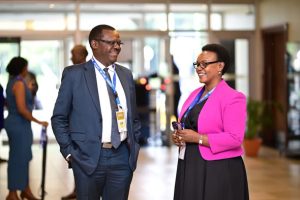



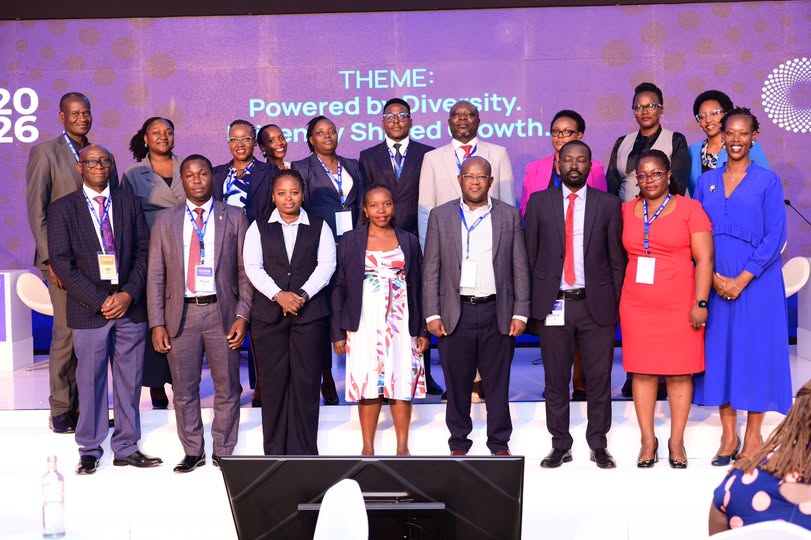
KAMPALA — The National Social Security Fund (NSSF) has called on suppliers to embrace innovation, sustainability, professionalism and inclusive growth as the Fund officially opened the NSSF Suppliers Forum 2026 under the theme “Powered by Diversity. Driven by Shared Growth.”
The forum, held at the Sheraton Hotel in Kampala, brought together suppliers, regulators, procurement professionals, business leaders and policymakers to discuss procurement opportunities, supplier development, sustainability, and social protection.
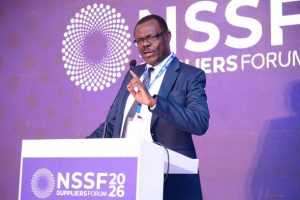
Speaking at the forum, NSSF Managing Director Patrick Ayota said the future success of the Fund would depend not only on internal operations, but also on the strength of its partnerships and supplier ecosystem.
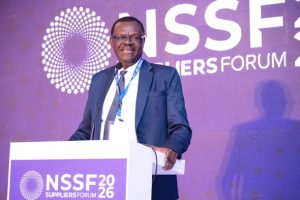
“The future of NSSF extends beyond the Fund itself,” Ayota said. “It will be driven by stronger partnerships, thriving enterprises, and a shared commitment to national transformation.”
Ayota stressed that suppliers should not be viewed merely as vendors, but as strategic partners contributing directly to the Fund’s ability to deliver efficient services to members. “You are not just service providers,” he said. “Your contributions are essential in enabling the Fund to deliver faster, more responsive, and dependable services to our members.”
He noted that organisations today are operating in an increasingly volatile environment shaped by rapid technological change, supply chain disruptions and growing sustainability expectations. “Success will belong to organisations and partners that remain resilient, adaptive, and forward-looking,” Ayota said.
He added that innovation and agility would be critical in shaping the Fund’s future direction. “Partnerships capable of bringing fresh thinking and stronger capabilities will be key to shaping the Fund’s future success,” he said.
Ayota described the Suppliers Forum as part of NSSF’s broader strategy to build resilient partnerships that promote inclusive economic growth. “This forum reflects our commitment to fostering diversity, resilience, and partnerships that create shared growth,” he said.
NSSF Chief Procurement and Disposal Officer Dan Mugura said the Fund had, over the past decade, built a supplier network of more than 1,000 suppliers, the majority of whom are local contractors.
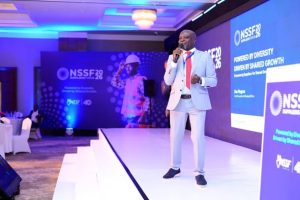
“The NSSF Suppliers Forum continues to strengthen supplier capacity, deepen engagement, and promote transparency and fairness across procurement processes,” Mugura said.
He noted that many suppliers still struggle with compliance and technical preparedness, which limits their competitiveness. “Business owners who want to unlock procurement opportunities must move beyond simply meeting basic requirements and focus on building strong internal systems,” he said.
Mugura identified expired compliance documents, weak technical submissions, poor planning and inconsistent service standards as some of the most common setbacks faced by suppliers.
“Businesses can position themselves for greater success by investing in proper documentation, strengthening internal controls, developing technical capability, and understanding procurement requirements in detail,” he added.
He also encouraged smaller businesses to pursue partnerships through joint ventures and subcontracting arrangements. “Collaboration through joint ventures and sub-contracting presents a practical pathway for smaller businesses to build capacity and compete more effectively,” Mugura said.
Representing the Public Procurement and Disposal of Public Assets Authority (PPDA), Moses Ojambo described supplier diversity as central to building a resilient procurement system.
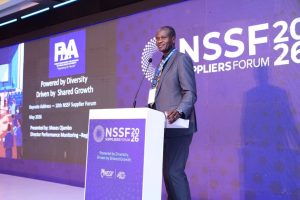
“Supplier diversity is central to building a more inclusive and resilient procurement ecosystem,” Ojambo said. “Broadening participation across Uganda’s supplier landscape creates stronger opportunities for innovation, competitiveness, and sustainable economic growth.”
He said procurement should increasingly be viewed as a strategic driver of national transformation. “Public procurement must increasingly be viewed as a strategic lever for national development,” he said.
Ojambo added that empowering suppliers through mentorship, information access and capacity-building would help create a fairer procurement environment. “When suppliers are empowered through mentorship, capacity building, and clearer access to information, they are better positioned to compete and deliver value,” he noted.
David Kiyingi from the Ministry of Finance, Planning and Economic Development said procurement systems must evolve beyond transactional processes and become instruments for long-term development.
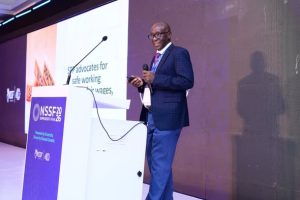
“Sustainable procurement is increasingly becoming a critical driver of shared growth,” Kiyingi said. “Procurement must move beyond transactional processes to become a strategic tool for advancing economic, social, and environmental development.”
He urged institutions to align procurement frameworks with sustainability principles, digital inclusion and supplier development.
“By addressing regulatory gaps, strengthening capacity, and fostering collaboration across stakeholders, Uganda can build a procurement ecosystem that is powered by diversity and driven by shared growth,” he said.
NSSF Chief Enterprise and Growth Officer Peninah Kabagambe-Wabwire challenged suppliers to view social security as a shared responsibility extending beyond compliance obligations. “Every business represented here is already contributing to Uganda’s social security future through the people it employs and supports,” Kabagambe-Wabwire said.
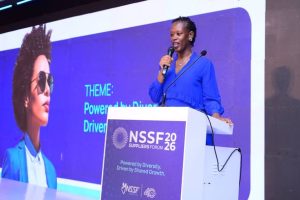
She urged suppliers to expand savings inclusion to casual workers, subcontractors and self-employed individuals. “Social security should not be viewed as a distant obligation, but as a practical and deliberate commitment to long-term financial independence and dignity in retirement,” she said.
Kabagambe-Wabwire highlighted NSSF’s SmartLife Flexi product as one of the solutions aimed at supporting workers with irregular incomes. “With innovations such as SmartLife Flexi, NSSF is creating accessible pathways for workers with irregular incomes to save consistently and build financial resilience for the future,” she said.
She also warned that many entrepreneurs concentrate on growing their businesses while neglecting personal financial security. “Many business owners focus on building financial security for their enterprises while overlooking their own personal savings,” she noted.
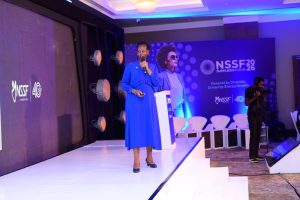
Giving testimony as one of NSSF’s suppliers, Ovia Kyomukama shared how her company grew from a small startup during the COVID-19 disruptions into a trusted supplier. “What started as a simple idea evolved into a business built on resilience, determination, and opportunity,” Kyomukama said.
She explained that losing formal employment during the pandemic pushed her into entrepreneurship. “Losing formal employment during the Covid-19 disruption became the turning point that pushed me to fully commit to entrepreneurship,” she said.
Kyomukama revealed that BrandLab initially struggled to meet NSSF’s procurement standards but improved through persistence and continuous learning. “Although the company initially faced rejection and struggles to meet NSSF quality standards, continuous learning and adaptability enabled the business to grow into a competitive and trusted supplier,” she said.
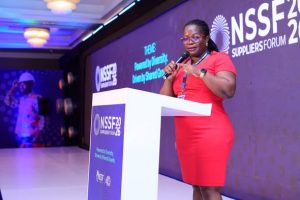
She also emphasised the importance of personal financial discipline among entrepreneurs. “Personal financial preparedness is just as important as professional readiness,” Kyomukama said. “Consistent saving creates resilience during uncertain periods and lays the foundation for long-term stability.”
The 2026 NSSF Suppliers Forum continues with panel discussions, supplier engagement sessions and conversations focused on procurement opportunities, innovation, sustainability and inclusive economic growth.