


President Yoweri Kaguta Museveni has unveiled a three-phase food stabilisation strategy for Karamoja aimed at helping households withstand recurrent droughts, improve food security and gradually reduce reliance on emergency food relief.
The strategy will provide communities with crop varieties and livestock suited to Karamoja’s climatic conditions through short-, medium- and long-term interventions, President Museveni said.
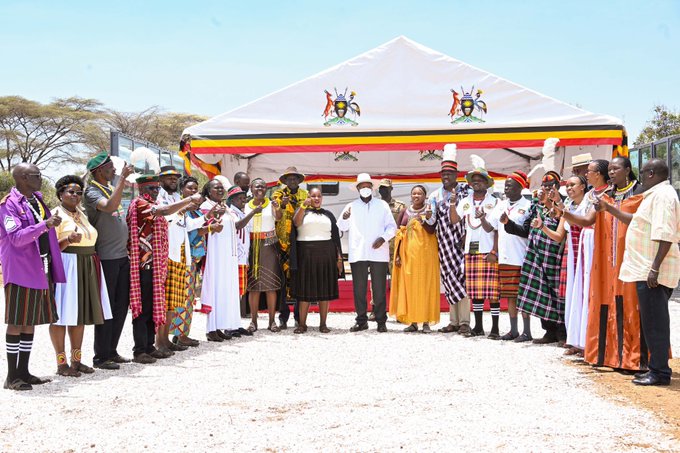
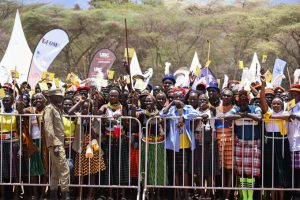
He announced the strategy on Tuesday while officiating at the 11th edition of the Karamoja Cultural Event at Naitakwae Grounds in Moroto District.
The week-long event, organised by the Karamoja Cultural Association, runs from September 6 to 12 under the theme: “Unity in Culture, Strength in Peace, Prosperity Through Tourism and Natural Resources.”
President Museveni said recurrent droughts and the effects of climate change on agriculture had forced the Government to repeatedly provide emergency food assistance to communities in the region.
He said the Government is currently distributing food relief worth about Shs45 billion to drought-affected areas.
The President said Cabinet had therefore resolved to pursue a more sustainable approach to food security in Karamoja by providing households with crops and livestock capable of surviving the region’s harsh climatic conditions.
He tasked the Minister for Karamoja Affairs, John Baptist Lokii, to elaborate on the Cabinet decision and explain how the three-phase strategy would be implemented.

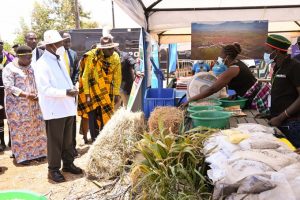
Under the immediate phase, President Museveni said the Government would promote crops with short maturity periods that can provide food within the region’s unpredictable growing seasons.
He recommended sorghum, green gram and white peas, while cautioning against excessive reliance on maize because of its relatively long maturity period and the region’s dry conditions.
The President also encouraged households to embrace goat rearing and beekeeping as alternative sources of food and income.
He said goats were particularly suitable for Karamoja because they can survive on shrubs and vegetation commonly found in the region.
Cassava and bananas, he added, could be grown in the wetter parts of Karamoja.
Shift to commercial agriculture
President Museveni said the medium- and long-term phases would focus on moving households from subsistence farming and food insecurity towards modern commercial agriculture.
He identified irrigation as central to the strategy, given Karamoja’s vulnerability to prolonged drought.
The President called for large-scale water infrastructure, including dams, to support irrigation and reduce dependence on rainfall.
“Therefore, Karamoja is a fertile area, but it’s because of water body encroachment. Therefore, we are going to put up big projects to support irrigation in Karamoja, like big dams,” he said.
He also warned against wetland encroachment, saying wetlands should be protected as part of Uganda’s water systems rather than converted into agricultural land.
Alongside the food stabilisation programme, President Museveni urged the people of Karamoja to conduct a cultural audit to identify practices that should be preserved and those that may hinder social and economic development.
He commended positive cultural practices that have contributed to the community’s resilience, including what he described as the region’s relatively low HIV/AIDS prevalence.
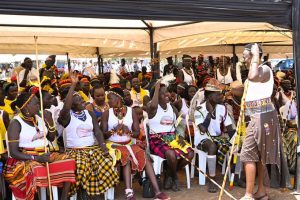
However, he urged the community to reconsider practices that limit sustainable household income growth, including nomadism.
“I think you should do a cultural audit. There are some things in your culture which are good and others which are not good. Keep the good ones and abandon the bad ones,” the President said.
Peace as foundation for development
President Museveni also attributed Karamoja’s improving development prospects to the restoration of peace following the Government’s disarmament programme.
He said approximately 41,000 illegal guns had been recovered from the region, contributing to a reduction in insecurity and cattle raids.
He particularly commended women for their role in the initial disarmament exercise, saying their participation helped the Government recover firearms.
The President also praised individuals who helped expose commercial networks involved in cattle raiding and those who supported former Karacunas to abandon violence and pursue productive livelihoods.
He said the transformation of former warriors demonstrated that people previously involved in violence could change when provided with opportunities to earn a living peacefully.
President Museveni also directed that Fr. Raphael Lobere be awarded a medal for his contribution to restoring peace in the Karamoja sub-region.
Leaders hail progress in Karamoja
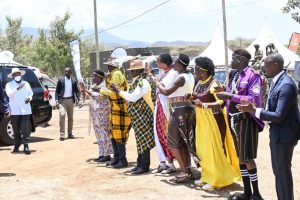
Vice President Jessica Alupo thanked the people of Karamoja for supporting the NRM in the recently concluded elections, saying the restoration of peace had created opportunities for development.
NRM Secretary General Richard Todwong also congratulated the people of Karamoja for supporting the NRM Government and urged them to use their cultural heritage as an asset in addressing household poverty.
Minister for Karamoja Affairs John Baptist Lokii welcomed the President’s focus on food stabilisation, saying the strategy would complement existing Government wealth-creation programmes, including the Parish Development Model (PDM) and Emyooga. Lokii said Karamoja had made significant progress in peace and socioeconomic transformation.
However, he appealed to President Museveni to consider delaying the recovery of PDM funds from beneficiaries in Karamoja because of the prolonged drought. “Let us allow Karamojongs to recover properly from this strong drought,” he appealed.
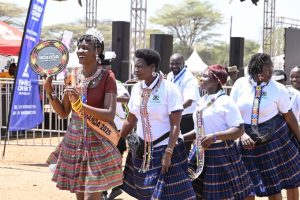
The 11th Karamoja Cultural Event has attracted an estimated 15,000 participants from the wider Ateker cluster, including the Karamojong, Iteso, Ethur, Ik and Tepeth, as well as the Turkana and Pokot from Kenya, the Toposa from South Sudan and the Nyangatom from Ethiopia.
The event is showcasing Karamoja’s cultural heritage while highlighting the potential of culture, tourism and natural resources to contribute to peace, economic growth and socioeconomic transformation in the region.