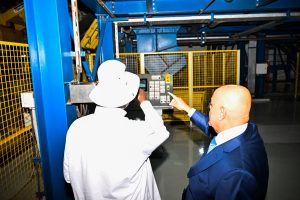



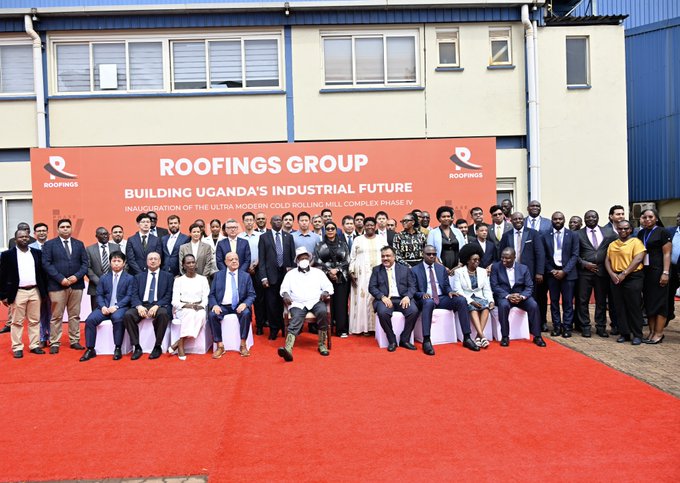
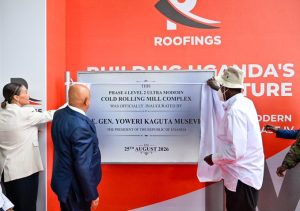
President Yoweri Kaguta Museveni has inaugurated Phase IV Level 2 of the Ultra-Modern Rolling Mill Complex at Roofings Group in Namanve, Mukono District, commending the company for its contribution to Uganda’s industrialisation, local value addition and the development of a self-sustaining economy.
Speaking at the inauguration, President Museveni said Uganda’s industrialisation journey must be understood against the backdrop of Africa’s history, arguing that colonialism disrupted indigenous African artisanship and left the continent largely dependent on exporting unprocessed raw materials.
He recalled that when the National Resistance Movement (NRM) came to power in 1986, it set out its economic vision through the Ten-Point Programme, including the full monetisation of the economy and the creation of an independent, integrated and self-sustaining economy.
Regional integration, he added, was identified as critical to creating a large and reliable market for Ugandan producers.
“A strong market makes it easy for wealth creators to succeed. All they want is a market, and by having a big and sure market, we will create jobs and wealth,” the President said.
President Museveni congratulated Roofings Group Chairman, Dr Sikander Lalani, for his contribution to Uganda’s industrial transformation and investment in local value addition.
He noted that Roofings initially imported intermediate products from Japan and added value to them in Uganda, achieving about 54 percent local value addition.
The company, he said, was now moving to another level by producing some of those intermediate products locally rather than importing them.
President Museveni also pointed to Uganda’s abundant iron ore resources, including high-grade deposits with purity of about 65 percent, saying they provide an opportunity for the country to develop a competitive steel industry.
He commended Dr Lalani for making strategic investment decisions, noting that Roofings had grown its turnover to about Shs1.2 trillion and exports to approximately US$70 million.
The President said Uganda’s development should be anchored on the belief in global affluence, pointing to countries such as China and India that have made significant progress in reducing poverty.
He said Africa was also increasingly beginning to realise its economic potential.
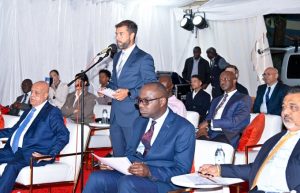
President Museveni cited Roofings as an example of the importance of international cooperation. The company sources technology and products from countries such as Italy and Japan, while Chinese companies participated in the construction of the plant.
“This is how you link all of them—the Italians, Japanese and Chinese. Cooperation is the way to go,” President Museveni said.
He said the investment was expanding Uganda’s industrial capacity while creating employment opportunities and supporting the country’s transition towards a middle-income economy.
The Minister of Trade, Industry and Cooperatives, Hon. Sanjay Tanna, congratulated Roofings Group for its long journey and described the Namanve plant as a resounding vote of confidence in the NRM Government and President Museveni.

He said the peace and stability established under the NRM Government had created an environment that enabled investors to establish and expand factories in Uganda.
Hon. Tanna also commended President Museveni for reducing the cost of electricity for manufacturers, noting that Uganda’s industrial power tariffs are among the most competitive in the region.
He said lower electricity costs had created a more favourable environment for industrial investment and expansion.
Dr Lalani thanked President Museveni for honouring the invitation to inaugurate the facility, saying his presence meant a great deal to Roofings Group.
He said the company’s growth had been closely linked to Uganda’s peace and security and thanked the President for consistently championing industrialisation.
“Thank you for the peace and security, for which, if it wasn’t for peace, Roofings would not succeed,” Dr Lalani said.
He also commended the Uganda Investment Authority and other Government agencies for the support extended to the company during its expansion and investment activities.
Dr Lalani stressed the importance of stable electricity and improved railway infrastructure to support industrial production and transportation.
He thanked President Museveni for reducing electricity tariffs for factories, saying the measure had given manufacturers “a breathing space” and improved the operating environment.
He pledged that Roofings Group would continue working with the President and relevant Government agencies to strengthen Uganda’s steel industry and provide quality iron sheets to the Ugandan market.
Roofings Reaffirms Commitment to Regional Market
Roofings Group Director, Mr Oliver Lalani, said the company was thriving partly because of Uganda’s strong economic fundamentals and growing market.
He said the East African region, with its growing population and expanding economy, presented significant opportunities for the steel industry.
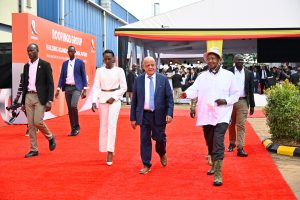
However, he said more work was needed to improve the quality of steel available on the market, particularly as the region’s middle class expands and demand for quality construction materials increases.
Mr Oliver thanked President Museveni for championing Uganda’s economic transformation and the country’s journey towards middle-income status.
He also commended the President for promoting East African integration, saying regional integration provides an important avenue for expanding markets and strengthening industrial production.
He reaffirmed Roofings Group’s commitment to working with the Government to transform Uganda’s steel industry.
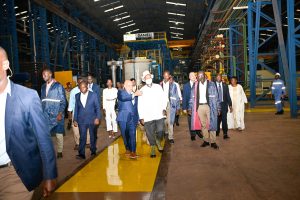
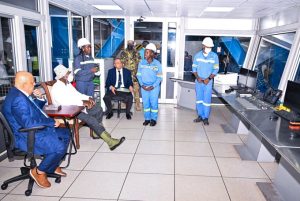
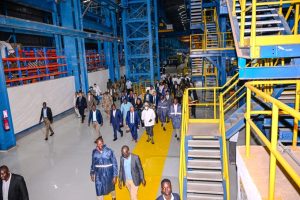
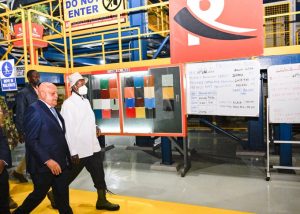
The new rolling mill forms part of a wider modern industrial complex comprising a cold rolling mill, edge-trimming line, galvanising line and colour-coating line.
The cold rolling mill is a four-high mill designed to undertake further processing of steel, enabling the company to produce higher-value products locally.
The facility represents another step in Roofings Group’s efforts to increase local value addition, reduce dependence on imported intermediate products and strengthen Uganda’s manufacturing capacity.
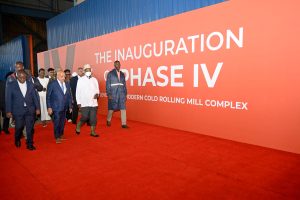
The inauguration was attended by Ministers, Government officials, private-sector representatives and other invited guests.
The investment adds to Uganda’s growing industrial base and reflects the Government’s efforts to promote local manufacturing, value addition, job creation and the development of a self-sustaining economy.