


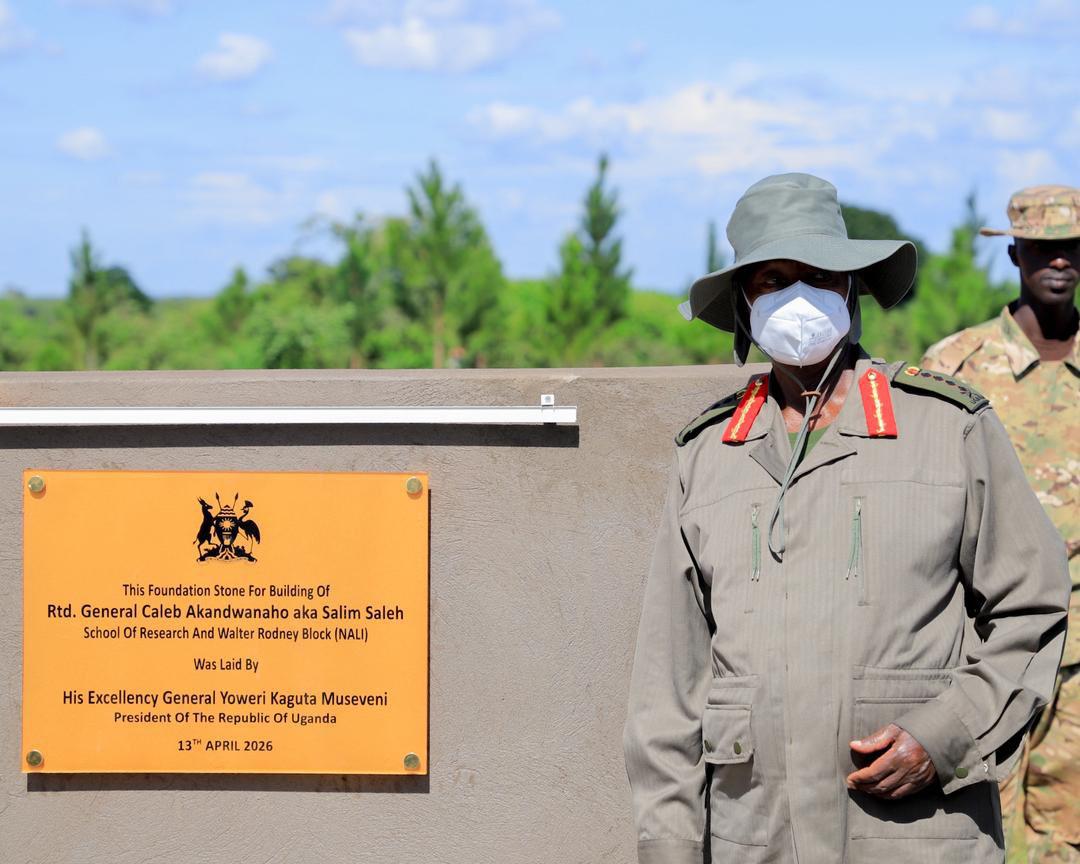
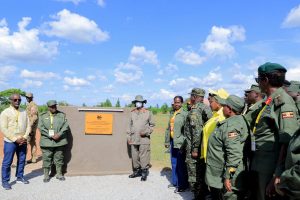
Kyankwanzi – At the sidelines of the ongoing NRM Leaders’ Retreat in Kyankwanzi, a new milestone in Uganda’s ideological and cultural development agenda was marked as President Yoweri Kaguta Museveni commissioned the construction of a research and heritage complex named after Retired Gen Caleb Akandwanaho Salim Saleh.
The facility, which includes the Walter Rodney Block, named after Walter Rodney, is envisioned as a centre for advancing Pan-African integration, promoting African culture, and hosting ideological discourse.
The complex will serve as a hub for sustained intellectual engagement, particularly around Africa’s socio-political and economic transformation. It is also expected to host a revolutionary museum aimed at preserving and transmitting the history of Uganda and Africa’s liberation struggles to the young generation.
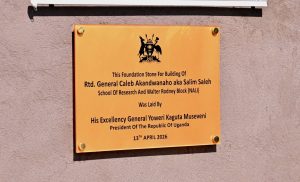
The project seeks to reinforce the legacy of liberation movements while fostering a new generation of thinkers and leaders grounded in Pan-African ideals. It will additionally provide space for examining contemporary development strategies, including the principles associated with Musevenomics, an approach linked to the President’s economic philosophy.
President Yoweri Kaguta Museveni said of the commissioning: “Today, before joining the MPs, I laid a foundation stone for a building that will house the Rtd Gen Caleb Akandwanaho School of Research and Walter Rodney Block. I thank the leadership of NALI for this initiative.”
The institution is also intended to honour Gen Saleh’s evolution as a freedom fighter, revered Commander of the National Resistance Army (NRA), and military strategist of great renown, to a development architect focused on the transformation of people into the money economy, unity, peace and harmony.
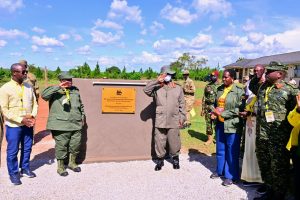
Highlighting Gen. Saleh’s contribution, President Museveni gave a detailed account of his role in Uganda’s liberation struggle.
“People like Saleh should act as good examples to you young people to show you what patriotism means and how what you do can help your country,” President Museveni said.
“Saleh joined us in the war against Idi Amin in 1976 when he was just 16 years old. He ran away from school at Kako and joined us in Tanzania together with other fighters like Ivan Koreta. Between 1979 and 1986, he did a lot of good work, especially during the 1981–1986 war. Saleh commanded many of the big battles, including the battles of Masindi, Kabamba, Masaka, and Kampala.”
President Museveni noted that after the war, Gen. Saleh transitioned into wealth creation and economic development.
“After the war, he became very much involved in wealth creation. He is now busy with development, working with others in areas like coffee and playing a very active role in the north,” he said. “That development in Kapeka was started by Saleh. I am very glad that this is a good idea, and I commend you.”
Leaders at the retreat described the school initiative as a strategic investment in ideological clarity and historical preservation, positioning it as a cornerstone for future discourse on Africa’s path to self-reliance and unity.