


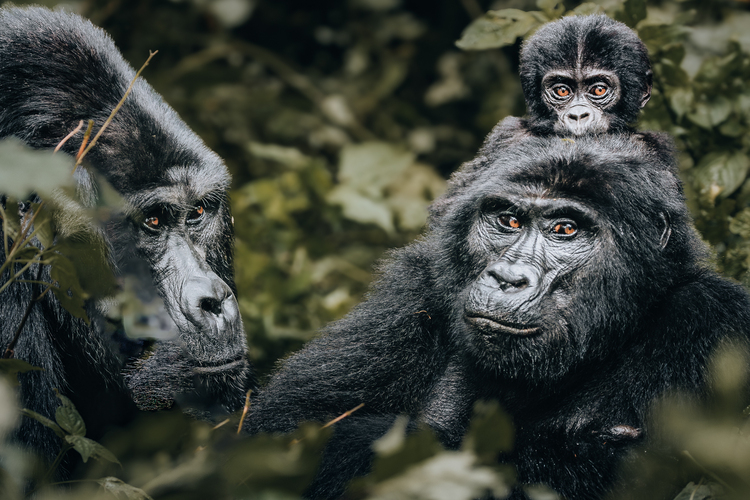
Leaders from Kisoro District and surrounding areas have called on the government to increase the share of gorilla tourism revenue allocated to communities living around Bwindi and Mgahinga National Parks, arguing that residents who bear the cost of living alongside wildlife should receive greater economic benefits from conservation.
The leaders say the current revenue-sharing arrangement does not adequately reflect the contribution of communities to protecting mountain gorillas, particularly in districts hosting a significant number of gorilla families. They want the distribution formula reviewed to ensure that areas carrying a greater conservation responsibility receive a corresponding share of the benefits.
The proposals emerged during the opening conference of Uganda’s first Mountain Gorilla Festival, held in Rubuguri Town Council, Kisoro District, from November 19 to 22, under the theme Protecting Gorillas, Empowering Communities.
Kisoro District LCV Chairperson Richard Ndyana challenged the existing arrangement, arguing that revenue distribution should be based on the number of gorilla families a district hosts rather than the number of parishes bordering the protected areas.
“For us who host 50 per cent of the families, we get less,” Ndyana said, calling for a review of the formula to recognise the conservation responsibilities communities in the district shoulder.
Currently, the Uganda Wildlife Authority (UWA) allocates 20 per cent of annual park entry fees to communities surrounding protected areas. In addition, communities around Bwindi receive $10 from every gorilla trekking permit sold, a provision introduced in July 2015.
However, State Minister for Tourism, Wildlife and Antiquities Susan Nakawuki Nsambu said the government was willing to consider increasing the direct benefit from each gorilla permit to $20, arguing that communities deserved greater recognition for their role in conservation.
She pledged to present the proposal to Cabinet, adding that increasing the community share would not significantly undermine tourism earnings, given the contribution residents have made to protecting the country’s wildlife over generations.
Nakawuki also proposed an education sponsorship programme targeting children from families living near the parks, particularly those seeking opportunities to pursue university education.
UWA Executive Director Dr James Musinguzi said the authority was examining how revenue-sharing funds reach beneficiary communities following concerns that some of the money does not trickle down to the intended grassroots beneficiaries.
He said the findings could inform possible amendments to the Uganda Wildlife Act and improvements in the management of community conservation funds. UWA is also exploring the establishment of an education fund to support children from communities neighbouring protected areas.
The calls come at a time when gorilla tourism is generating substantial revenue for the country. Uganda earned Shs110 billion from gorilla tourism in the 2025/26 financial year, up from Shs93 billion in 2024/25 and Shs86 billion in 2023/24.
According to figures presented by UWA, Bwindi and Mgahinga generated a combined Shs162.5 billion in tourism revenue during the 2025/26 financial year, with gorilla trekking accounting for the largest share.
Despite the earnings, Musinguzi said conservation must deliver more tangible benefits to the people living alongside the animals.
“We want the gorilla to put money in the pockets of the local person,” he said, emphasising the need to strengthen community participation in the tourism value chain.
Beyond revenue sharing, the leaders called for improved road infrastructure to make the gorilla tourism destinations more accessible to visitors.
Nakawuki expressed concern about the poor condition of roads serving the Rubuguri area, saying her journey from the hotel to the conference venue had taken about 40 minutes despite the distance being less than 10 kilometres.
“The nature of the roads was terrible,” she said, noting that the experience could discourage visitors, particularly international tourists travelling to the region for gorilla trekking.
The situation has been compounded by the collapse of the Kisoro-Bukimbiri road at River Mucha Bridge, forcing motorists to use the Rubuguri-Rushaga alternative route.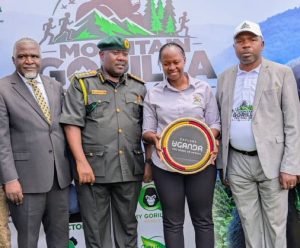
Nakawuki said the government had committed to prioritising roads serving tourism destinations, beginning with the Bwindi and Mgahinga area because of the revenue generated from the parks. However, she noted that compensation for people affected by the planned road works remained an outstanding issue despite funds for the project having been secured.
Musinguzi also appealed to Uganda Airlines to consider introducing flights between Entebbe/ Kajjansi and Kisoro to ease access to the destination, where visitors currently face a lengthy road journey from Kampala.
On conservation, Musinguzi called for the expansion and connection of gorilla habitats to provide more room for the endangered primates to move and reproduce.
He said the government was pursuing plans involving Echuya Central Forest Reserve, with the long-term ambition of improving connectivity between the forest and Bwindi Impenetrable National Park.
“We would like to see gorillas roaming from Bwindi to Echuya and back,” Musinguzi said, arguing that expanding available habitats would support gorilla population growth while creating opportunities for more tourism activities.
He said increased habitat would ultimately translate into more gorillas, tourism employment and revenue for both government and surrounding communities.
The conference also highlighted the importance of involving residents in wildlife protection, with Nakawuki saying communities around Bwindi and Mgahinga had demonstrated that conservation could be achieved through cooperation rather than enforcement alone.
She observed that while wildlife authorities in other protected areas often rely on arrests to deal with poaching, residents around the gorilla parks had increasingly taken responsibility for reporting and preventing illegal activities because they understood the economic value of the animals.
Musinguzi said snaring, which has historically threatened wildlife in the area, was increasingly becoming a thing of the past, partly because of stronger community involvement.
To strengthen this relationship, he said UWA’s board had established a Department of Community Conservation and External Wildlife Management Services, with plans to establish community conservation offices to improve engagement with residents.
He said the intention was to move from managing human-wildlife conflict towards promoting coexistence between communities and wildlife.
“It’s not true that Uganda Wildlife Authority loves animals more than people,” Musinguzi said, emphasising that the authority’s conservation mandate also recognises the welfare of communities neighbouring protected areas.
Batwa inclusion and the future of the festival
Bukimbiri County MP Eddie Kwizera Wagahungu called for the Mountain Gorilla Festival to be formally established as an annual event, saying it could become an important platform for promoting conservation, tourism and the cultures of communities in the Kigezi region.
He proposed that the festival be gazetted so that it could be recognised on the national calendar, with celebrations rotating among Kisoro, Kanungu, Rubanda, Kabale, Rukiga and Rukungiri districts.
Kwizera also called for greater sensitivity in promoting Batwa heritage, cautioning tourism stakeholders against presenting the Batwa people themselves as a tourism attraction.
He said their cultural heritage could be showcased through performances and other cultural experiences, but their dignity, rights and participation in development should remain central.
The festival featured the Virunga Gorilla Marathon, football matches, craft exhibitions and a programme to enrol gorilla guardians. Organisers also sought to promote experiences beyond gorilla trekking, including Batwa and Bakiga cultural activities, community walks and home-stays.