


Kampala — Financial institutions in Uganda have been urged to expand lending to women entrepreneurs, introduce flexible financing products and use data to address barriers that prevent women-owned businesses from accessing credit.
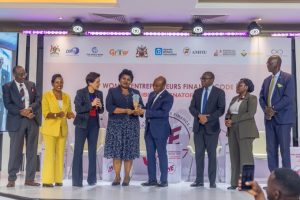
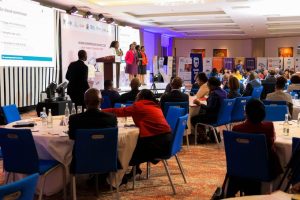
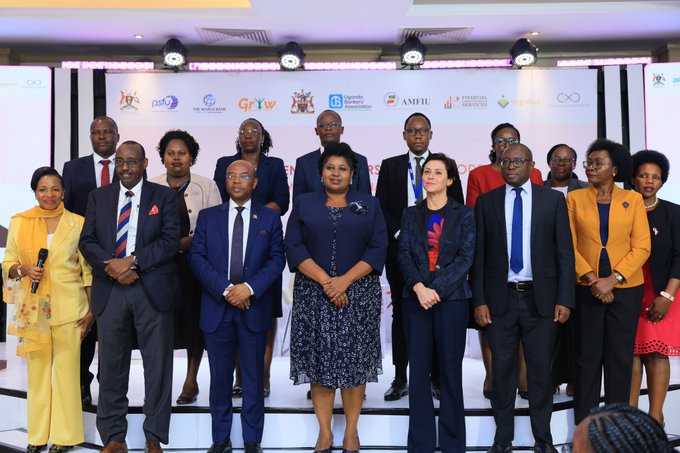
The call was made on Monday, November 23, 2026, during the WE Finance Code Uganda High-Visibility Signatory Event and Women Small and Medium Enterprises (WSME) Data Dashboard launch at Kampala Serena Hotel.
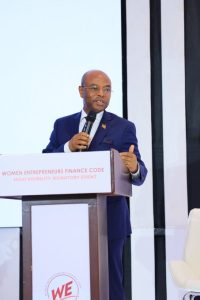
Bank of Uganda Deputy Governor Prof. Augustus Nuwagaba said financial inclusion should go beyond financial literacy to ensure that women and other borrowers can access financial services and withstand economic shocks.
“Financial literacy means that people understand financial products and services. Financial inclusion means they can access those products and services from commercial banks and other financial institutions,” Nuwagaba said.
“But what is even more important is what we call financial health. This means being able to withstand shocks and emergencies without your finances falling apart.”
He said although Uganda’s financial literacy was estimated at 81 per cent, many people still struggled to withstand financial shocks.
Nuwagaba said approximately 40 per cent of women were engaged in business, but only 18 per cent could access loans, while just nine per cent had access to commercial loans.
“Women continue to face challenges accessing traditional loans from conventional financial institutions,” he said, calling for more financing arrangements that recognise group collateral and enable women to borrow collectively.
He cited the Bank of Uganda’s Agricultural Credit Facility and Small Business Fund as some of the financing arrangements available to support businesses, saying the latter offered loans at an interest rate of 10 per cent.
Nuwagaba also urged financial institutions to increase lending to women, arguing that women borrowers generally had better loan repayment records.
“We know that women have generally been prudent in the way they use money, particularly borrowed funds,” he said.
He further advocated for family-owned enterprises, saying businesses in which spouses worked together tended to survive longer. “If you want growth that can be sustained over time, then you must have a family enterprise,” he said.
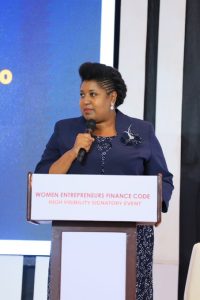
Sarah Kagingo, Vice Chairperson of the PSFU board, urged financial institutions to design products around the realities of women-owned businesses rather than applying uniform lending conditions across different sectors.
She said the GROW Project had demonstrated measurable improvements in the performance of businesses that accessed its financing facility.
“Within less than two years, 77.2 per cent of women-led businesses that accessed the GROW financing facility reported that it had helped increase their household incomes,” Kagingo said.
She added that the proportion of participating businesses that had formalised increased from 17.4 per cent to 42 per cent, while their average number of employees rose 1 per cent to 2.7 per cent in 2026.
According to Kagingo, profits among participating businesses increased 3.2 times compared with those of borrowers who were not part of the GROW Project.
She also cited improvements in women’s social empowerment, saying 88.2 per cent of the women reported an increased sense of recognition, while 95 per cent reported improved recognition within their communities.
Kagingo called on banks to consider alternative lending arrangements for women who lack conventional collateral and to work with telecommunications companies to reach entrepreneurs using mobile money services.
“Not every woman entrepreneur can provide conventional security or collateral,” she said.
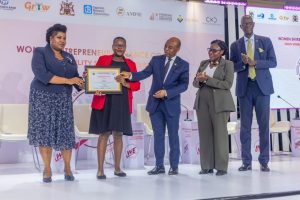
She also cautioned financial institutions against imposing repayment schedules that do not reflect the business cycles of their clients, particularly in tourism and hospitality.
“Tourism and hospitality businesses are highly sensitive to seasons. If you extend financing to a tour operator or a business in the heritage sector and expect repayment during the low season, you are getting it wrong,” she said.
Kagingo further urged banks to consider the entire value chain, including product certification and non-tariff barriers affecting women trading across borders.
“Please consider whether access to finance is actually helping women scale their businesses, whether you are reaching the last mile, and whether you are improving the economic prospects of women entrepreneurs and women-led businesses across the country,” she said.
She cited Ecobank’s non-collateralised lending to women-led enterprises, which she said amounted to US$50,000, approximately Shs200 million, and said Stanbic Bank was also implementing non-collateralised lending.
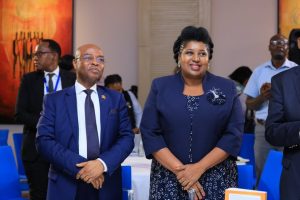
Dr Ruth Aisha Biyinzika Kasolo, who coordinates the World Bank-funded Generating Growth Opportunities and Productivity for Women Enterprises (GROW) project, said Uganda’s lack of a standard definition of women-owned businesses had previously affected the country’s ability to measure and report progress in women’s financial inclusion.
She said institutions had been using different criteria, with some requiring women to own 51 per cent of a business, others using 55 per cent, while some considered businesses managed by women or employing large numbers of women.
“Uganda has faced a challenge because we did not have a standard definition of a women-owned enterprise,” Kasolo said.
She said the WE Finance Code would provide a common framework for banks, microfinance institutions, SACCOs, fintech companies and telecommunications firms to track loans, deposits, electronic money transactions and insurance products accessed by women.
“It will enable standardised reporting. When you have standard reporting, you can assess how far you have gone in ensuring that women participate in the financial sector,” she said.
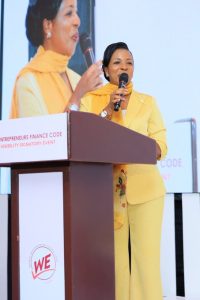
Kasolo said all banks in Uganda now had programmes targeting women, compared with two years ago when some financial institutions did not have any products specifically designed for women.
“Our current reporting indicates that between 35 and 42 per cent of women who had never accessed loans before are now borrowing,” Kasolo said.
She described the WE Finance Code as broader than the GROW Project because it requires countries to report on women’s access to loans, savings, electronic money and other financial services.
Uganda Bankers’ Association Executive Director Wilbrod Owor said financial institutions needed to translate the data they already collected into practical products that responded to the needs of women entrepreneurs.
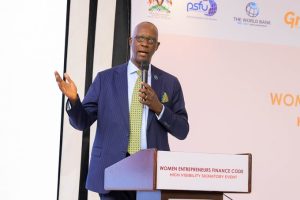
Owor urged product development teams to “champion more innovative products” and asked banks to consider whether women could access financing in time to purchase supplies, reach customers and generate enough income to repay loans.
He said the association’s Resource Centre could draw on the experience of former banking professionals in credit and risk management to help member institutions design products suited to women’s businesses.
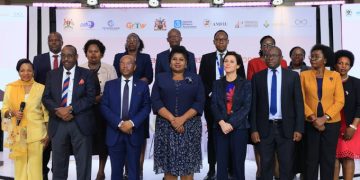
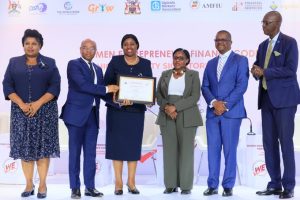
The event brought together the Bank of Uganda, Ministry of Gender, Labour and Social Development, PSFU, World Bank, Uganda Bankers’ Association, Association of Microfinance Institutions of Uganda and other financial sector stakeholders.